
You cannot make yourself completely safe from AI misuse, and it is never your fault if someone abuses your photo. But a few habits can reduce the supply of images and help you act fast.
AI nude tools only need an ordinary photo of a face. The most useful defences are limiting who can see and download your photos, watching for misuse and having a plan ready.
This guide gives practical steps without suggesting you disappear from the internet. Being visible is normal, and misuse is the responsibility of the person who does it.
No setting makes you completely safe, and the blame always lies with the person who misuses your images. These steps reduce the supply of easily copied photos and prepare you to respond quickly.
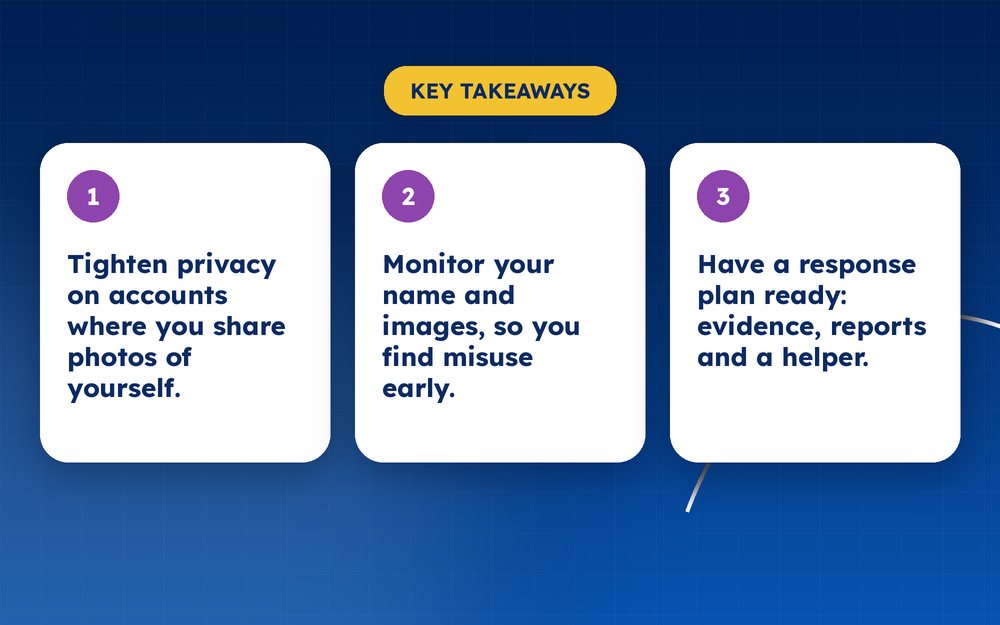
- Tighten privacy on accounts where you share photos of yourself.
- Monitor your name and images, so you find misuse early.
- Have a response plan ready: evidence, reports and a helper.
Practical steps
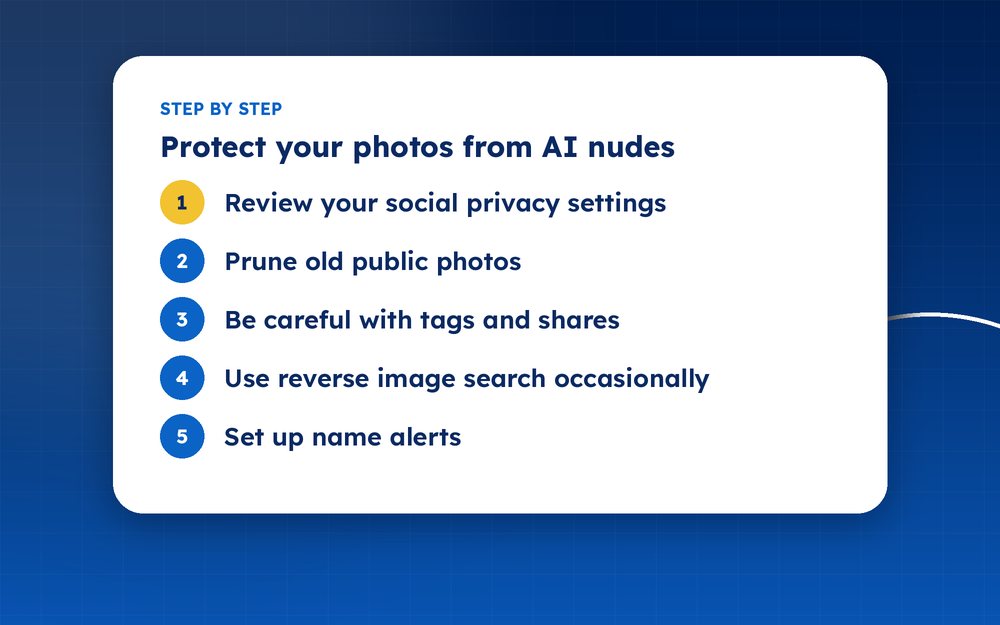
- Review your social privacy settingsSet accounts to private or limit who can see and save photos, especially of your face and body. Set social accounts to private where you can, and check who can see photos, tags and your friends list.
- Prune old public photosRemove or restrict old public photos you no longer need to share widely. Consider removing or limiting old public photos, especially clear face photos and ones in swimwear or private settings.
- Be careful with tags and sharesLimit who can tag you, and ask friends not to post photos of you publicly if that matters to you. Ask friends and family not to tag you or post your photos publicly. Review tagged photos before they appear on your profile.
- Use reverse image search occasionallyCheck where your profile photos appear on the web. Search your own photos and name occasionally to see whether they appear in unexpected places.
- Set up name alertsAlerts help you notice new pages that mention you. Set alerts for your name so you hear quickly about new mentions.
- Know your reporting routesBookmark the Google form, StopNCII.org and the main platform report pages. Know the reporting routes for non-consensual and fake images, and keep a short list of links in a safe place.
- Prepare a helperAsk a trusted person to be your go-to if something happens, so you do not face it alone. Agree with a trusted person that they can help you capture evidence and report if something happens.
What watermarks and protection tools can and cannot do
Some tools add subtle changes to photos that are meant to disrupt AI models, and visible watermarks can make misuse less attractive. These can help, but they are not guaranteed, and AI tools evolve. Treat them as one layer among others.
For parents and teenagers
Talk openly about what to do if a fake appears: tell a trusted adult, save evidence and report. Make clear that the victim is not in trouble. Schools should have a policy for this kind of abuse, and you can ask what it is.
If a fake appears anyway
Save evidence, report to platforms, ask search engines to remove links and tell the police if you choose. You can follow our guides on AI nudes and deepfake reporting for the steps.
A realistic mindset
Perfect protection does not exist, and you should not feel pressure to hide. The aim is to make misuse harder, to notice it early and to know what to do. Most people who deal with a fake find that quick reporting, search removal and a trusted helper bring the situation under control.
If you do find a fake, remember that the shame belongs to the person who made it. You can ask for help from friends, support services and professionals, and you do not need to look at the content to get it removed.
What a typical case looks like
A teacher with many public photos decides to tighten her settings. She makes her accounts private, removes old public photos, asks friends not to tag her and sets alerts for her name. Months later, a stranger uses a photo from a school page to make a fake image. Because she has a helper and a list of reporting routes, the image is reported within hours and removed the same day.
Preparation did not prevent the abuse, but it made the response fast.
Common mistakes to avoid
Do not rely on a single tool. Do not blame yourself for having photos online. Do not delete everything in panic, since you may need evidence. And do not send photos to unknown apps that claim to test or protect them.
How a specialist can help
If a fake does appear, speed matters. A specialist team can monitor, search and report while you stay away from the content. We cannot promise outcomes, but we will be honest about what is realistic. Email us in confidence.
Frequently asked questions
Can I stop my photos being used by AI tools?
You cannot fully prevent misuse, but you can reduce exposure with privacy settings and fewer public photos.
Should I delete my photos?
That is your choice. Limiting public access to clear face photos is a sensible step.
Do watermarks help?
They may discourage some misuse, but they do not stop determined people.
What if my photo is already misused?
Report it as a non-consensual fake and ask search engines to remove results.
Who is to blame if it happens?
The person who misuses the images, not you.
Is this legal advice?
No. It is general information, and laws differ by country. For claims or court action, speak to a qualified lawyer.
Need help with this?
Every situation is different. Email us the details in confidence and we will reply with an honest assessment of what can be done.
Contact us by email Deepfake removalThis guide is general information, not legal advice. DMCA Reputation is not a law firm.
Related guides
What to Do If Someone Made an AI Nude of You
What to do if someone made an AI nude of you: save evidence, report the fake, remove it from platforms and search, and get support. A calm, practical guide.
Read the guide · 5 min
How to Report Deepfake Porn to Google, X and Telegram
How to report deepfake porn to Google, X and Telegram: what to say, what evidence to include, how to follow up and how to handle the copies that keep coming back.
Read the guide · 4 min
How to Remove Deepfakes of Yourself
How to remove deepfakes of yourself: documenting evidence, platform reports, search removal and legal options for AI-generated fake images and videos.
Read the guide · 4 min