
A fake or false news article about your company can spread fast and rank in search. Removal depends on the publisher and the type of problem, so start by working out what you are dealing with.
Not every negative article is fake. Some are real reporting you dislike, some are mistakes, and some are fabricated by content farms or competitors. Publishers respond differently to each.
This is general information, not legal advice. For serious false claims, speak to a lawyer about options such as corrections, takedowns and claims.
Not every bad article is fake. Before you decide what to ask for, work out whether the article is false, one-sided, outdated or simply unflattering, because each calls for a different approach.
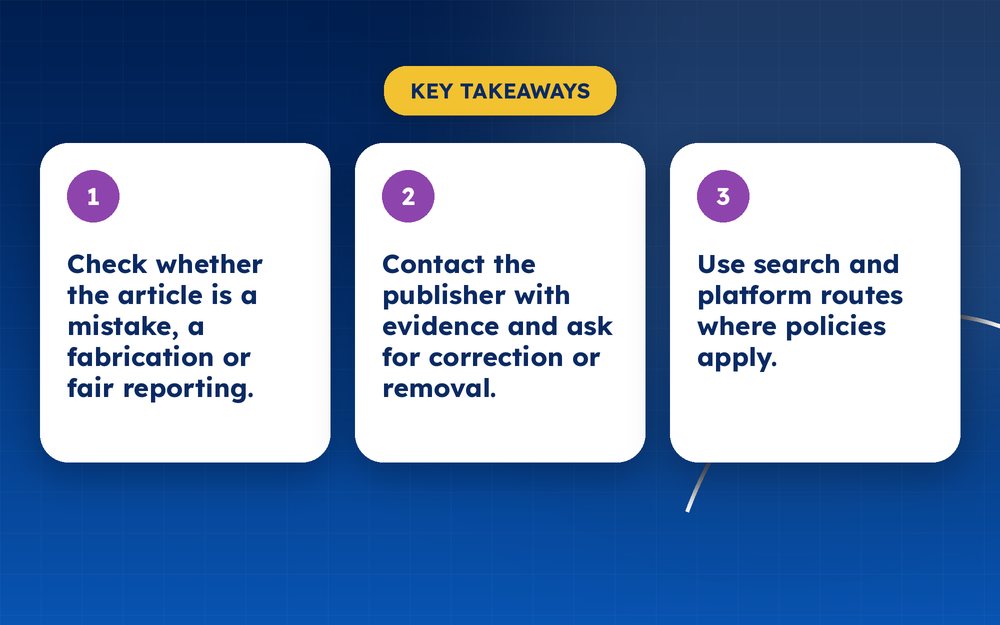
- Check whether the article is a mistake, a fabrication or fair reporting.
- Contact the publisher with evidence and ask for correction or removal.
- Use search and platform routes where policies apply.
What to do, step by step
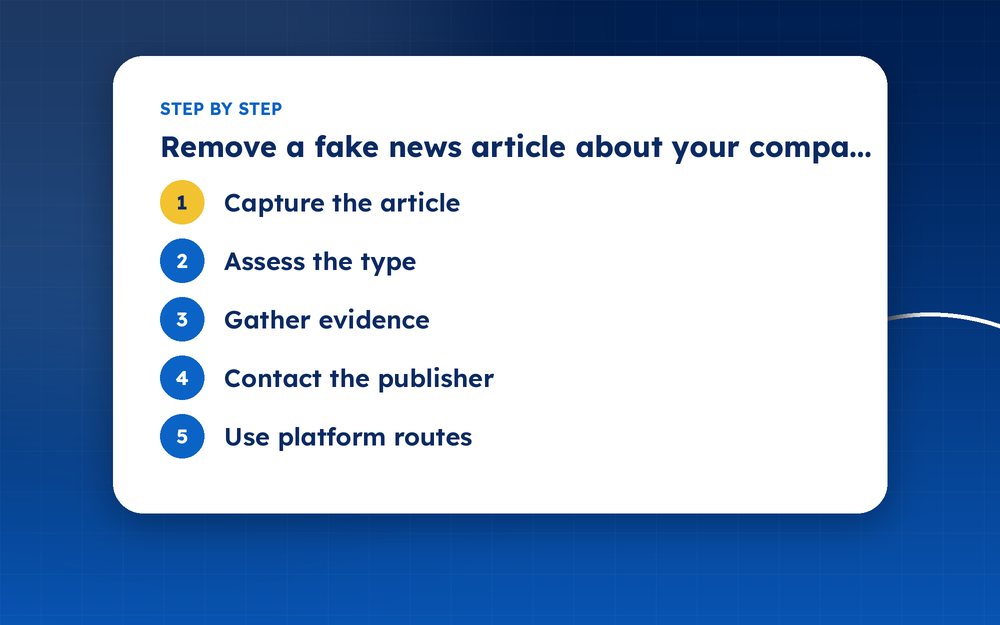
- Capture the articleSave the page, date, author and any sources. Save the full page, the web address, the date and the author or site details. Archive copies so you can prove what it said.
- Assess the typeIs it a factual error, a fabrication, an opinion or a scraped copy? Decide whether the article is fabricated, wrong on specific facts, an opinion piece or outdated. This will guide your approach.
- Gather evidenceCollect documents that show the facts. Collect documents that show the true facts, such as records, statements, emails or official notices. Put them in order.
- Contact the publisherWrite a short, factual request for correction or removal. Send a short, polite message to the publisher listing the errors and attaching evidence. Ask for a correction or removal.
- Use platform routesReport to social platforms and search engines where policies apply. If the site is a content farm or uses fake names, report it to the host, search engines and social platforms for spam or fraud.
- Consider legal adviceFor defamatory claims, ask a lawyer. If the article is seriously false and damaging, a lawyer can advise on defamation and other routes, and on the risks and costs.
- Publish your own responsePut accurate information on your channels. Publish a factual response on your own site and share it where people look for you. Keep it calm.
Corrections versus removal
Reputable publishers prefer to correct factual errors rather than remove articles. A clear request with evidence often gets a correction. Removal is rarer.
Content farms and fabricated articles
Sites that fabricate stories may ignore requests. Use hosts, registrars and platform reports, and ask search engines about their policies on deceptive content.
Legal options
False statements of fact that harm reputation may be actionable in some places. A lawyer can explain the rules, time limits and costs. We do not promote particular law firms in our guides, and you can contact us if you would like a recommendation.
Managing the story
Publish a short factual statement, brief staff and customers, and keep a record of coverage. Avoid attacking journalists, which can amplify the story.
What a typical case looks like
A start-up finds an article claiming it was fined for fraud, which never happened. It saves the page, collects official records showing no such action, and emails the publisher with the facts. The site does not reply, so the team reports the article to the host as fabricated news and requests search removal. The host removes it after two weeks. The start-up also publishes a short statement on its site, which now appears next to the old coverage in search.
Combining a request to the publisher with other routes made the difference.
Common mistakes to avoid
Do not threaten the publisher without advice. Do not ignore the story. Do not publish unverified claims in return. And do not skip evidence.
How a specialist can help
A specialist team can contact publishers, send notices to hosts and platforms, and work on search visibility. We are not a law firm and cannot give legal advice. Email us in confidence.
Frequently asked questions
Can a fake news article be removed?
Sometimes. Reputable outlets may correct or remove false claims with evidence, while fabricated sites may need reports to hosts and search engines.
What is the difference between correction and removal?
A correction fixes specific errors. Removal deletes the article. Many outlets prefer corrections, so be clear about which you ask for.
Should I sue?
Legal action is costly and slow, and the outcome is uncertain. It may suit serious, clearly false statements. A lawyer can explain the options.
Will search engines remove it?
Only in specific cases, such as legal orders or certain policy violations. Otherwise, build accurate content to balance results.
How do I respond publicly?
Publish a short, factual statement on your own site and share it where people look for you.
Is this legal advice?
No. It is general information. For defamation claims, speak to a qualified lawyer.
Need help with this?
Every situation is different. Email us the details in confidence and we will reply with an honest assessment of what can be done.
Contact us by email Brand infringement removalThis guide is general information, not legal advice. DMCA Reputation is not a law firm.
Related guides

What to Do If Someone Clones Your Business Website
What to do if someone clones your business website: document it, send copyright and brand notices to the host and registrar, report to search engines and warn customers.
Read the guide · 4 min
How to Report a Phishing Site Using Your Brand
How to report a phishing site using your brand: capture evidence, report to the host, registrar and browsers, warn customers and speed up takedown.
Read the guide · 4 min
How to Protect Your Brand From Fake Social Media Accounts
How to protect your brand from fake social media accounts: registration, verification, monitoring and a fast takedown process.
Read the guide · 3 min