
Local groups can spread a complaint or rumour fast. Group admins and the platform can both act, and a calm response often matters as much as removal.
Facebook groups are run by admins and moderators, who can remove posts. Nextdoor has neighbourhood leads and a reporting system. Both platforms have rules about harassment, personal information and false claims.
Start by reading the group rules and contacting admins politely. If that fails, use the platform's report tools.
Community groups are run by admins who often care about civility. A calm message to them is sometimes the fastest route, with platform reports as your backup.
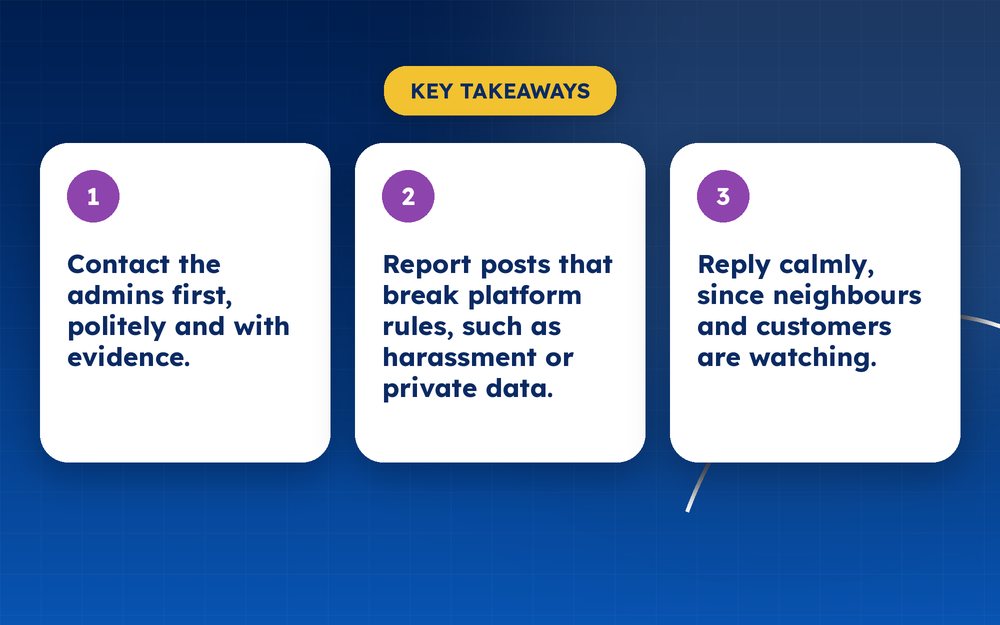
- Contact the admins first, politely and with evidence.
- Report posts that break platform rules, such as harassment or private data.
- Reply calmly, since neighbours and customers are watching.
What to do, step by step
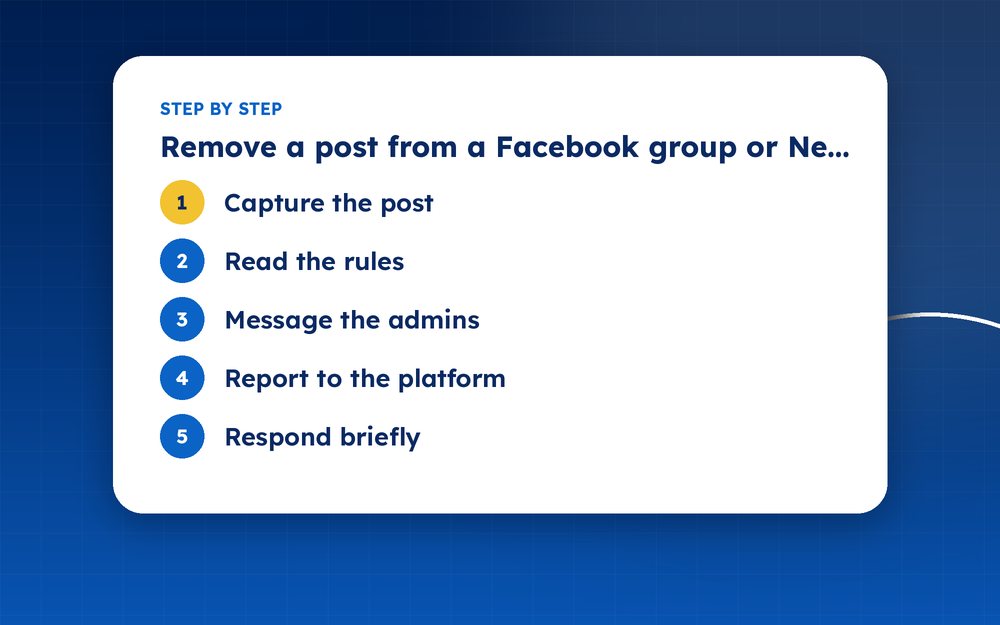
- Capture the postTake screenshots with the group name and date. Take screenshots showing the post, the author, the group name and the date. Copy the link to the post.
- Read the rulesCheck group and platform rules. Find the group rules, and note which ones the post breaks, such as no personal attacks or no private information.
- Message the adminsAsk politely for removal, citing the rule. Message the admins privately, quote the rule and ask them to remove the post. Stay polite and short.
- Report to the platformUse the report tool for harassment, personal information or false claims. If admins do not respond or the post is serious, report it to the platform as harassment, private information or false information.
- Respond brieflyA calm reply can help if the post stays up. A short, calm reply can help neighbours see your side. Avoid arguing in the thread.
- Keep recordsNote dates, messages and responses. Keep a record of messages, reports and responses. It helps if things escalate.
- Consider legal adviceFor serious harassment or false claims, ask a lawyer or the police. For serious false claims or threats, a lawyer or the police may be appropriate. Avoid threats yourself.
Working with admins
Admins are often volunteers and respond better to polite, factual requests. Explain what is wrong with the post and which rule it breaks. Avoid public arguments.
If your address or family are mentioned
Posts that include your home address, phone number or family details may count as doxxing or personal information. Report them as such, and consider contacting the police if there are threats.
Business owners
If the post is about your business, consider replying with a brief, constructive statement and an offer to resolve the matter privately. Avoid inflaming a local dispute.
Searching for reposts
Posts can be shared across groups. Search for similar posts, and ask admins of each group to remove them.
What a typical case looks like
A resident finds a neighbourhood post naming her and claiming she damaged a car. She saves the post, messages the admins and points to the rule against naming people without proof. The admins remove the post the same day and remind members of the rules. She also posts one calm sentence in a later thread saying the claim is untrue.
Working with the admins resolved it faster than a platform report would have.
Common mistakes to avoid
Do not argue in comments. Do not post personal details in return. Do not ignore threats. And do not delay saving evidence.
How a specialist can help
A specialist team can contact admins, report posts and monitor for reposts. We cannot promise removal, but we will be honest about what is realistic. Email us in confidence.
Frequently asked questions
Can I get a post removed from a Facebook group or Nextdoor?
Often yes, by asking the admins or reporting it for breaking rules. Posts that are only opinions may stay.
Should I reply in the thread?
Usually keep it brief or not at all. Arguments tend to spread the post.
What if the admin is the one posting?
Report to the platform and keep evidence.
What if my address or photo is posted?
Report it as private information or harassment, and consider asking for search removal.
Can I take legal action?
For serious false claims or threats, a lawyer can advise. It is often slow, so try other routes first.
Is this legal advice?
No. It is general information. For claims or disputes, speak to a qualified lawyer.
Need help with this?
Every situation is different. Email us the details in confidence and we will reply with an honest assessment of what can be done.
Contact us by email Negative content removalThis guide is general information, not legal advice. DMCA Reputation is not a law firm.
Related guides
How to Remove a Blog Post From WordPress.com, Blogger or Substack
How to remove a blog post from WordPress.com, Blogger or Substack: report forms, DMCA and legal routes, contacting the author and managing search results.
Read the guide · 3 min
How to Remove a Post From Twitch or Kick
How to remove content from Twitch or Kick: copyright notices, harassment reports, VODs and clips, and how to handle streamers who keep reposting.
Read the guide · 3 min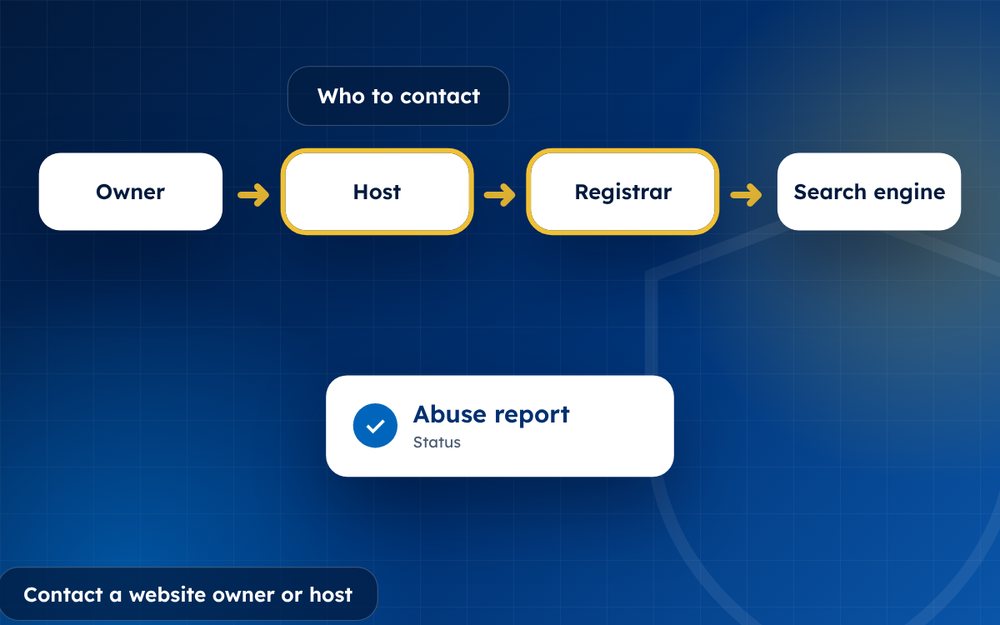
How to Contact a Website Owner or Hosting Company to Remove Content
How to contact a website owner or hosting company to remove content: finding contacts, writing the request and escalating step by step.
Read the guide · 4 min