
Counterfeit listings harm sales and reputation. Marketplaces have brand protection programs and report tools, and a clear, evidence-based report usually works best.
Marketplaces provide brand registries and notice processes for rights owners. Enrolling usually requires a registered trademark, and gives you better tools to search and report.
Counterfeit cases also involve product safety and customer complaints. Keep evidence and respond quickly.
Marketplaces process large volumes of reports, so clear, complete reports win. The more you can show that you own the rights and that the item is not genuine, the faster the listing comes down.
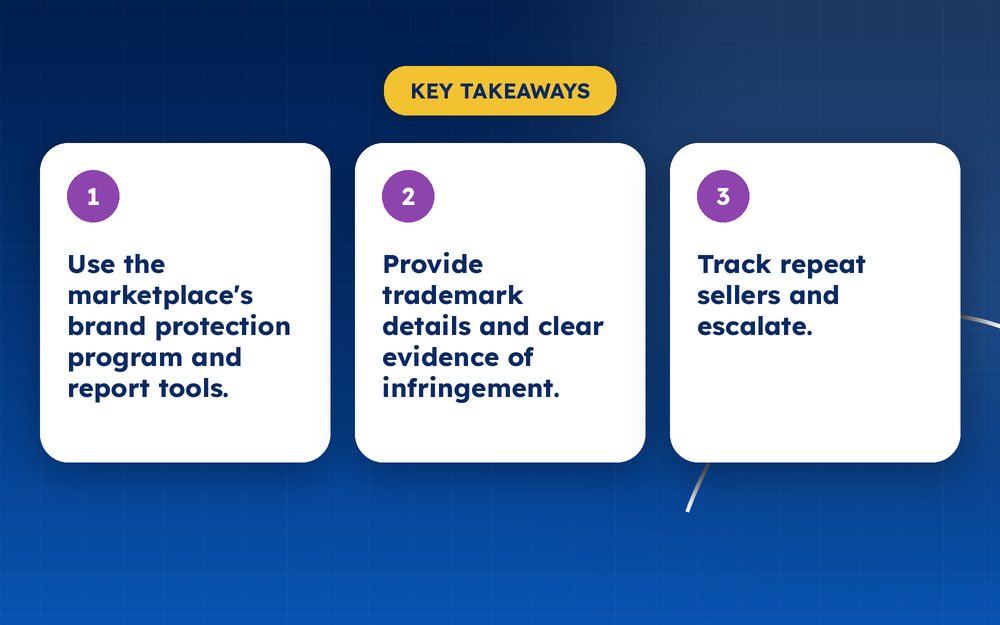
- Use the marketplace's brand protection program and report tools.
- Provide trademark details and clear evidence of infringement.
- Track repeat sellers and escalate.
What to do, step by step
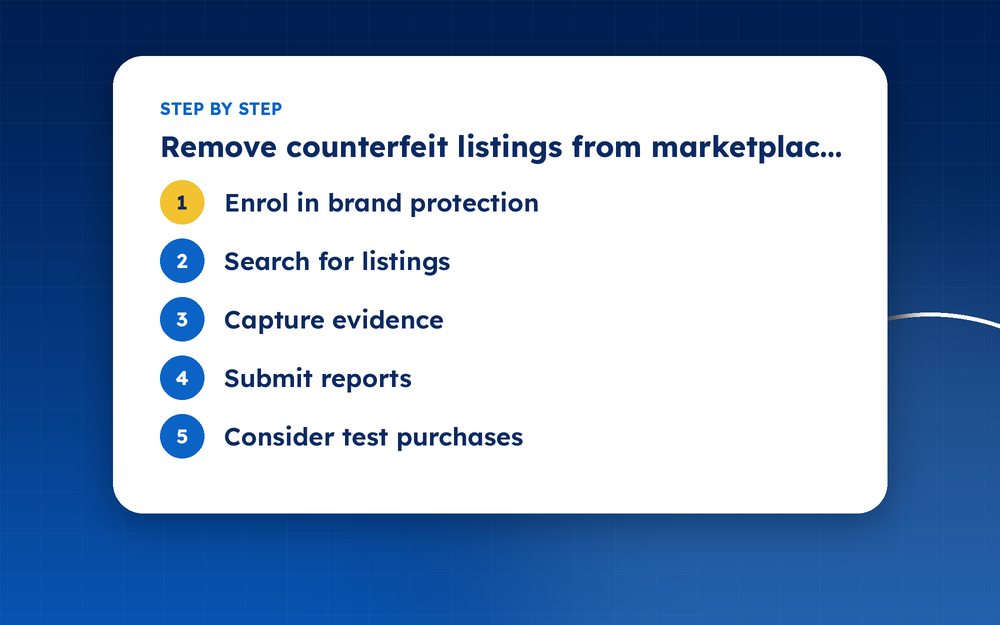
- Enrol in brand protectionApply for the marketplace's brand registry with your trademark details. Most large marketplaces offer programs for rights owners, with faster tools for reporting. They usually require a registered trademark or similar right.
- Search for listingsUse search tools to find fakes using your name or images. Search by product name, images and keywords, and across countries. Record seller names and listing links.
- Capture evidenceSave listing details, seller names and images. Save screenshots of listings, prices, seller details and customer reviews that mention fakes. Note dates.
- Submit reportsUse report forms with your rights and the listing details. Use the platform's report tool with exact links and a clear reason, such as trademark or copyright infringement. Keep the explanation short and factual.
- Consider test purchasesThese can confirm counterfeits, following the marketplace's rules. A test purchase can show that an item is counterfeit, and gives evidence. Some marketplaces accept test purchase evidence, but follow their rules.
- Track repeat sellersKeep a log and mention earlier reports. Sellers often return under new names. Track repeat sellers and include earlier reports in new ones.
- Seek legal advice for serious casesLarge operations may need action. For large-scale counterfeiting, a lawyer can advise on further steps, such as cease and desist letters or court orders.
Why registered trademarks matter
Most programs require a registered trademark, because it provides clear rights. If you do not have one, consider registering in key markets.
Evidence that helps
Clear photos, authenticity markers and comparison with your genuine products help reviewers. Keep it brief and precise.
Customer protection
Counterfeits can harm customers. Tell customers how to identify authorised sellers and report suspected fakes.
Beyond marketplaces
Counterfeits also appear on social media and standalone sites. Use notices to hosts and platforms for those.
What a typical case looks like
A cosmetics brand finds fake products at half price on a marketplace. It enrols its trademark in the platform's brand program, reports eight listings with links and photos, and buys one item to prove it is not genuine. The listings are removed within three days and the seller is warned. When the seller reappears under a new name, the team adds the earlier case reference and the listing is taken down faster.
The brand program and the test purchase gave its reports more weight.
Common mistakes to avoid
Do not report genuine resellers by mistake. Do not skip evidence. Do not ignore repeat sellers. And do not forget to update your authorised seller list.
How a specialist can help
A specialist team can monitor marketplaces, file reports and track repeat sellers. We are not a law firm and cannot give legal advice. Email us in confidence.
Frequently asked questions
Do I need a registered trademark?
Many brand programs require one, though copyright reports can sometimes be made without it. Check the platform's rules.
How fast are counterfeit listings removed?
Often within days, though it varies by platform and the strength of your report.
Should I buy a test item?
It can provide evidence, but follow platform rules and consider advice, especially for large purchases.
What if the seller comes back?
Track repeat sellers and cite earlier reports. Platforms may escalate against repeat infringers.
Can I warn customers?
Yes. Explain how to identify authorised sellers and how to report suspected fakes.
Is this legal advice?
No. It is general information. For enforcement or claims, speak to a qualified lawyer.
Need help with this?
Every situation is different. Email us the details in confidence and we will reply with an honest assessment of what can be done.
Contact us by email Brand infringement removalThis guide is general information, not legal advice. DMCA Reputation is not a law firm.
Related guides
How to Remove Fake Telegram Channels Using Your Name
How to remove fake Telegram channels using your name: report in app, email Telegram, document impersonation and warn your audience. A practical guide.
Read the guide · 3 min
How to Report a Fake WhatsApp Business Account
How to report a fake WhatsApp Business account: report in app, document the impersonation, warn customers and use official verification where available.
Read the guide · 3 min
How to Protect Your Brand From Fake Social Media Accounts
How to protect your brand from fake social media accounts: registration, verification, monitoring and a fast takedown process.
Read the guide · 3 min