
If a charge was dismissed, it can be painful to see it still shown online. Options include legal sealing, publisher updates and search requests, but results vary.
This page is general information, not legal advice. Whether court records can be sealed or expunged depends on the country, state and type of case. Many places have processes for dismissed or non-convicted cases, and some publishers have policies to update or anonymise stories.
Even after legal steps, copies of old coverage and records on aggregator sites can remain, so removal work is usually a combination of legal and online steps.
It is hard to see a charge that went nowhere still attached to your name. The most effective approach usually combines a legal route to seal or correct records with requests to publishers and search engines, and it helps to take the steps in order.
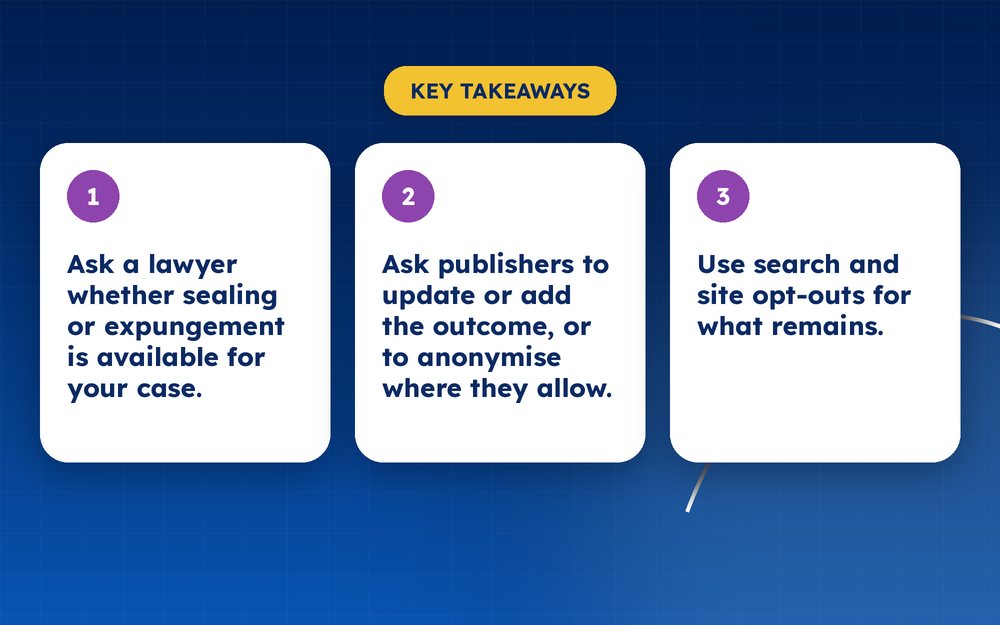
- Ask a lawyer whether sealing or expungement is available for your case.
- Ask publishers to update or add the outcome, or to anonymise where they allow.
- Use search and site opt-outs for what remains.
What to do, step by step
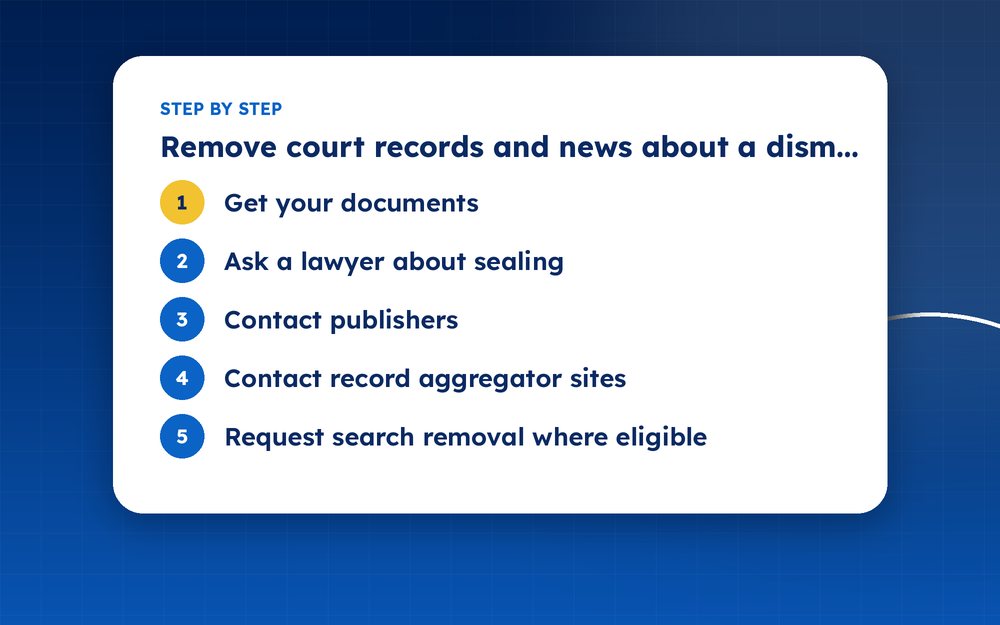
- Get your documentsObtain court records showing the dismissal. Obtain certified copies showing the dismissal or outcome. These documents support every later request.
- Ask a lawyer about sealingCheck eligibility and the process. Ask a lawyer where you live whether sealing, expungement or similar options exist, and what they involve. Rules vary widely.
- Contact publishersAsk them to update the story with the outcome, or consider their policy on removal. Send publishers a polite request with the documents, asking them to update, add the outcome or consider removal under their policy.
- Contact record aggregator sitesUse opt-out or removal procedures with your documents. Many aggregator sites republish records. Check their opt-out and removal processes and submit requests with evidence.
- Request search removal where eligibleSome search engines and laws allow delisting in limited cases. Ask search engines to remove results where local law or policy allows, for example under data protection rights or specific policies.
- Add the outcome yourselfPublish accurate information on your own channels. Publish a short factual note or profile that includes the outcome, so people searching see the full story.
- MonitorWatch for new copies. Search your name every month and act on new republishing.
Sealing and expungement
These legal processes can limit public access to records, though details vary and some records remain available to certain agencies. A lawyer can explain what applies to you.
Publishers' policies
Some news outlets have policies to update stories or consider removal in limited cases, especially when charges are dropped. Requests with documents and a polite tone are more likely to succeed.
Aggregator and mugshot sites
Many sites copy public records. Some remove them on request, others do not. Keep your documents ready, and escalate to hosts and search engines where grounds exist.
Data protection law
In some countries, data protection law supports delisting or erasure requests for outdated or irrelevant information. Check the rules where you live.
What a typical case looks like
A man whose charge was dismissed finds a local news story and two record sites still listing it. He obtains the court order, asks a lawyer about sealing and sends the news site a request to add an update. The site adds a line stating the charge was dismissed. One record site removes the page after seeing the order, while another ignores him. He then asks the search engine to remove the remaining page under local data protection law, and the request is accepted.
No single route solved it, but together they changed what people see.
Common mistakes to avoid
Do not pay for guaranteed removal. Do not ignore legal options. Do not lie about the outcome. And do not give up after one refusal.
How a specialist can help
A specialist team can contact sites, send requests and monitor, while your lawyer handles legal sealing. We are not a law firm and cannot give legal advice. Email us in confidence.
Frequently asked questions
Can a dismissed charge be removed from the internet?
Sometimes, through sealing, publisher updates and search removal, depending on where you live. Results vary, so a lawyer can explain the options.
Will news sites remove old stories?
Many refuse to delete, but some will add updates or anonymise in particular cases. Politely ask with documents.
What about mugshot and record sites?
Many have removal processes, and some require a court order. Check their policies.
Can search engines remove these results?
In some regions, data protection laws let you request delisting. Elsewhere, options are limited.
How long does it take?
It can take weeks to months, depending on the sites and the legal process.
Is this legal advice?
No. It is general information. For sealing or expungement, speak to a qualified lawyer.
Need help with this?
Every situation is different. Email us the details in confidence and we will reply with an honest assessment of what can be done.
Contact us by email Reputation recoveryThis guide is general information, not legal advice. DMCA Reputation is not a law firm.
Related guides

What to Do About Old News Stories That No Longer Reflect Reality
What to do about old news stories that no longer reflect reality: ask for updates, use right-to-be-forgotten routes where available and build context.
Read the guide · 3 min
Reputation Due Diligence: What Investors and Journalists Find
Reputation due diligence: what investors and journalists find when they search, how to run the same checks on yourself and how to prepare honest answers.
Read the guide · 4 min
How to Handle a Viral Negative Post About You or Your Business
How to handle a viral negative post about you or your business: first response, facts, communication and recovery.
Read the guide · 3 min