

Tube sites host huge amounts of pirated adult content, often reuploaded from paid platforms. Creators can use copyright takedowns, and many sites have dedicated forms.
Major tube sites often have a content removal or copyright form, and respond to valid notices. Smaller or less reputable ones may not, and need escalation.
Because videos are copied and re-titled, you will often be dealing with many uploads of the same file. A good record and a repeatable process make it manageable.
Tube sites range from cooperative to hostile. Those with proper processes remove content quickly, while others ignore requests, so having your evidence and a second route ready is important.
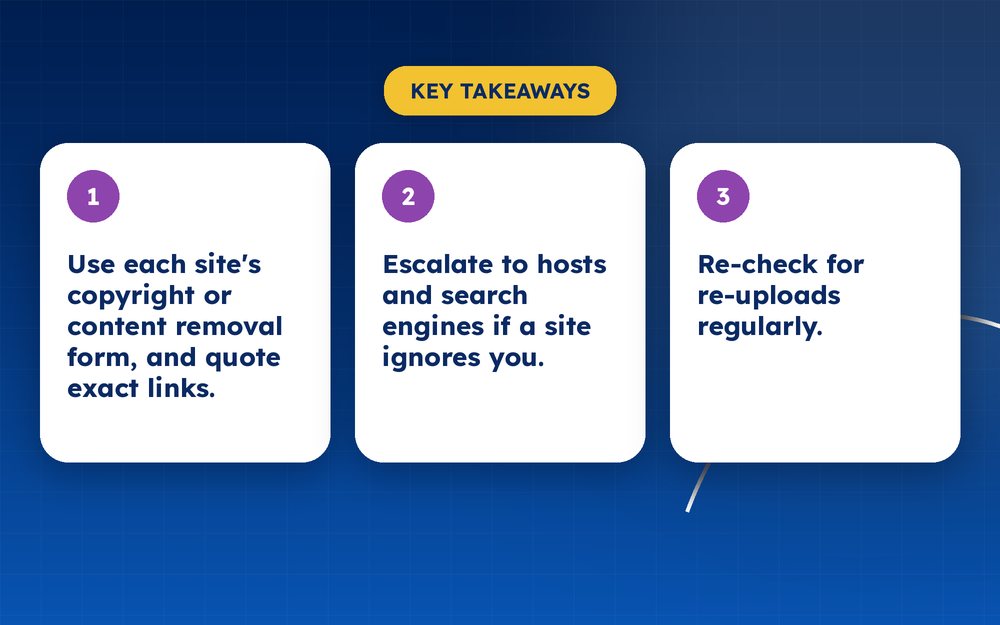
- Use each site's copyright or content removal form, and quote exact links.
- Escalate to hosts and search engines if a site ignores you.
- Re-check for re-uploads regularly.
How to remove your videos, step by step
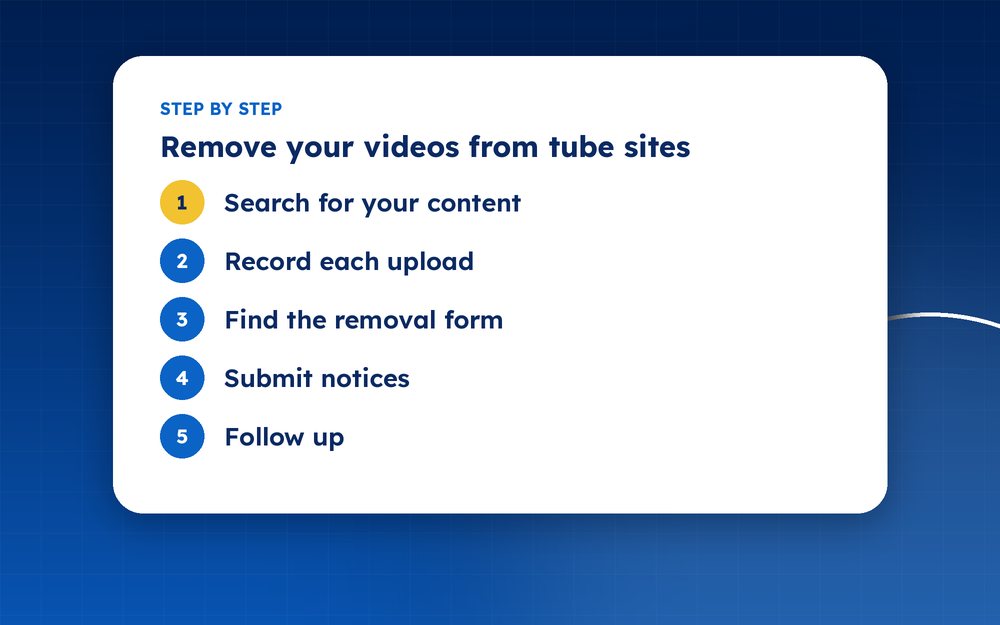
- Search for your contentSearch titles, stage names and handles on tube sites and in search. Search by your name, stage name, titles and distinctive details. Check several pages of results.
- Record each uploadSave links, titles and screenshots with dates. Record each upload with the link, title, date and screenshots. Keep a spreadsheet.
- Find the removal formLook for copyright, DMCA or content removal links on each site. Look for the site's copyright, content removal or abuse form. Many publish one.
- Submit noticesProvide your details, the original work and the infringing links, with required statements. Submit complete notices with your proof, exact links and the required statements. Keep copies.
- Follow upIf there is no response after a reasonable time, send a reminder and escalate to the host. Follow up after a few days, quoting the first notice, and then move to hosts and search engines if nothing happens.
- Ask search engines to remove linksSubmit copyright removal requests so uploads become harder to find. Submit the video pages to search engines, to reduce traffic.
- Monitor and repeatCheck weekly at first, then less often. Search monthly for new uploads, and repeat notices.
Why uploads multiply
Once a video is downloaded, many people can upload it with different titles and thumbnails. Some sites then mirror it. This is why searching by description and by your name matters, and why one removal rarely finishes the job.
Fingerprinting and content ID tools
Some larger sites offer fingerprint matching or verified uploader programs, which help block re-uploads. Ask whether the sites you deal with offer this, and apply if they do. Check eligibility and the requirements first.
Using non-consent routes too
If a video was recorded or uploaded without your agreement, you can also use the site's non-consensual content route. Use the right wording for each form, and keep your statements accurate.
Prioritising where to start
Start with the sites that appear highest in search results for your name, since they drive the most views. Then move to the sites that show the most uploads of your content. A small number of large sites usually accounts for most of the traffic.
Check whether the large sites offer verified creator or fingerprint programs. These can block known videos from being re-uploaded, which saves repeating notices. Apply if you qualify, and note that requirements and availability change over time.
Keep your notices consistent so that they can be processed quickly, and track the date of each. After removal, check search results again, because thumbnails can linger.
What a typical case looks like
A creator finds her videos on eight tube sites. Five have forms and remove the videos within a week after her notices. Three ignore her, so she notifies their hosts and submits the pages to search engines. A month later, two of the three are down, and one is still online but nearly invisible in search.
Combining routes gave a better result than relying on the sites.
Common mistakes to avoid
Do not reply to uploaders. Do not skip search removal. Do not forget to record each notice. And do not rely on a single sweep.
How a specialist can help
Tube site removals are high-volume work. A specialist team can run sweeps, send notices and monitor for new uploads. We cannot promise every upload will be removed, but we will be honest about what is realistic. Email us in confidence.
Frequently asked questions
Do tube sites remove stolen videos?
Many do after valid notices, though some ignore them.
What if the site does not respond?
Notify the host and search engines.
How long does it take?
From days to weeks.
Will videos reappear?
Often. Monitor regularly.
Should I use my real name in notices?
Notices may be shared. A representative can act for you.
Is this legal advice?
No. It is general information. For claims or court action, speak to a qualified lawyer.
Need help with this?
Every situation is different. Email us the details in confidence and we will reply with an honest assessment of what can be done.
Contact us by email OnlyFans leak removalThis guide is general information, not legal advice. DMCA Reputation is not a law firm.
Related guides
How to Report Someone Who Is Selling Your Content
How to report someone who is selling your content: gather evidence, report to the marketplace or platform, send copyright notices and cut off payment and promotion routes.
Read the guide · 4 min
How to Trace Who Leaked Your Content Using Watermarks
How to trace who leaked your content using watermarks: visible and invisible marks, per-subscriber tracking, limits, and what to do with the evidence you find.
Read the guide · 4 min
How to Remove OnlyFans Leaks From Google and Websites
How to remove OnlyFans leaks from Google and websites: DMCA notices, search removal, platform reports and monitoring for creators.
Read the guide · 4 min