
Reporting to the police is a personal choice. If you decide to do it, preparation helps: knowing what to bring and what to say can make the process less stressful.
Sharing intimate images without consent is a crime in many places, and police can sometimes act against the person responsible. A report also creates an official record that can support removal requests and any later legal steps.
You do not need to report before starting removal, and you do not have to decide today. If you do go ahead, here is how to prepare.
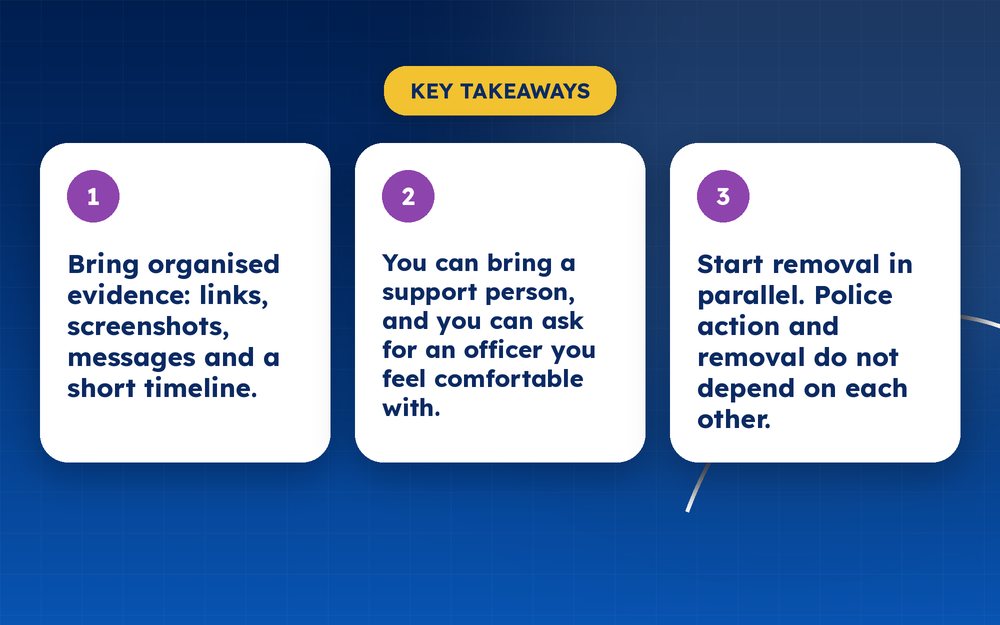
- Bring organised evidence: links, screenshots, messages and a short timeline.
- You can bring a support person, and you can ask for an officer you feel comfortable with.
- Start removal in parallel. Police action and removal do not depend on each other.
How to report, step by step
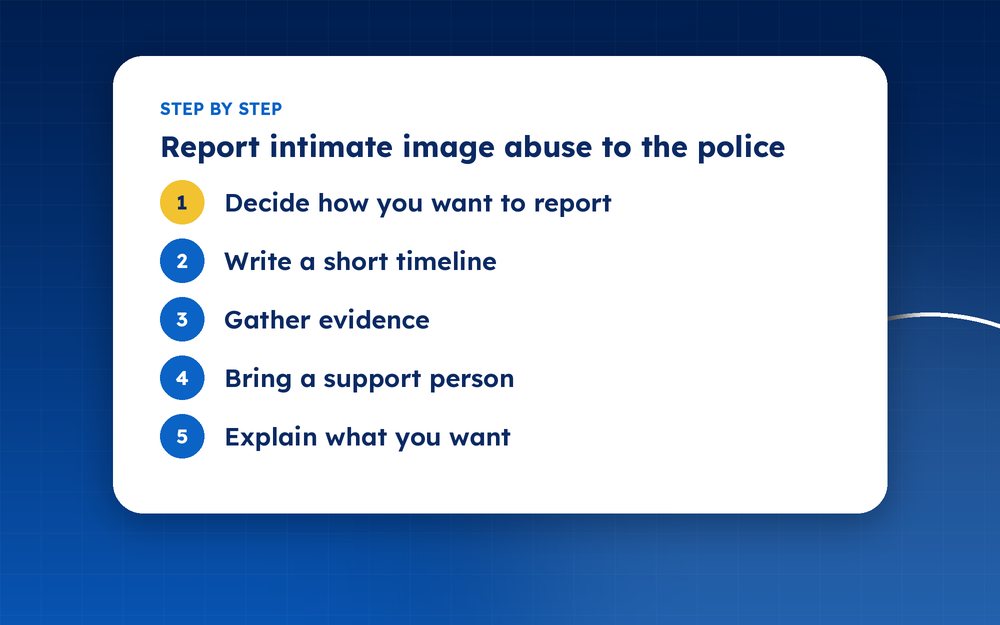
- Decide how you want to reportMany forces let you report online, by phone or in person. Choose what feels safest. You can report in person, by phone or online in many places. You can ask for a trained officer or a support person to be present.
- Write a short timelineNote what happened, when, who you think is responsible and how you found out. Write a short timeline: when you took or shared the image, what happened, when you found it and what you have done since.
- Gather evidenceBring screenshots with web addresses and dates, messages, usernames and any threats. Bring links, screenshots, messages, usernames and dates. Do not forward the images themselves unless asked.
- Bring a support personA friend or support worker can come with you or help you prepare. A friend, family member or support worker can come with you. Ask the station if there is a victim support service.
- Explain what you wantYou can say that you want the content removed, the person warned or prosecuted. Ask what is possible. Say whether you want removal, an investigation, a warning or all three. It helps officers understand your priorities.
- Ask for a reference numberKeep it, and note the officer's name. It helps with platforms and follow-up. Ask for a reference number and the name of the officer. Ask what will happen next.
- Continue with removalKeep reporting to platforms and search engines while the police process continues. Police processes can take time, so continue reporting to platforms and search engines.
What evidence to bring
Bring links to each page where the content appears and screenshots showing the date. Include messages from the person, or from anyone who threatened to share. Include account names and any information that helps identify who is responsible. Store copies securely and avoid sending explicit images by email.
If you are concerned about handing over images, ask the officer how evidence is handled. Many forces can take details without needing you to show the content again.
What to expect
Police may take a statement, ask about your relationship with the person and discuss next steps. Some cases lead to a warning or charge, others do not. Being clear about your wishes and asking questions about timing helps.
Processes differ by country and force, and outcomes cannot be guaranteed.
If you feel unsafe
Tell the officer about any threats or stalking and ask about protective measures. Victim support organisations can also help with practical safety planning.
After you have reported
Ask the officer how often you will be updated and who to contact with new information. If new copies appear, send them as additional evidence and quote your reference number. Keep a copy of your statement.
Police processes can be slow, and that is not a reason to stop removal work. Platform reports and search engine requests can continue while the case is open, and they often make the biggest day-to-day difference to how visible the content is.
What a typical case looks like
A woman decides to report after an ex-partner shares her images. She writes a one-page timeline, prints her screenshots and brings a friend. The officer takes her statement, gives her a reference number and explains what will follow. Meanwhile she reports to platforms, and the images are removed within a week.
Her preparation made the meeting shorter and clearer.
Common mistakes to avoid
Do not delete evidence before reporting. Do not confront the person first. Do not rely on memory alone. And do not feel you must decide everything at the first meeting.
How a specialist can help
Removing content while dealing with police can be draining. A discreet specialist team can handle searching, reporting and monitoring so you can focus on the police process and on yourself. We cannot promise results, but we will be honest about what is realistic. Email us in confidence.
Frequently asked questions
Do I have to report to the police?
No. It is your choice. Removal can go ahead without a police report.
Will the police see my images?
They may need some evidence, but you can ask how this is handled and bring links and screenshots in an organised way.
Can I report if I do not know who did it?
Yes. Police can sometimes find out who is responsible.
What if the police do not act?
You can ask for a review, speak to a victim support service and continue removal.
Does a police report help with removal?
It can support requests and show seriousness, but is not required by platforms.
Can I report on behalf of someone else?
Often you can pass on information, but the person shown may need to give a statement.
Need help with this?
Every situation is different. Email us the details in confidence and we will reply with an honest assessment of what can be done.
Contact us by email NCII removalThis guide is general information, not legal advice. DMCA Reputation is not a law firm.
Related guides
Can You Sue Someone for Sharing Your Intimate Images?
Can you sue someone for sharing your intimate images? A plain overview of civil and criminal options, what removal can do without court, and when to speak to a lawyer.
Read the guide · 4 min
How to Help a Friend Whose Intimate Images Were Leaked
How to help a friend whose intimate images were leaked: what to say, what not to do, how to help with reporting and removal, and how to look after yourself too.
Read the guide · 4 min
How to Remove Non-Consensual Intimate Images (NCII), Step by Step
How to remove non-consensual intimate images (NCII): reporting, StopNCII.org, Google removal, legal options and support. A step-by-step guide.
Read the guide · 4 min