
Removal work sometimes needs proof of identity or ownership, but you should share only what is necessary and know how it is handled.
Platforms may ask for proof that you are the person in an image or the owner of content. A provider acting for you may need some of this, but not everything.
Before sending anything, ask what is needed, why and how it will be stored and deleted. Be careful about sending explicit material, full identity documents or passwords.
The safest mindset is to share in stages. Begin with links and a short description, then add more only when there is a clear reason. A trustworthy provider will never be offended by this.
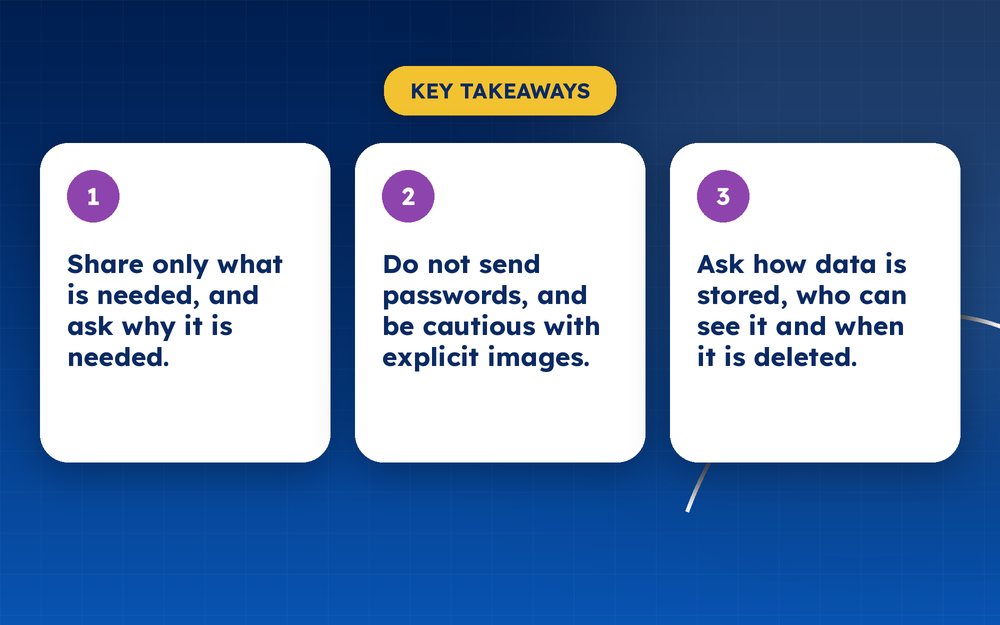
- Share only what is needed, and ask why it is needed.
- Do not send passwords, and be cautious with explicit images.
- Ask how data is stored, who can see it and when it is deleted.
How to protect yourself, step by step
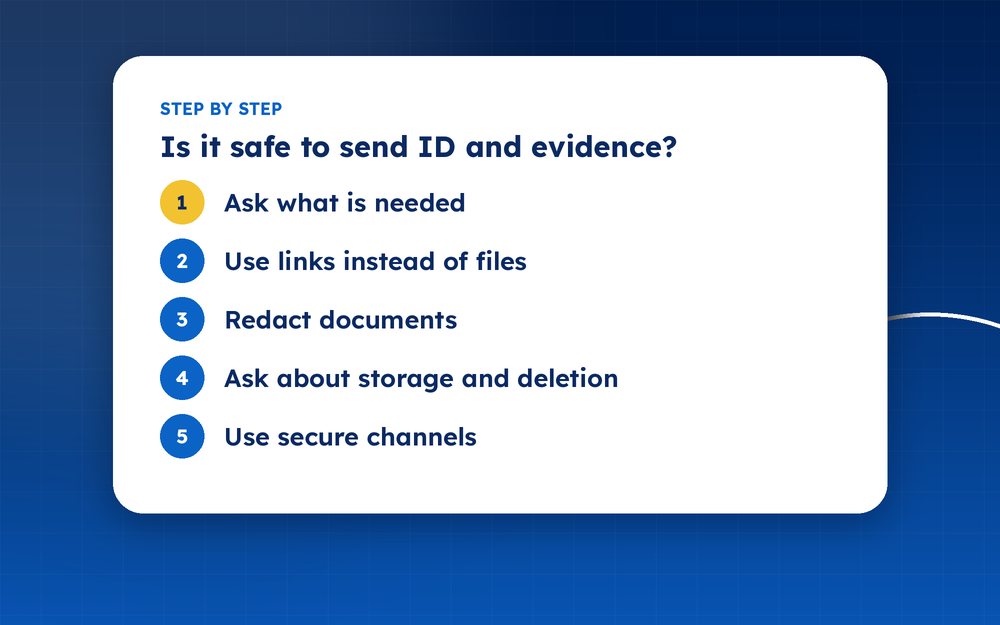
- Ask what is neededRequest a list of required documents and reasons. Ask for a short list of what is required and why each item matters. If the reason is unclear, ask again before sending.
- Use links instead of filesWhere possible, send links and descriptions rather than explicit content. Links and a short description are often enough for the provider to assess your case. You can describe what a file shows without sending it.
- Redact documentsCover details not needed, such as document numbers, when allowed. If a platform requires ID, you can often cover the document number, address or other details that are not needed. Ask the provider what is acceptable first.
- Ask about storage and deletionHow is data stored, who has access and when is it deleted? Ask where the data is stored, who can access it, whether anyone outside the company sees it and when it is deleted. Write down the answers.
- Use secure channelsShare through encrypted or secure methods. Use secure upload links or encrypted tools provided by the provider, rather than sending sensitive files by ordinary email or messaging apps.
- Never share passwordsA provider should not need your account passwords. A provider acting for you does not need to log in as you. Sharing passwords gives them, and anyone who gets them, access to far more than needed.
- Keep a recordNote what you sent and when. Keep a note of what you sent, when and to whom. If you ever need the provider to delete it, this makes the request simple.
When ID is genuinely needed
Some platforms require identity proof for certain reports, for example to confirm you are the person shown. Providers may help you prepare it, but you should limit sharing.
Explicit material
A professional can often work from links and descriptions, without you sending explicit content. If material must be shared, ask about handling and deletion.
Questions about privacy
Ask where data is stored, who can access it, whether it is shared with third parties and how long it is kept. A reputable provider will answer clearly.
When to say no
If a provider demands more than seems necessary, pushes you to send sensitive material at once or cannot explain its practices, pause and reconsider.
What a typical case looks like
A person asks a provider to remove private images from several sites. The provider asks for links, not the images. When one platform insists on proof of identity, the provider explains what is needed and suggests covering the document number and address. The person sends the redacted copy through a secure link, and asks for deletion once the case is closed. The provider confirms deletion in writing.
At no stage did the person have to send more than the task required.
Common mistakes to avoid
Do not send unredacted documents by default. Do not share passwords. Do not use insecure channels. And do not ignore data handling terms.
How a specialist can help
We work from links and descriptions wherever possible, and ask only for what is needed. Email us in confidence, and we will explain what we need and why.
Frequently asked questions
Do I always need to send my ID?
No. It is only needed when a platform requires it for a specific report. Ask the provider what is needed and why before sending anything.
Can I cover parts of my ID?
Often yes, but the platform may need certain details. The provider can tell you what can be covered.
Should I send explicit images?
Usually not. Links and descriptions are often enough, and sending the images again increases the risk of them spreading.
How long should a provider keep my data?
Only as long as needed for the work, plus any period required by law. Ask for their retention and deletion policy.
Should I ever share passwords?
No. A legitimate provider does not need your passwords to submit notices or reports.
Is this legal advice?
No. It is general information. For data protection concerns, speak to a qualified lawyer.
Need help with this?
Every situation is different. Email us the details in confidence and we will reply with an honest assessment of what can be done.
Contact us by email How it worksThis guide is general information, not legal advice. DMCA Reputation is not a law firm.
Related guides
What Evidence to Gather Before You Contact a Removal Service
What evidence to gather before you contact a removal service: links, screenshots, dates, proof of ownership and a short timeline, to speed up the assessment.
Read the guide · 3 min
10 Questions to Ask Before You Hire a Content Removal Company
10 questions to ask before you hire a content removal company: methods, results, reporting, confidentiality, fees and what happens when content returns.
Read the guide · 4 min
How Much Does Review or Content Removal Cost?
How much does review or content removal cost? What drives the price, how providers charge and questions to ask before hiring.
Read the guide · 3 min