
Having your home address posted online can feel frightening. Your first priority is safety, then evidence, then removal.
Posting someone's home address to encourage harassment is called doxxing. Platforms and search engines treat it seriously, especially when there is a risk of harm.
If you feel unsafe, contact the police first. Removal can happen alongside.
It helps to know that your address is often findable for ordinary reasons, such as property records, old directory listings or data brokers. Doxxing is different because someone has gathered it and published it on purpose, usually alongside a call for others to act. Platforms judge it by that intent, so your report should describe the harm and not just the fact that the address exists.
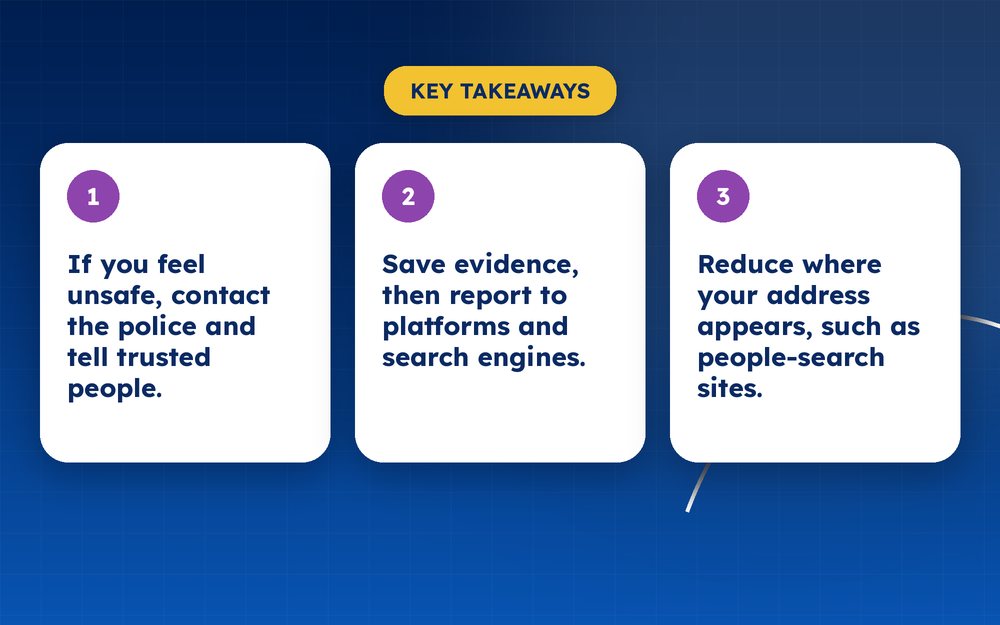
- If you feel unsafe, contact the police and tell trusted people.
- Save evidence, then report to platforms and search engines.
- Reduce where your address appears, such as people-search sites.
What to do, step by step
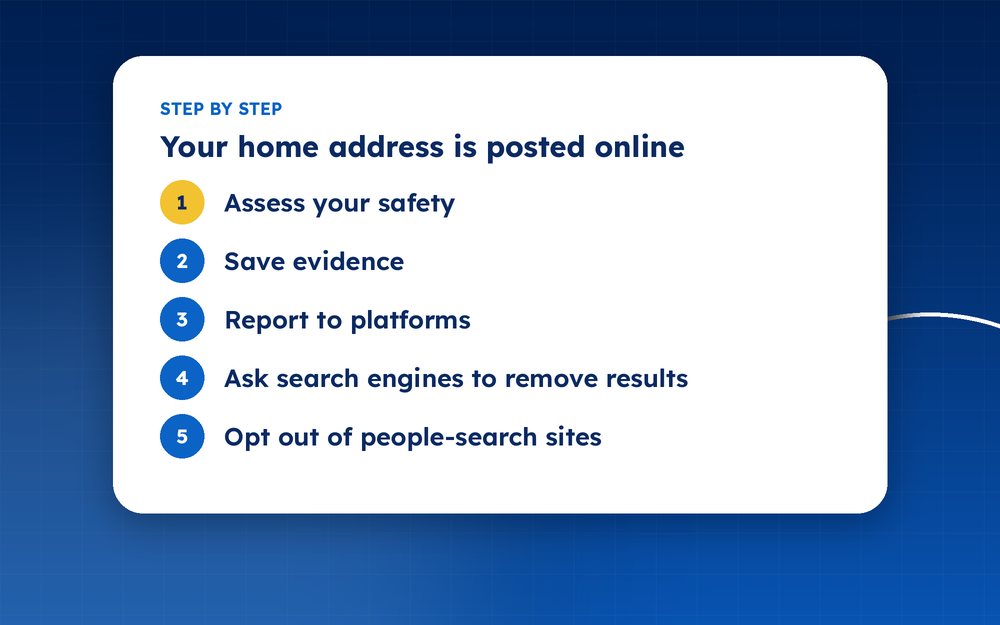
- Assess your safetyIf there are threats, call emergency services and consider staying elsewhere. Ask yourself whether anyone has threatened you, turned up at your door or named a time or place. If so, treat it as urgent, call the police and tell them the post exists. If you are unsure, tell someone you trust and decide together whether to stay elsewhere for a few nights.
- Save evidenceCapture posts, links, accounts and dates. Take a full screenshot showing the address, the username, the date and the web address in the browser bar. Copy the link into a note. Do this for every copy, including replies and reposts, because the original may be deleted before a platform reviews it.
- Report to platformsUse report options for private information and harassment. Most platforms have a category for sharing private information or for harassment. Say plainly that this is your home address, that it was posted without your consent and that you fear for your safety. Short, factual reports are reviewed faster than long, emotional ones.
- Ask search engines to remove resultsUse forms for personal contact information. Google lets you request removal of results that show personal contact details, including your address, especially where the aim is to harass. Give the exact result links and, if asked, explain how the page exposes you. Removal from search does not delete the page, but it cuts how easily people find it.
- Opt out of people-search sitesRemove your address from data brokers. Search your name and address on people-search and data broker sites. Most have an opt-out page. It is tedious and the listings can come back, so note which sites you cleared and check again every few months.
- Tell trusted peopleAsk neighbours, family and employers to watch for threats. Let a neighbour, a family member and your workplace know what has happened, and ask them not to confirm your details to anyone who asks. This also gives you witnesses if something happens.
- Document harassmentKeep a log of incidents for police and courts. Keep a simple log with date, time, what happened and what you did. A police officer, an insurer or a court will find a clear timeline far more useful than scattered screenshots.
When to involve the police
If there are threats, stalking or people arriving at your home, report to the police and ask about protective measures. Provide your evidence log.
Reducing exposure
Opt out of people-search sites, tighten privacy settings and avoid sharing your address on forms and registrations. Consider mail forwarding or a mailbox for public use.
Reporting to platforms
Say that the post reveals your home address and puts you at risk. Many platforms act quickly on doxxing, and repeat posters can be banned.
Looking after yourself
Doxxing is stressful. Ask someone to help monitor and report, and talk to a counsellor or support service if you need support.
What a typical case looks like
Imagine someone is named in an angry forum thread after a dispute. A user posts her street name and house number and writes that people should go and "have a word". She saves screenshots, reports the post as sharing private information, and reports the account. The forum removes the post within a day and suspends the user. She then asks Google to remove two search results that copied the address, and opts out of three data broker sites. Over the next month she checks her name and address weekly, and finds one reposted copy on a different site, which she reports the same way.
The lesson is that the first removal is rarely the last step. Copies appear, so a short routine of checking for a few weeks matters as much as the first report.
Why addresses keep reappearing
An address often sits in several places at once: public records, old accounts, delivery services and data brokers. Even after one post comes down, another site can republish it from the same source. Reducing the sources is the long-term fix, and reports deal with the visible posts. Doing both is what keeps the problem from returning.
Common mistakes to avoid
Do not confront the poster. Do not delete evidence. Do not ignore threats. And do not assume removal alone is enough.
How a specialist can help
A specialist team can find posts, report them and monitor for new ones. We cannot promise every copy will be removed, but we will be honest about what is realistic. Email us in confidence.
Frequently asked questions
Is posting someone's home address illegal?
In many places it can be, particularly where it is used to threaten, stalk or harass. Laws differ by country and region, and some places have specific doxxing offences. If you feel unsafe, report it to the police and let them advise on the local law.
Will platforms really remove it?
Most major platforms prohibit publishing private home addresses and often act within a day or two, especially when you explain the safety risk. Smaller or unmoderated forums can be slower or ignore reports, which is where search removal and hosting reports come in.
Can Google remove my address from results?
Google has a process for removing results that expose personal contact information, mainly where there is intent to harass. It can take several days and does not delete the original page, but it makes the page much harder to find.
Should I move house?
That is a personal decision and depends on the level of threat. Talk to the police and a support organisation about the risk before making a big change. Many people stay while they tighten privacy, get the posts removed and keep a record.
How do I stop my address being posted again?
You cannot control everyone, but you can shrink the supply. Opt out of data brokers, use a mailbox or business address for public registrations where allowed, and check your name and address in search regularly. Early reports stop reposts spreading.
Is this legal advice?
No. This is general information to help you act quickly. For threats, protective orders or claims against the person responsible, speak to the police and a qualified lawyer.
Need help with this?
Every situation is different. Email us the details in confidence and we will reply with an honest assessment of what can be done.
Contact us by email Harassment and doxxing responseThis guide is general information, not legal advice. DMCA Reputation is not a law firm.
Related guides
What to Do If an Ex Is Posting About You Online
What to do if an ex is posting about you online: save evidence, report harassment, protect your accounts, consider legal and police options and look after yourself.
Read the guide · 5 min
What to Do When a Group Chat or Forum Is Targeting You
What to do when a group chat or forum is targeting you: document the harassment, report to platforms and moderators, protect your privacy and seek support.
Read the guide · 5 min
What to Do When You Are Doxxed: A Step-by-Step Guide
What to do when you are doxxed: safety steps, removing personal information, reporting, securing accounts and getting support.
Read the guide · 4 min