
A leak of internal documents can expose confidential information and personal data. Fast containment, careful assessment and coordinated communication limit the damage.
Leaks come from insiders, hacks or mistakes. The right response combines security, legal, communications and removal efforts.
This is general information, not legal advice. Notification duties for personal data breaches vary by country, so get advice quickly.
A leak is both a security incident and a communications problem. Handle them together, with a small group that has authority to act, and keep a written record of decisions.
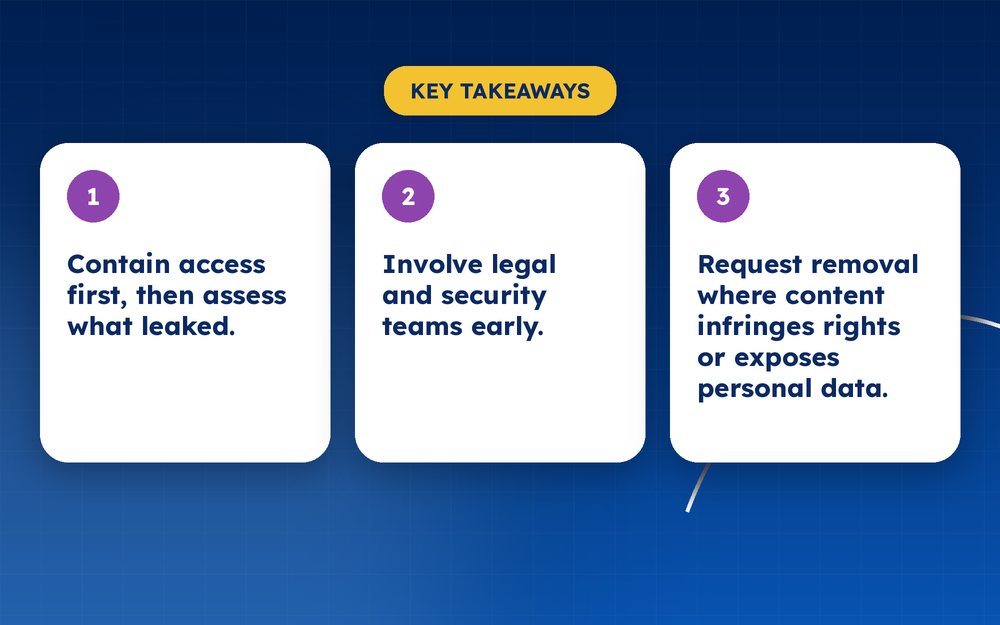
- Contain access first, then assess what leaked.
- Involve legal and security teams early.
- Request removal where content infringes rights or exposes personal data.
What to do, step by step
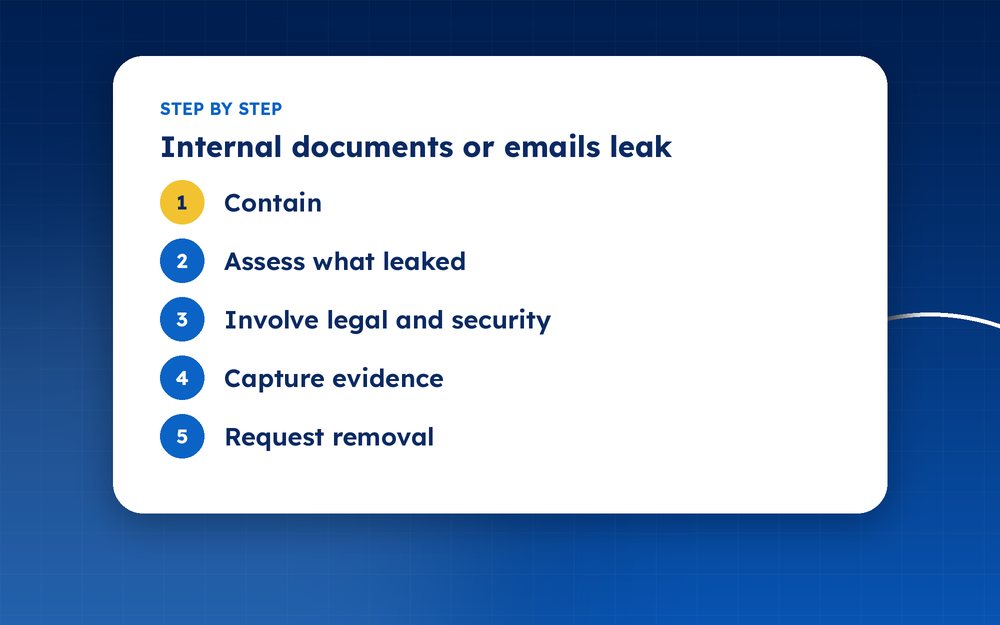
- ContainRevoke access, change credentials and secure systems. Work out how the leak is happening and stop it if you can, for example by changing access, locking accounts and limiting who can see the material.
- Assess what leakedIdentify documents, data subjects and where they appear. Identify what leaked, who it affects and whether it contains personal data, trade secrets or legal material. This determines your obligations.
- Involve legal and securityGet advice on notification duties and privilege. Bring in your legal counsel and security team early. They can advise on duties to notify regulators or people affected.
- Capture evidenceSave links, screenshots and dates. Save copies of where the material appears, with links and dates, before requesting removal.
- Request removalSend notices to hosts and platforms under copyright, confidentiality and privacy grounds where they apply. Request removal from hosts, platforms and search engines, using privacy, copyright or confidentiality grounds where they apply.
- Notify those affectedFollow legal duties and inform people at risk. Tell affected people promptly and clearly, with advice on what to do. Delays make things worse.
- Plan communicationsPrepare statements for staff, customers and media. Prepare a short statement, a Q&A and a list of who speaks to whom. Keep staff informed.
Grounds for removal
Copyright may apply to internal documents, and platforms may act on private data or personal information. Confidentiality claims are legal in nature, so a lawyer can advise on the strongest basis.
Search and media
If leaked documents appear in search or news, request removal where eligible and prepare to address coverage. Do not assume removal is possible for everything.
Investigating the source
Work with legal counsel on any investigation. Informal accusations can create legal risk.
Learning from it
After the incident, review access controls, training and monitoring.
What a typical case looks like
A company discovers that a spreadsheet with customer names has been posted on a forum. The security lead disables the shared link, legal confirms what notifications are required and the team records each place the file appears. They send takedown requests to the forum and to the file host, and ask search engines to remove the links. Affected customers receive a clear message with advice. Later, the review shows a misconfigured sharing setting, which is fixed.
The calm sequence of containing, assessing, removing and informing limited the damage.
Common mistakes to avoid
Do not delay containment. Do not accuse without evidence. Do not ignore notification duties. And do not communicate without legal review.
How a specialist can help
A specialist team can find copies of leaked material and handle takedowns and monitoring while your legal and security teams lead the response. We are not a law firm and cannot give legal advice. Email us in confidence.
Frequently asked questions
Can leaked documents be removed from the internet?
Often partly. Hosts and search engines may remove personal data and confidential material on valid grounds, but copies may remain. Quick action limits spread.
Do I have to notify people?
Depends on the type of data and local law. Ask your legal counsel quickly.
Should I tell the media?
Only with a plan. A short, accurate statement is better than silence if the story will emerge.
Can I find out who leaked it?
Sometimes, through access logs and an investigation, which should be handled by security and legal teams carefully.
How do I prevent another leak?
Review access, train staff and limit sensitive sharing. Learn from the incident.
Is this legal advice?
No. It is general information. For notification duties, speak to a qualified lawyer.
Need help with this?
Every situation is different. Email us the details in confidence and we will reply with an honest assessment of what can be done.
Contact us by email Reputation recoveryThis guide is general information, not legal advice. DMCA Reputation is not a law firm.
Related guides
How to Handle a Former Employee Posting Damaging Claims
How to handle a former employee posting damaging claims: stay calm, review facts and contracts, report policy breaches, respond carefully and take advice. General information.
Read the guide · 3 min
How to Clean Up Your Search Results Before a Job Search
How to clean up your search results before a job search: audit what appears, remove or fix content, build professional profiles and manage social media.
Read the guide · 3 min
How to Handle a Viral Negative Post About You or Your Business
How to handle a viral negative post about you or your business: first response, facts, communication and recovery.
Read the guide · 3 min