
Creators are often frustrated when they remove a leak and see it return a week later. It is not a sign that the work failed. It is how leaked content behaves, and it can be managed.
Once a file leaves your control, anyone with a copy can upload it again. Many sites also copy each other automatically, and search engines can show old results for a while. That is why removal is a process with a routine, not a one-off event.
The goal is to shorten how long each copy stays online, reduce how often it gets uploaded and cut the traffic that leak sites receive.
Content returns because there are many copies, many uploaders and many sites that scrape each other. The fix is not one big removal but a routine that keeps visibility low.
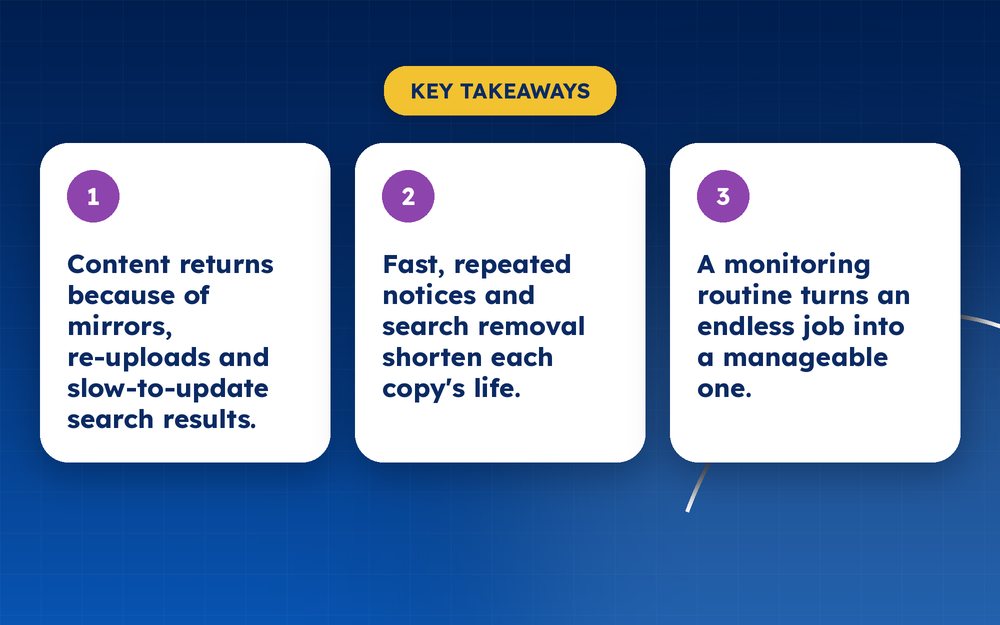
- Content returns because of mirrors, re-uploads and slow-to-update search results.
- Fast, repeated notices and search removal shorten each copy's life.
- A monitoring routine turns an endless job into a manageable one.
How to reduce the return, step by step
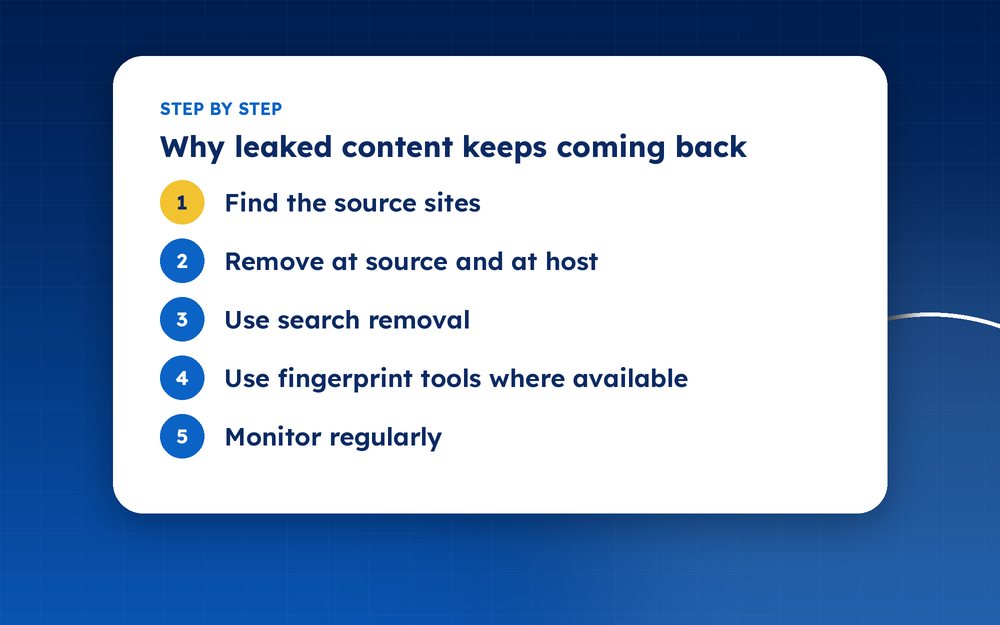
- Find the source sitesIdentify which sites and channels feed copies to others, and prioritise them. Work out which sites seem to be the origin or hubs. Removing a hub reduces reposts across many sites.
- Remove at source and at hostSend notices to the site and to its host, so that mirrors lose their supply. Send notices to the site and to its host and network, so that the source is dealt with properly.
- Use search removalSubmit link removal requests to Google and Bing for every copy. Submit links to search engines, so even reposted pages are hard to find.
- Use fingerprint tools where availablePlatforms with content matching can block known files from being re-uploaded. Some services use fingerprints to block known content on participating platforms. Use them where available.
- Monitor regularlyCheck weekly at first, then monthly. Use alerts for your name and handles. Search weekly at first, then monthly. Note when and where reposts appear.
- Quote your historyWhen copies return, reference your earlier notices to show repeat infringement. Reference earlier notices when reporting repeat content. It helps reviewers act faster.
- Tighten your sideReview account security and how content is shared, to prevent new leaks. Review your own accounts, devices and sharing to check where leaks begin.
The role of mirrors and scrapers
Automated scrapers copy content from popular sites to other sites without anyone choosing to. A takedown on one site may be followed by a new copy from a scraper that visited before the takedown. Notices to the scraper hosts and search removal help break the chain.
Why search results matter most
Many viewers find leaks through search. If search no longer shows the pages, traffic falls even if some copies remain. That is why search removal is one of the most valuable steps, and why regular resubmission of new pages matters.
Setting realistic expectations
No honest provider can promise that content will never reappear. A realistic goal is that most copies are removed quickly and that the rest receive little traffic. Many creators see leaks fall to a trickle after a couple of months of steady work.
What a typical case looks like
A creator removes content from five sites, but copies keep appearing. She finds that most come from one forum that feeds the rest. She targets the forum's host, uses a fingerprint tool for her content and submits links to search engines. Reposts become rarer and her weekly checks take less time.
Targeting the hub rather than each copy changed the pattern.
Common mistakes to avoid
Do not stop checking after one success. Do not skip hosts. Do not ignore small sites. And do not feel it is your fault when copies reappear.
How a specialist can help
Monitoring and re-reporting is the part most creators find draining. A specialist team can run it on a routine basis and keep you informed. We cannot promise content will never reappear, but we will be honest about what is realistic. Email us in confidence.
Frequently asked questions
Why does leaked content keep coming back?
Because copies are shared and scraped across many sites, and uploaders repost.
Can it be stopped completely?
Not completely, but you can reduce it a lot with a routine.
What is a fingerprint tool?
A tool that creates a digital signature of content so participating platforms can block matches.
How often should I search?
Weekly at first, then monthly.
Does it help to cite earlier notices?
Yes. It shows a pattern and can speed action.
Is this legal advice?
No. It is general information. For claims or court action, speak to a qualified lawyer.
Need help with this?
Every situation is different. Email us the details in confidence and we will reply with an honest assessment of what can be done.
Contact us by email OnlyFans leak removalThis guide is general information, not legal advice. DMCA Reputation is not a law firm.
Related guides
Leak Removal Service or DIY: How Creators Decide
Leak removal service or DIY? How creators decide: time, emotional cost, volume, skills needed, what a service can and cannot do and questions to ask before hiring.
Read the guide · 4 min
What to Do If Your Agency or Manager Leaked Your Content
What to do if your agency or manager leaked your content: secure evidence, remove copies, change access, review contracts and speak to a lawyer about your options.
Read the guide · 3 min
How to Remove OnlyFans Leaks From Google and Websites
How to remove OnlyFans leaks from Google and websites: DMCA notices, search removal, platform reports and monitoring for creators.
Read the guide · 4 min