
Legal claims have time limits, and they differ by country, state and type of claim. Defamation limits are often short, so waiting can cost you options.
This page is general information, not legal advice. Time limits, sometimes called limitation periods, set how long after an event you can start a legal claim. After the period ends, a court may refuse to hear it.
Defamation limits are often one to a few years, and in some places shorter, while copyright limits are commonly longer, such as three years in the US from when a claim accrues. Rules differ and have exceptions, so ask a lawyer about your case.
Time limits are often short and vary widely, from months to several years. The safest approach is to treat any claim as time sensitive and speak to a lawyer early, even if you plan to start with simple removal requests.
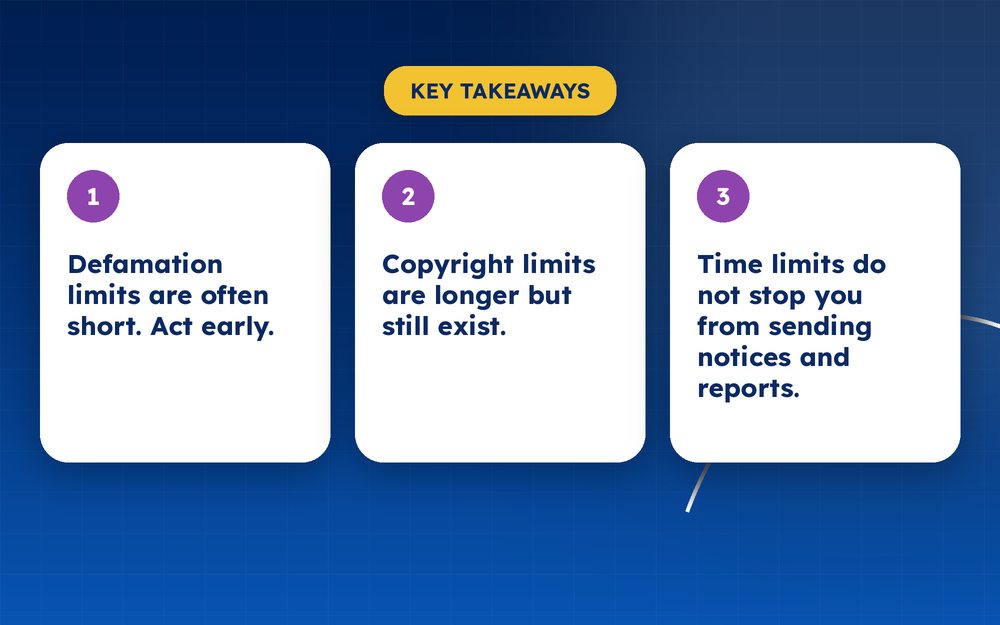
- Defamation limits are often short. Act early.
- Copyright limits are longer but still exist.
- Time limits do not stop you from sending notices and reports.
What to do, step by step
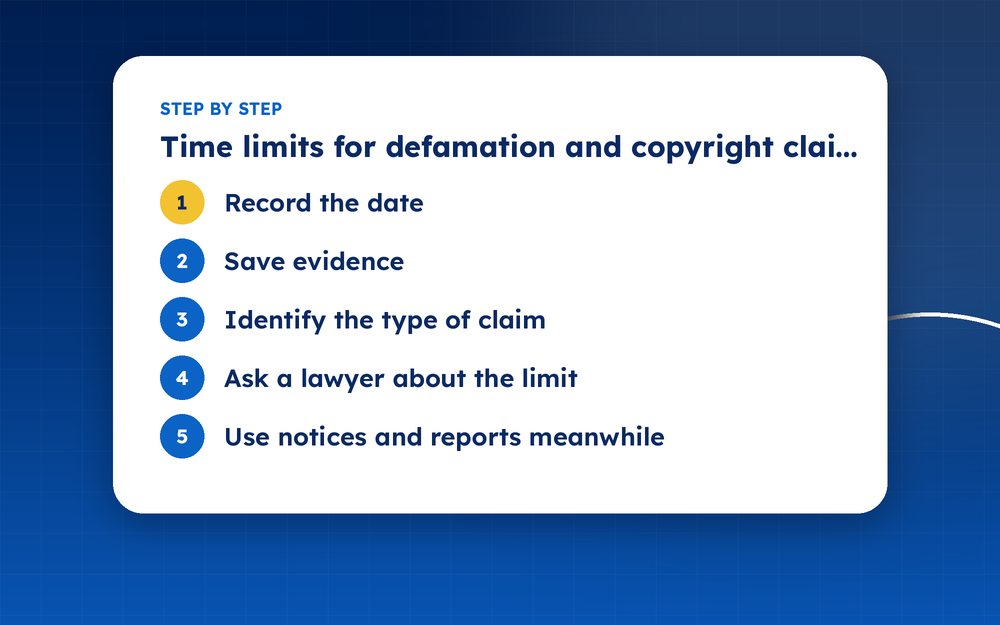
- Record the dateNote when the content was published and when you found it. Write down when the content was first published and when you found it. These dates may matter.
- Save evidenceCapture the content and any republishing. Save the content and proof of the date, such as archives or screenshots. Do this before it changes.
- Identify the type of claimDefamation, copyright, privacy or another. Time limits depend on the type of claim, such as defamation or copyright, and on the country or state.
- Ask a lawyer about the limitCheck the limit for your location and claim. A lawyer can tell you the limit for your claim and whether it can be extended or restarted by republication.
- Use notices and reports meanwhileThese do not depend on legal time limits. Reports and notices can usually be sent at any time, and they do not stop a legal time limit from running.
- Track republicationNew publications can sometimes restart or affect limits. Republishing or new posts may start new periods in some places. Keep track of when and where content reappears.
- Act before the deadlineDecide in good time. If you may want to bring a claim, make the decision early, because acting late can end your options.
Why limits vary
Countries and states set their own rules. Some count from publication, others from discovery. Online content that stays up, or is republished, can raise questions about when the period starts. A lawyer can explain the rules for your place.
Copyright and ongoing infringement
In copyright, each act of infringement can matter, and ongoing infringement may allow claims for recent acts. Details vary, so check locally.
Why early action helps
Evidence disappears, people forget and sites change. Acting early preserves options and often makes removal easier.
Removal does not need a lawsuit
Platform reports, notices and search requests have no legal limitation period, though platforms may be less responsive to old content. Do not assume you are too late for removal.
What a typical case looks like
A person finds a false article that has been online for eight months. She saves it, writes down the dates and speaks to a lawyer. The lawyer explains the time limit in her region and advises on whether a claim is realistic. Meanwhile she sends reports to the platform and publishes a correction, which reduces the impact.
Because she asked early, she kept her options open.
Common mistakes to avoid
Do not wait to see if it goes away. Do not rely on general internet advice for limits. Do not forget to record dates. And do not skip legal advice for serious cases.
How a specialist can help
A specialist team can start removal right away and keep dated records that support any legal step. We are not a law firm and cannot give legal advice. Email us in confidence.
Frequently asked questions
How long do I have to sue for defamation?
It varies by country and can be short. A lawyer can tell you the limit for your case.
Is there a time limit for copyright claims?
Yes, usually longer than for defamation, but it varies by place.
Does a takedown request stop the clock?
No. Notices do not usually pause legal time limits.
Does republication restart the clock?
In some places it can. A lawyer can explain.
What should I do first?
Save evidence, note dates and get advice early.
Is this legal advice?
No. It is general information, and laws differ by country. For advice on your situation, speak to a qualified lawyer.
Need help with this?
Every situation is different. Email us the details in confidence and we will reply with an honest assessment of what can be done.
Contact us by email DMCA takedown serviceThis guide is general information, not legal advice. DMCA Reputation is not a law firm.
Related guides
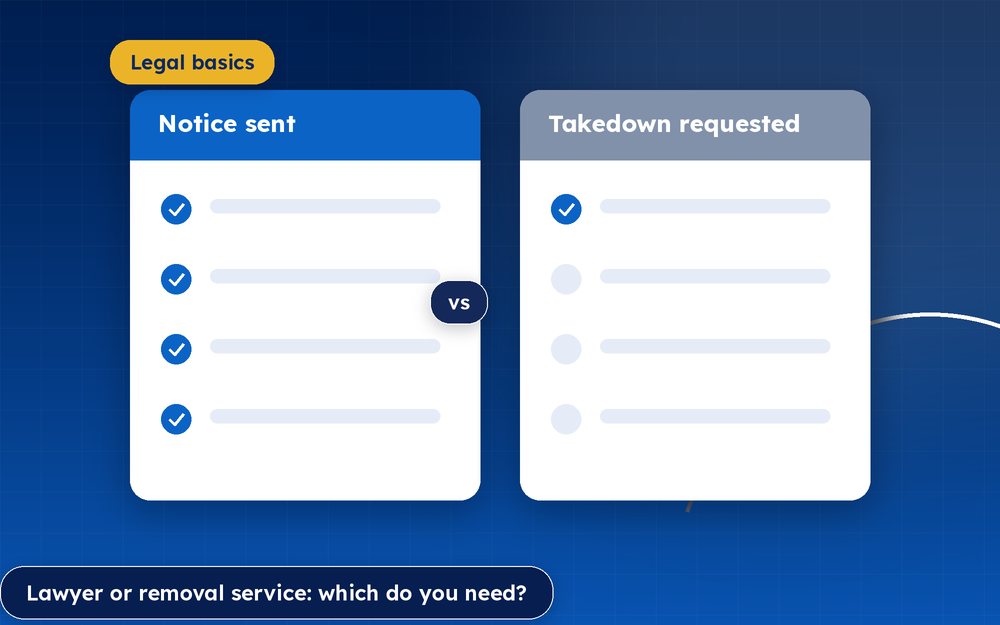
When to Hire a Lawyer and When a Removal Service Is Enough
When to hire a lawyer and when a removal service is enough: what each can do, typical cases for each and how they can work together. General information.
Read the guide · 4 min
What to Do If a Hosting Company Ignores Your Takedown Request
What to do if a hosting company ignores your takedown request: check your notice, follow up, escalate to upstream providers, use search removal and consider legal advice.
Read the guide · 3 min
How to Send a DMCA Takedown Notice (With Template)
How to send a DMCA takedown notice: what to include, who to send it to, a free template, counter-notices and common mistakes.
Read the guide · 5 min