
If your content was removed after a DMCA notice and you believe it was a mistake, you can send a counter-notice. It is a legal step with consequences, so understand it before you act.
This page is general information, not legal advice. A DMCA counter-notice is a statement made under penalty of perjury that content was removed by mistake or misidentification. If the host receives a valid counter-notice, it may restore the content after a waiting period unless the complainant starts legal action.
Counter-notices also share your contact details with the complainant, so think carefully before sending one, and consider advice from a lawyer.
A counter-notice is a formal statement made under penalty of perjury, so it is not something to send in anger or haste. Read it as a legal document and decide calmly whether you truly have the right to the content.
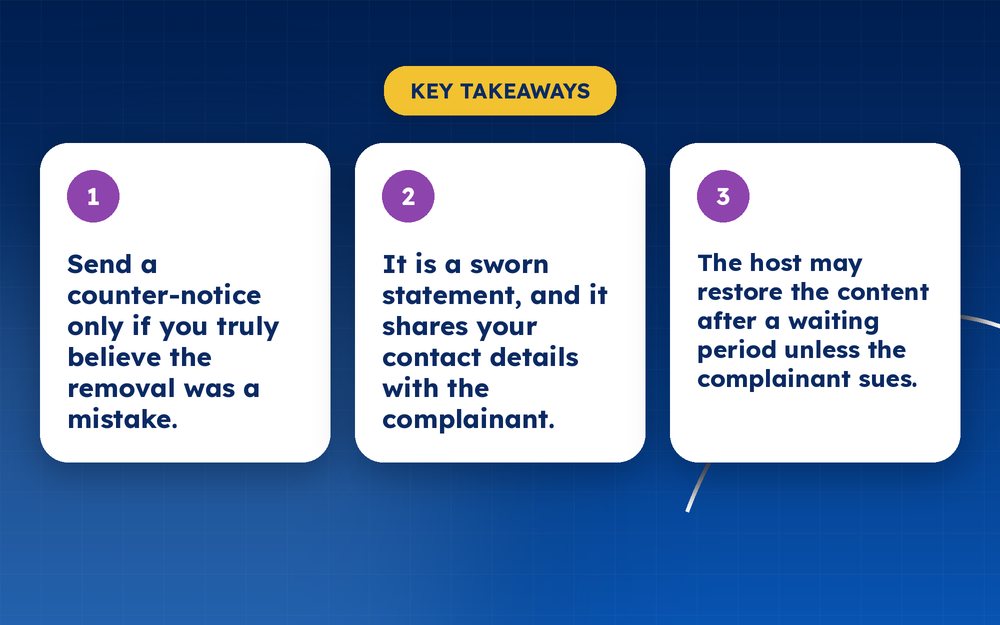
- Send a counter-notice only if you truly believe the removal was a mistake.
- It is a sworn statement, and it shares your contact details with the complainant.
- The host may restore the content after a waiting period unless the complainant sues.
How to respond, step by step
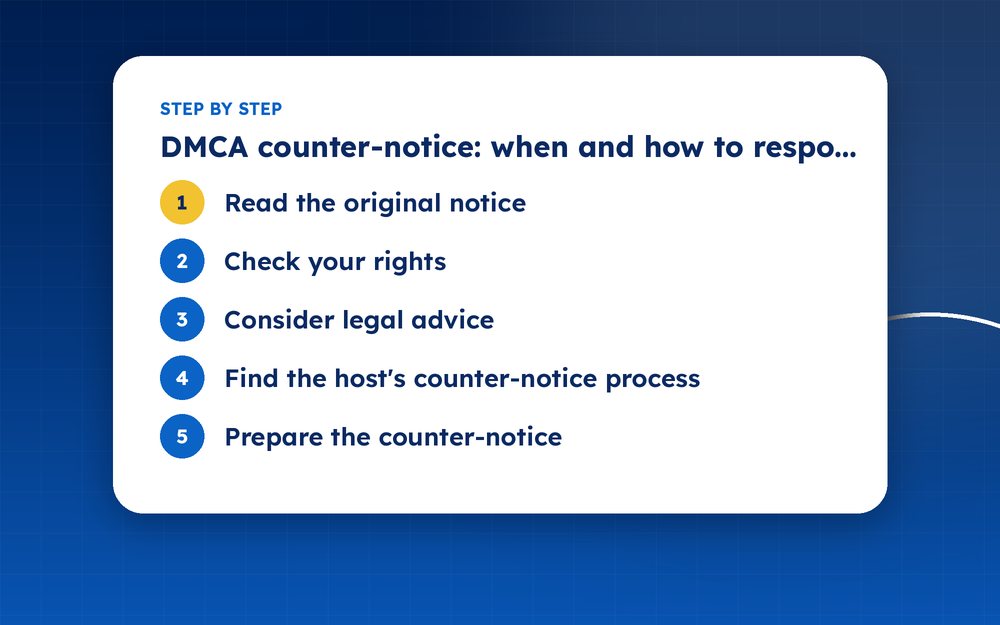
- Read the original noticeUnderstand exactly what was claimed and which content was removed. Read the notice and note who sent it, what work they claim, which links they list and what they ask. Check the date, because deadlines can apply.
- Check your rightsDecide whether you own the content, have a licence or believe it falls under an exception. Ask yourself honestly whether you made the content, had permission or have a legitimate reason to use it, such as a recognised exception. Do not rely on a hunch.
- Consider legal adviceA lawyer can explain risks and whether to proceed. Because a counter-notice has legal consequences, and the sender may start a lawsuit, ask a lawyer before you file, especially if the matter is valuable.
- Find the host's counter-notice processLook for instructions in the host's notice or policy pages. Each platform explains how to send a counter-notice, often through a form. Follow it exactly, including contact details and required statements.
- Prepare the counter-noticeIdentify the removed content, state your good faith belief it was removed by mistake, consent to jurisdiction as required and sign. Include the content that was removed, where it appeared, a statement that you believe it was removed by mistake, and your consent to the relevant court. Sign it.
- Send it and keep proofSubmit and save a copy. Keep a copy of what you sent and any confirmation. Note the date.
- Watch for a replyThe host will tell you what happens next. The platform usually passes the counter-notice to the sender and may restore the content after a waiting period unless the sender starts legal action.
When a counter-notice may be appropriate
It may be appropriate if you created the content, hold a licence, or the complaint wrongly identified your content. It is not appropriate if you know the content infringes. False statements can have serious consequences.
What happens after
The host typically forwards your counter-notice to the complainant. If the complainant does not tell the host that it has started court action within the stated period, the host may restore the content. If they do start action, the content generally stays down while the case proceeds.
Risks
Sending a counter-notice can lead to a lawsuit. Your name and contact details are shared. Think about whether the content is worth that risk and discuss it with a lawyer.
Alternatives
You can also contact the complainant to resolve the issue, replace the content with your own original material or negotiate a licence.
What a typical case looks like
A video maker receives a notice saying her video used a protected song. She checks and finds that she licensed the track and has the receipt. A lawyer reviews her paperwork and she files a counter-notice with the licence attached. The platform tells the sender and restores the video after the waiting period when no legal action follows.
The paperwork was what made her confident enough to file.
When not to file
If you are not sure you have the right to use the content, or you copied it, a counter-notice can expose you to risk. In that case, it may be better to remove the content, or seek permission.
Common mistakes to avoid
Do not send one in anger. Do not make false statements. Do not ignore deadlines. And do not skip advice if the stakes are high.
How a specialist can help
If you are the rights holder dealing with counter-notices, a specialist team can help you manage notices and follow-ups. We are not a law firm and cannot give legal advice. Email us in confidence.
Frequently asked questions
What is a counter-notice?
It is a formal response to a takedown notice, saying the content was removed by mistake or misidentification and asking for it to be restored.
Do I need a lawyer to file one?
Not required, but it is wise, because the statements are legal and the other side may sue.
What happens after I file?
The platform usually passes it on and may restore the content after a waiting period unless the sender starts legal action.
Can I be sued for filing one?
If your statement is false or the use infringes, you could face claims. That is why advice matters.
Is there a time limit?
Platforms may set deadlines, so check the notice and act promptly.
Is this legal advice?
No. It is general information, and laws differ by country. For advice on your situation, speak to a qualified lawyer.
Need help with this?
Every situation is different. Email us the details in confidence and we will reply with an honest assessment of what can be done.
Contact us by email DMCA takedown serviceThis guide is general information, not legal advice. DMCA Reputation is not a law firm.
Related guides
DMCA Safe Harbor Explained for Content Owners
DMCA safe harbor explained for content owners: why hosts respond to notices, what conditions apply, repeat infringers and how to write notices that work.
Read the guide · 4 min
DMCA, Defamation or Privacy Request: Which Removal Route Fits?
DMCA, defamation or privacy request: which removal route fits? How to match your problem to the right route, what each needs and why the wrong route fails.
Read the guide · 4 min
How to Send a DMCA Takedown Notice (With Template)
How to send a DMCA takedown notice: what to include, who to send it to, a free template, counter-notices and common mistakes.
Read the guide · 5 min