
Posts on Quora and Medium can rank in search and carry authority. You can ask for removal where they break policies, and respond or request edits where they do not.
Both platforms have content rules covering harassment, personal information, impersonation and false claims, and both have ways to report content and to contact authors. They are less likely to remove posts that are merely critical.
Choose your route based on what the post says: personal information and harassment go to the platform, false statements may need legal advice, and fair criticism may be better answered with a reply or update.
Posts on open writing platforms are often written by real people, so it helps to decide early whether you want the post removed, corrected or simply pushed down. Each goal leads to a different request.
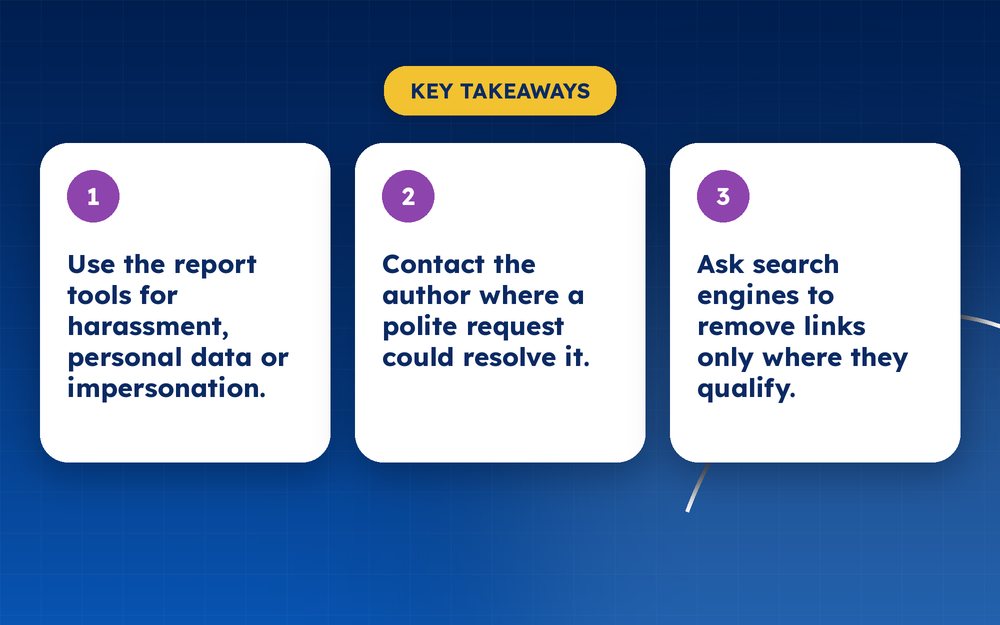
- Use the report tools for harassment, personal data or impersonation.
- Contact the author where a polite request could resolve it.
- Ask search engines to remove links only where they qualify.
How to deal with it, step by step
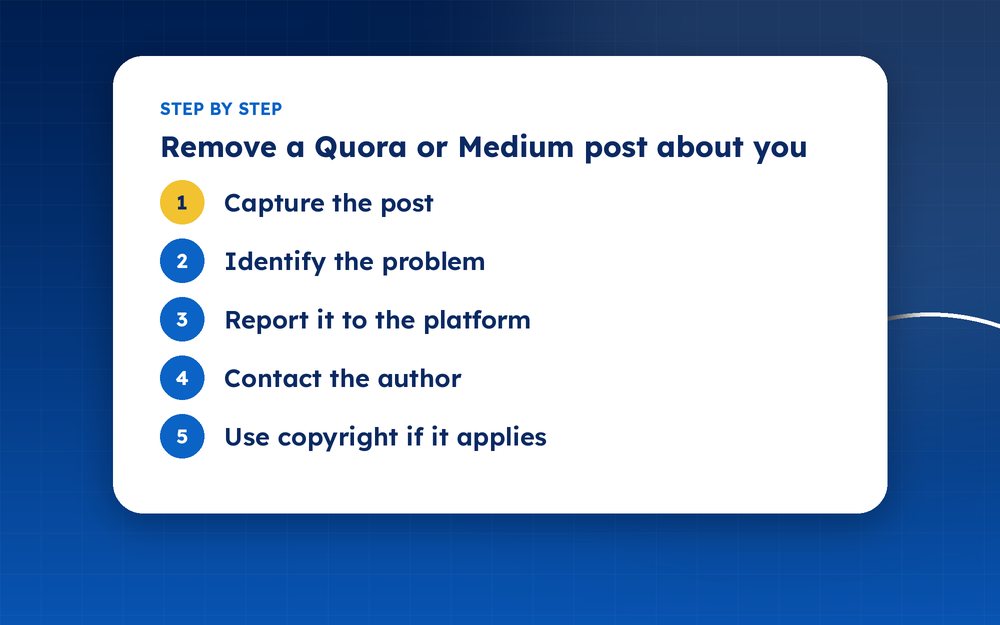
- Capture the postSave the link, text, author and date. Save the full page, the link, the author name and the date. Archive a copy in case the post is edited or deleted after you report it.
- Identify the problemDecide whether it contains personal data, harassment, false claims or copyright material. Work out whether the post is false, private, copied from you, abusive or merely critical. The platform will judge it by its rules, so match your report to the closest rule.
- Report it to the platformUse the report option and the closest category. Use the report option on the post, choose the category that fits and add a short, factual explanation with links. Avoid long stories.
- Contact the authorAsk politely for a correction or removal, with evidence. A polite message to the author sometimes works, especially if the post contains a mistake. Keep it short, and do not threaten.
- Use copyright if it appliesIf the post copies your work, send a copyright notice. If the post copies your text, photos or work, a copyright notice may be the strongest route, because platforms handle these formally.
- Consider legal adviceFor false statements of fact, a lawyer can explain options. For serious false claims, a lawyer can explain defamation routes and risks. Avoid sending your own legal threats.
- Manage search resultsPublish accurate content and monitor rankings. If the post stays, publish accurate content about yourself and ask search engines to remove results that expose private details.
When the platform will act
Platforms usually act on clear policy breaches such as threats, doxxing, impersonation or copyright infringement. They are slower on disputes about fairness or accuracy.
Contacting the author
A polite message with evidence can lead to a correction. Avoid threats. If the author refuses, keep a record for any later steps.
Corrections and updates
Some posts can be updated with a correction note or follow-up. If removal is not possible, a correction visible to readers can still reduce harm.
Search visibility
Long-form posts on these platforms can rank for your name. Counter this by publishing accurate content, profiles and press about your work.
What a typical case looks like
A consultant finds a long post on a writing platform that wrongly states she was fired for misconduct. She saves the page, replies politely to ask the author to correct the date and the reason, and gets no answer. She then reports the post for false and harmful claims, with a short statement and the facts. The platform removes the section naming her within a week. She also publishes a profile page that now ranks above the old post.
The report worked because it named the exact lines that were wrong and avoided accusing the author.
Common mistakes to avoid
Do not argue in comments. Do not threaten the author. Do not report posts that do not break rules. And do not ignore copyright routes.
How a specialist can help
A specialist team can assess the post, report it and follow up, and work on search visibility. We cannot promise removal, but we will be honest about what is realistic. Email us in confidence.
Frequently asked questions
Can I remove a post about me from Quora or Medium?
Often, if it breaks the platform rules, such as harassment, private information or copyright. Fair opinion is harder to remove, so frame your report around a specific rule.
Should I contact the author first?
It can help if the author is reasonable and the issue is a mistake. Be polite and brief, and save evidence first.
How long does a report take?
Often a few days, though it varies and some reports are rejected. You can usually follow up or appeal.
Will it disappear from Google straight away?
Not always. After removal, search results can linger until the page is recrawled, and you can request a refresh.
What if the post is true?
Removal is unlikely unless it breaks a privacy rule. Focus on context and your own content.
Is this legal advice?
No. It is general information. For claims or disputes, speak to a qualified lawyer.
Need help with this?
Every situation is different. Email us the details in confidence and we will reply with an honest assessment of what can be done.
Contact us by email Negative content removalThis guide is general information, not legal advice. DMCA Reputation is not a law firm.
Related guides
How to Remove a Pinterest Pin That Infringes Your Content
How to remove a Pinterest pin that infringes your content: copyright notices, reporting tools, what to include, tracking and handling repeat pins.
Read the guide · 4 min
How to Remove Wikipedia Mentions or a Wikipedia Page About You
How to remove Wikipedia mentions or a page about you: what editors accept, how to request corrections, conflict of interest rules and realistic options.
Read the guide · 4 min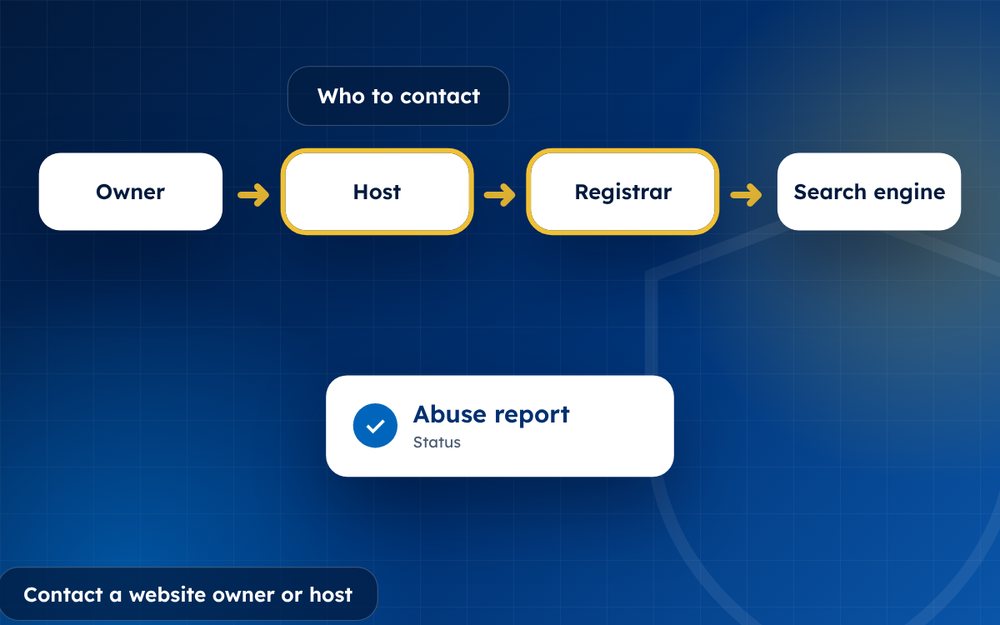
How to Contact a Website Owner or Hosting Company to Remove Content
How to contact a website owner or hosting company to remove content: finding contacts, writing the request and escalating step by step.
Read the guide · 4 min