
Wikipedia is run by volunteers, and the rules differ from other sites. You usually cannot demand removal, but you can request corrections, raise concerns and follow the proper process.
Wikipedia pages are based on reliable, published sources and must follow neutrality and verifiability rules. Subjects of articles do not control them, and editing your own page carries conflict of interest rules.
If a page about you is inaccurate or contains private or defamatory material, there are ways to raise it, such as the article's talk page, noticeboards and the foundation's contact routes for serious problems. Review the current guidance.
Wikipedia is not an ordinary website. Pages are written and edited by volunteers who follow strict rules about sources and neutrality. Pressure and legal threats usually backfire, while calm, evidence-based requests sometimes work.
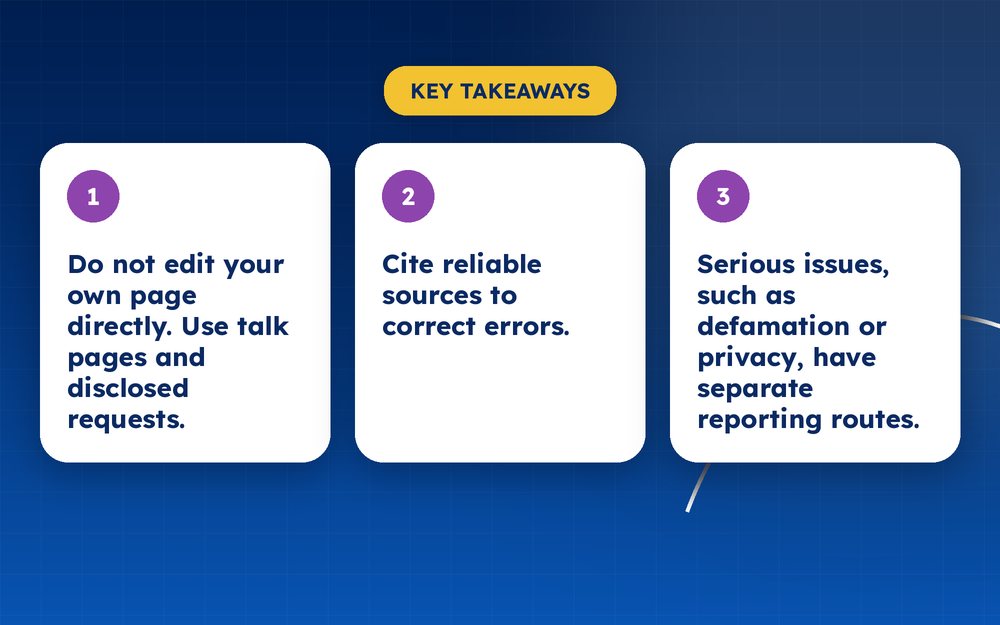
- Do not edit your own page directly. Use talk pages and disclosed requests.
- Cite reliable sources to correct errors.
- Serious issues, such as defamation or privacy, have separate reporting routes.
What to do, step by step
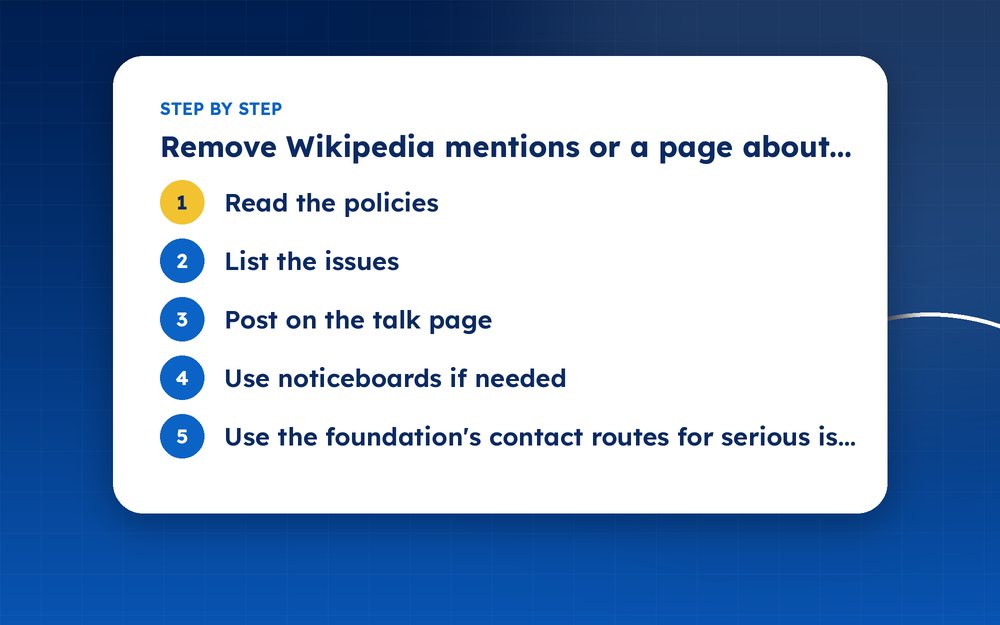
- Read the policiesReview guidance on conflict of interest, biographies of living people and notability. Read the policies on biographies of living people, neutral point of view, reliable sources and conflicts of interest. Your request will be judged against them.
- List the issuesNote inaccuracies and the sources that show the correct information. List the exact statements that are wrong, unsourced or unfair, and the sources that show the facts. Avoid listing mere dislikes.
- Post on the talk pageDisclose your connection and ask for changes, with sources. Post a short request on the article's talk page, stating your connection, the problems and the sources. Do not edit the article yourself if you have a conflict of interest.
- Use noticeboards if neededThe biographies of living people noticeboard handles serious concerns. If the talk page gets no response or the issue is serious, the community has noticeboards for biographies of living people. Use the process that fits.
- Use the foundation's contact routes for serious issuesFor defamation or privacy, follow the official process. For serious privacy or legal issues, there are official routes to contact the foundation or volunteer response team. Keep your message factual.
- Consider deletion criteriaIf you believe the subject is not notable, a deletion discussion is one route, though outcomes are not guaranteed. If the subject is not notable under the rules, deletion discussions can happen, but outcomes are decided by the community and are not guaranteed.
- Build reliable coverageAccurate independent sources support better articles. Reliable independent coverage helps correct and balance a page, because editors rely on published sources.
Conflict of interest
If you are the subject, or paid to edit, you should disclose and avoid direct editing of the article. Undisclosed paid editing breaks the rules and can lead to bans and negative attention.
What editors look for
Editors look for reliable, independent sources, neutral wording and notability. Requests supported by sources are far more likely to succeed than requests based on preference.
Mentions inside other articles
If your name appears inside another article, the same rules apply. Raise the issue on that article's talk page, with sources and a clear explanation.
Search visibility
Wikipedia pages often rank highly. If you cannot remove or change a page, focus on accurate sources and your own channels so searchers see a balanced picture.
What a typical case looks like
A business owner finds that his page repeats an old allegation from a single blog. He does not edit the page. He posts on the talk page that the claim comes from an unreliable source and links to a court record showing the case was dismissed. An experienced editor removes the claim and adds the outcome, citing the court record. The change takes two weeks, and he thanks the editor politely.
Patience and a reliable source mattered more than any argument.
Common mistakes to avoid
Do not edit your page secretly. Do not hire undisclosed editors. Do not threaten editors. And do not demand removal without grounds.
How a specialist can help
A specialist team can review the article, advise on sources and the proper process and work on wider visibility. We cannot guarantee changes, since volunteers decide, but we will be honest about what is realistic. Email us in confidence.
Frequently asked questions
Can I delete my Wikipedia page?
Usually not on request. Pages are kept if the subject meets the notability rules, but editors can fix errors and remove unsourced claims.
Can I edit my own page?
Editing your own page is discouraged because of conflict of interest rules. Suggest changes on the talk page instead.
What if the page contains false claims?
Raise them on the talk page with reliable sources. Serious cases about living people get faster attention.
Will legal threats help?
Rarely. They can make volunteers reluctant to engage, and can lead to blocks. Take advice before making them.
How can I improve what Wikipedia says about me?
Reliable, independent coverage gives editors sources to use. You cannot control the page, but you can influence what is available.
Is this legal advice?
No. It is general information. For claims or disputes, speak to a qualified lawyer.
Need help with this?
Every situation is different. Email us the details in confidence and we will reply with an honest assessment of what can be done.
Contact us by email Negative content removalThis guide is general information, not legal advice. DMCA Reputation is not a law firm.
Related guides
How to Remove a Fake Review From the App Store or Google Play
How to remove a fake review from the App Store or Google Play: reporting routes, what store policies cover, replying as a developer and protecting your rating.
Read the guide · 4 min
How to Remove a Fake Airbnb or Etsy Review
How to remove a fake Airbnb or Etsy review: what each platform covers, how to report, how to respond as a host or seller and how to protect your rating.
Read the guide · 3 min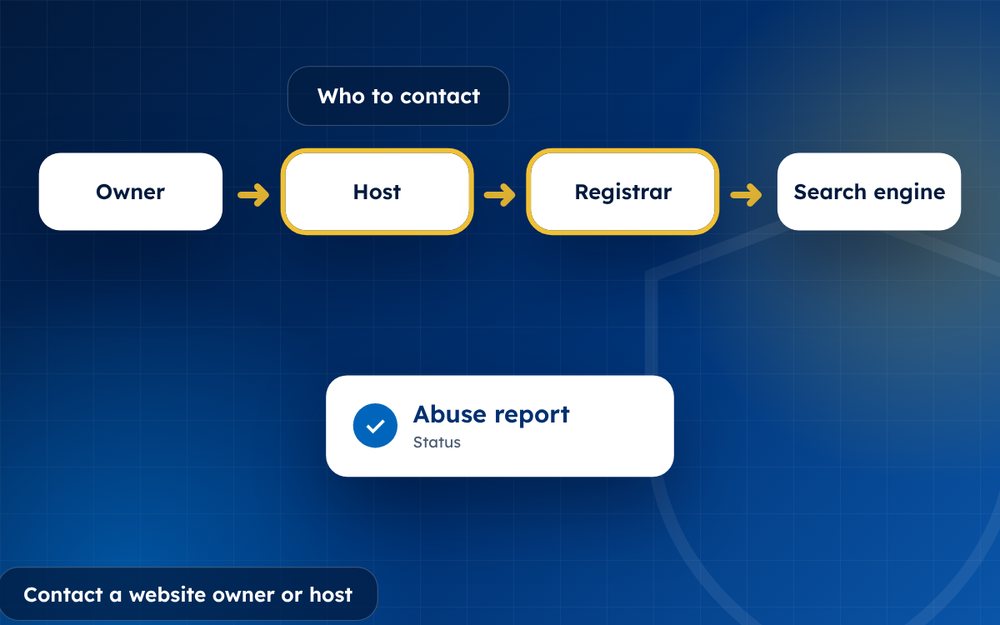
How to Contact a Website Owner or Hosting Company to Remove Content
How to contact a website owner or hosting company to remove content: finding contacts, writing the request and escalating step by step.
Read the guide · 4 min