
Ripoff Report is known for rarely removing reports. That makes it important to understand your realistic options: respond, correct the record, address legal issues and reduce visibility.
Ripoff Report publishes complaints from users and has historically stated that it does not remove reports at the request of the subject, even if the author asks. It offers programs for businesses to respond and, in some cases, to rebut or resolve complaints. Check the site's current policies, which can change.
Because removal is uncommon, the work usually involves several tracks at once: a clear public response, evidence that the complaint is false if it is, legal routes for serious cases and building more positive results around your name.
Complaint sites often state that they do not remove reports on request. That does not mean you are helpless. The strongest steps are to resolve the issue, respond clearly and reduce visibility, rather than fight the site directly.
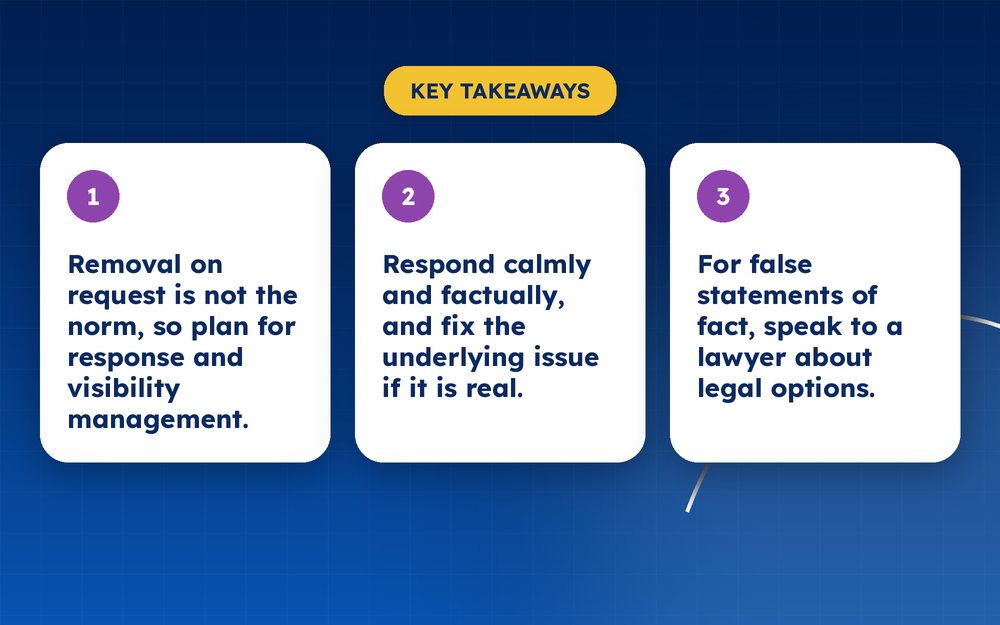
- Removal on request is not the norm, so plan for response and visibility management.
- Respond calmly and factually, and fix the underlying issue if it is real.
- For false statements of fact, speak to a lawyer about legal options.
What you can do, step by step
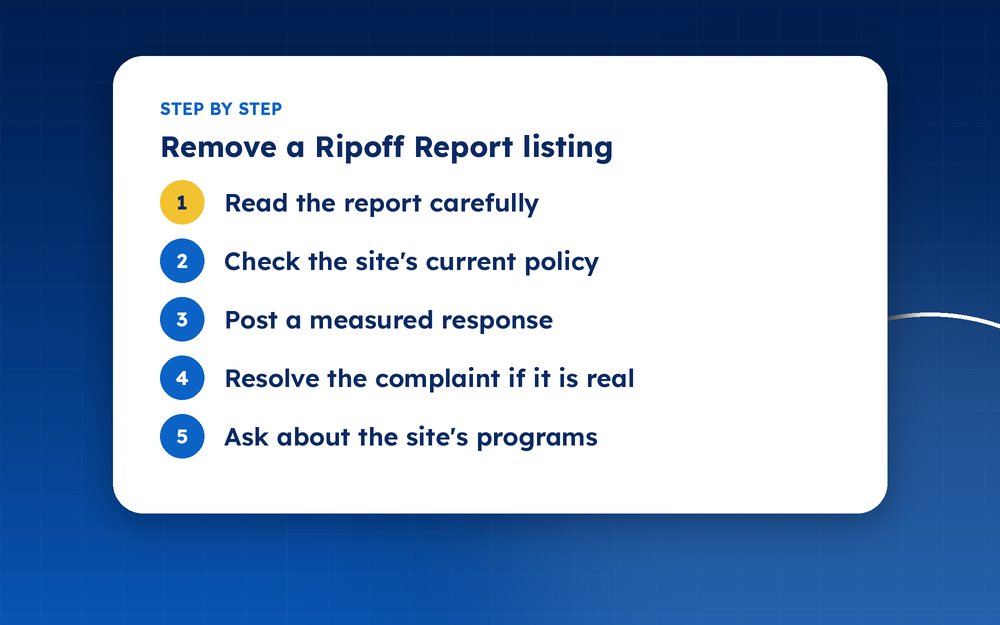
- Read the report carefullyNote which statements are facts and which are opinions. Read the report twice and list each claim. Mark what is true, false or unclear, and note the date.
- Check the site's current policyRead its terms on responses, rebuttals and removal. Policies and programs change. Read the site's current rules on removal, updates and rebuttals before you act.
- Post a measured responseReply factually, offer to resolve, and avoid arguing. Write a calm, factual public reply that addresses the claims and offers to resolve them. Keep it short.
- Resolve the complaint if it is realContact the customer. A resolved complaint helps your credibility. If the complaint is real, fix the problem and ask the customer to update the report. This often helps most.
- Ask about the site's programsReview what it offers for businesses, and the terms, before agreeing to anything. Some sites offer programs for businesses. Check what they involve, and be careful of anything that asks for payment.
- Consider legal advice for false statementsA lawyer can explain options such as court orders and their costs. For clearly false statements, a lawyer can explain defamation routes and limits. These can be slow and costly.
- Reduce visibilityBuild positive content and, where grounds exist, ask search engines to remove links. Publish accurate content and encourage genuine reviews, so the report is not the only story people see.
Why removal is hard
The site's model is built on keeping reports public, and it relies on legal protections for platforms. That means letters to the site rarely work unless backed by a court order. Other routes focus on response, resolution and visibility.
Court orders
In some cases, a court finding that a statement is false can lead to removal or search de-listing. This is a legal process with costs and no guarantee. Speak to a lawyer, and you can contact us if you would like a recommendation. We do not promote particular law firms in our guides.
Search visibility
If the page ranks for your business name, building positive, accurate content can push it down. Search engines also have a legal removal process for certain content. Check eligibility before you apply.
Beware of paid promises
Be wary of anyone who claims to guarantee removal for a fee. Ask exactly how they would do it, and whether the site's own policy allows it.
What a typical case looks like
A contractor finds a report claiming he took a deposit and disappeared. He checks his records and finds the customer cancelled and received a refund. He posts a short public reply with the facts and contacts the customer, who agrees to update the report. Over time his own reviews and website move above the report in search.
He did not remove the report, but he changed what readers saw.
Common mistakes to avoid
Do not argue emotionally in your response. Do not threaten the author. Do not ignore a real complaint. And do not pay without understanding what you get.
How a specialist can help
A specialist team can help prepare a response, assess your options and work on search visibility. We cannot promise removal from a site that does not normally remove reports, but we will be honest about what is realistic. Email us in confidence.
Frequently asked questions
Can I remove a Ripoff Report listing?
Complaint sites often resist removal. Responses, resolution and updates by the complainant are common routes.
Should I pay to remove it?
Be careful. Understand the terms and use free routes first.
Can I sue?
For false statements, perhaps, but it is slow and costly. Ask a lawyer.
Will a public reply help?
Yes, if it is calm and factual. Readers judge how you respond.
How do I reduce its visibility?
Publish accurate content and collect genuine reviews.
Is this legal advice?
No. It is general information. For claims or court action, speak to a qualified lawyer.
Need help with this?
Every situation is different. Email us the details in confidence and we will reply with an honest assessment of what can be done.
Contact us by email Negative content removalThis guide is general information, not legal advice. DMCA Reputation is not a law firm.
Related guides
How to Remove a Pissed Consumer or Complaints Board Post
How to remove a Pissed Consumer or Complaints Board post: site rules, how to respond, flagging violations, resolving complaints and handling paid removal offers.
Read the guide · 4 min
How to Respond to a Better Business Bureau Complaint
How to respond to a Better Business Bureau complaint: deadlines, what to write, how to resolve it, when a complaint may be removed and how to protect your rating.
Read the guide · 4 min
How to Remove a Defamatory Website or Blog Post About You
How to remove a defamatory website or blog post about you: evidence, host and platform complaints, legal routes and search suppression.
Read the guide · 4 min