
A complaint to the Better Business Bureau, or a similar body, deserves a quick, professional answer. A good response can resolve the issue and protect your rating.
The BBB and similar organisations forward consumer complaints to businesses and ask for a response within a set time. How you respond affects how the complaint is recorded and sometimes your rating. Check the current rules on the BBB site for your region.
The aim is to resolve the issue fairly, document your steps and keep your tone professional. Some complaints can be removed if they do not meet the organisation's criteria.
A complaint response is read by the customer, the organisation and future readers. Write for all three, in a calm, clear and respectful tone.
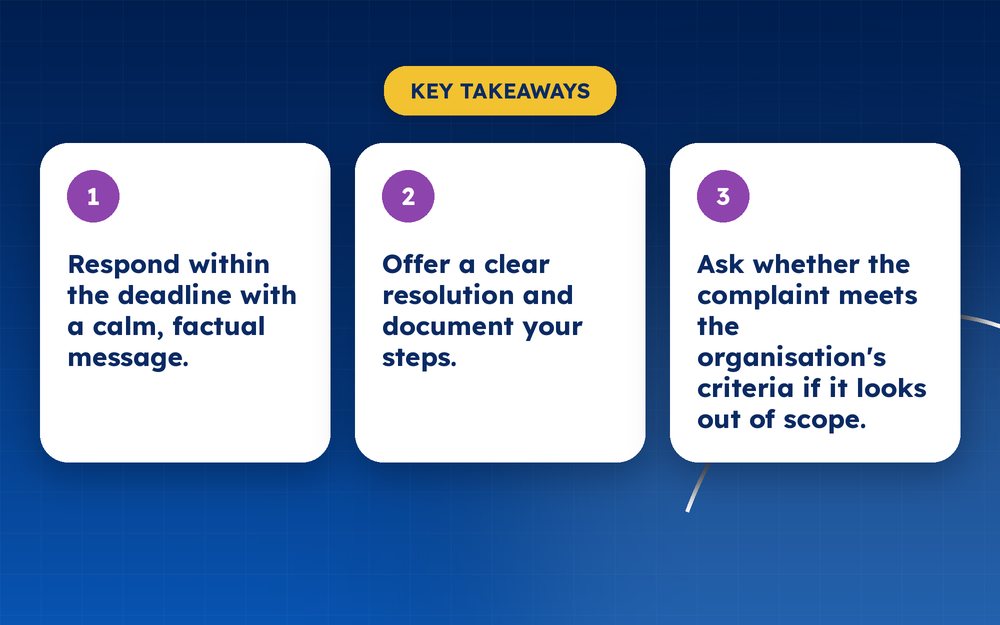
- Respond within the deadline with a calm, factual message.
- Offer a clear resolution and document your steps.
- Ask whether the complaint meets the organisation's criteria if it looks out of scope.
How to respond, step by step
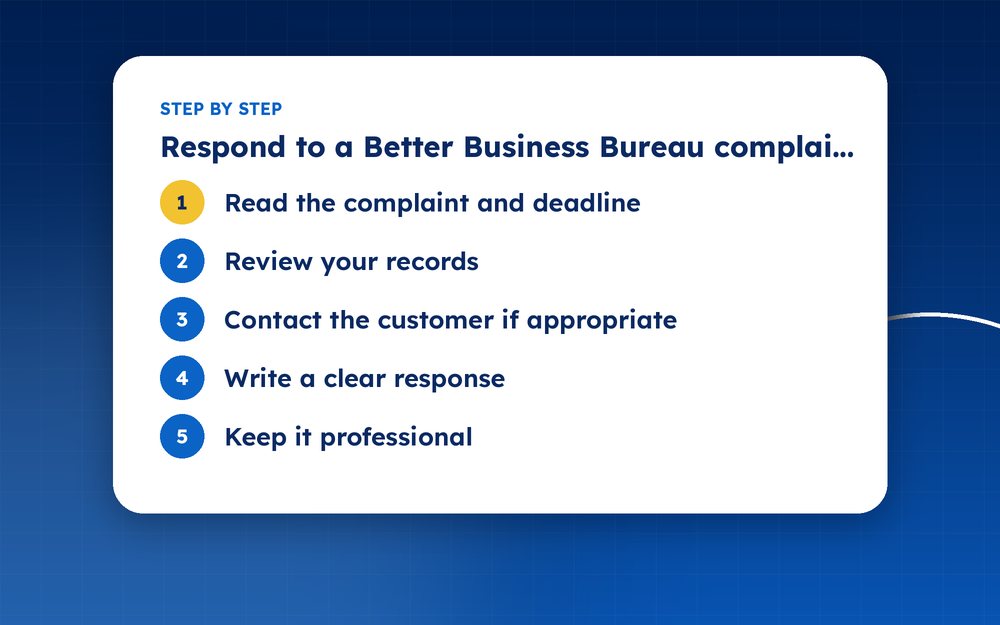
- Read the complaint and deadlineNote the date by which you must respond. Check the deadline, the complaint number and what the customer wants. Respond on time.
- Review your recordsGather invoices, messages and notes about the customer. Collect orders, messages, receipts, photos and any policies that apply. Check facts carefully.
- Contact the customer if appropriateResolving it directly can be quickest. If appropriate, contact the customer directly to resolve the matter. It can speed things up.
- Write a clear responseState the facts, explain what you did and offer a resolution. State the facts, what you have done and what you can offer. Avoid emotion and blame.
- Keep it professionalAvoid blame and emotional language. Do not attack the customer or share private details. Stay on the issue.
- Follow upIf the customer accepts, ask for the complaint to be marked as resolved. If the customer replies, respond promptly and politely. Update the record.
- Check the criteriaIf the complaint does not meet the organisation's rules, ask whether it can be removed. Check the organisation's criteria for how complaints are treated and what counts as resolved.
Why a good response matters
Readers see both the complaint and your reply. A polite, specific response suggests a business that takes problems seriously, even if the customer is not fully satisfied.
What to include
Include what happened from your side, what you offered, how the matter was handled and what you will do to avoid repeats. Avoid long arguments or personal comments about the customer.
If the complaint is not genuine
If the complaint seems fake or from a non-customer, explain this politely with evidence and ask whether it can be removed. Check the organisation's criteria for what qualifies.
Keeping your rating healthy
Respond to every complaint, resolve where possible and keep records. Consistent handling usually helps more than any single reply.
What a typical case looks like
A retailer receives a complaint about a delayed refund. The manager checks records, finds a processing error and refunds the customer, then replies with a short, factual explanation and an apology. The customer confirms the resolution and the complaint is closed as resolved.
A prompt, polite answer made the difference.
Timing and tone
Respond within the window the bureau gives, and sooner if you can. A prompt reply shows you take customers seriously, even when you disagree with the complaint. Keep the tone calm and courteous, address the customer by name where possible, and avoid defensive language. Readers who see only the public record judge the business by how it answers.
Offering a clear resolution
Say exactly what you will do and by when: a refund, a replacement, a corrected order or a call. Vague promises rarely close a complaint. If you cannot give what the customer asks, explain the reason briefly and offer the closest fair alternative. Once the customer accepts, ask them to confirm to the bureau that the matter is resolved, and keep a copy of every message.
Common mistakes to avoid
Do not miss the deadline. Do not argue with the customer. Do not post fake reviews. And do not ignore patterns across complaints.
How a specialist can help
A specialist team can help prepare a clear response and follow up on resolution. We cannot promise removal, but we will be honest about what is realistic. Email us in confidence.
Frequently asked questions
How should I respond to a BBB complaint?
Respond on time, stay factual and polite and offer a solution where reasonable.
Can complaints be removed?
Not usually. Responses and resolution matter.
Should I contact the customer?
If appropriate, yes. Direct contact can resolve matters quickly.
What if the complaint is unfair?
Explain the facts calmly, with evidence.
Does it affect my rating?
Often through how complaints are handled. Check the organisation's criteria.
Is this legal advice?
No. It is general information. For claims or court action, speak to a qualified lawyer.
Need help with this?
Every situation is different. Email us the details in confidence and we will reply with an honest assessment of what can be done.
Contact us by email Negative content removalThis guide is general information, not legal advice. DMCA Reputation is not a law firm.
Related guides
How to Remove a Negative Review From G2 or Capterra
How to remove a negative review from G2 or Capterra: guidelines, how to report, how to respond professionally and how to encourage balanced, verified reviews.
Read the guide · 3 min
What to Do If a Complaint Site Asks You to Pay for Removal
What to do if a complaint site asks you to pay for removal: why this is a red flag, how to check the terms, how to respond and what legitimate options exist.
Read the guide · 3 min
How to Remove a Defamatory Website or Blog Post About You
How to remove a defamatory website or blog post about you: evidence, host and platform complaints, legal routes and search suppression.
Read the guide · 4 min