
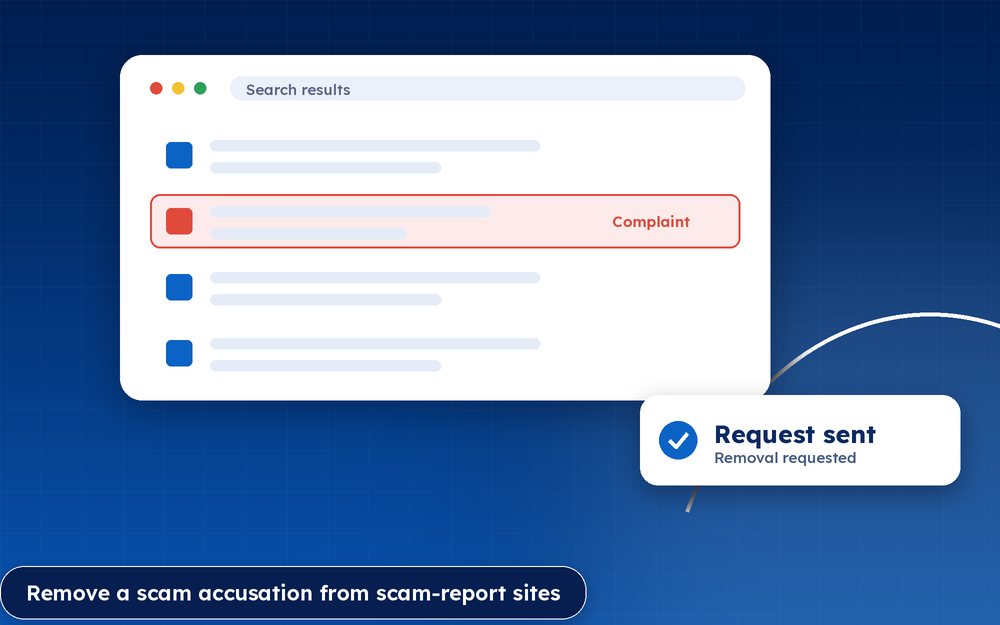
Being called a scam in public is serious for a legitimate business. A mix of facts, evidence and calm responses is the best way to deal with it.
Scam-report sites allow people to post accusations, often with little verification. Even if the claim is false, the page can rank for your name and harm trust.
Start by working out whether the claim has any basis, such as a delayed order or a misunderstanding, and then use the site's processes and public responses to correct the record.
A scam accusation can damage trust quickly, but it is often based on a misunderstanding or a rival's attack. Facts, records and a calm tone are your best tools.
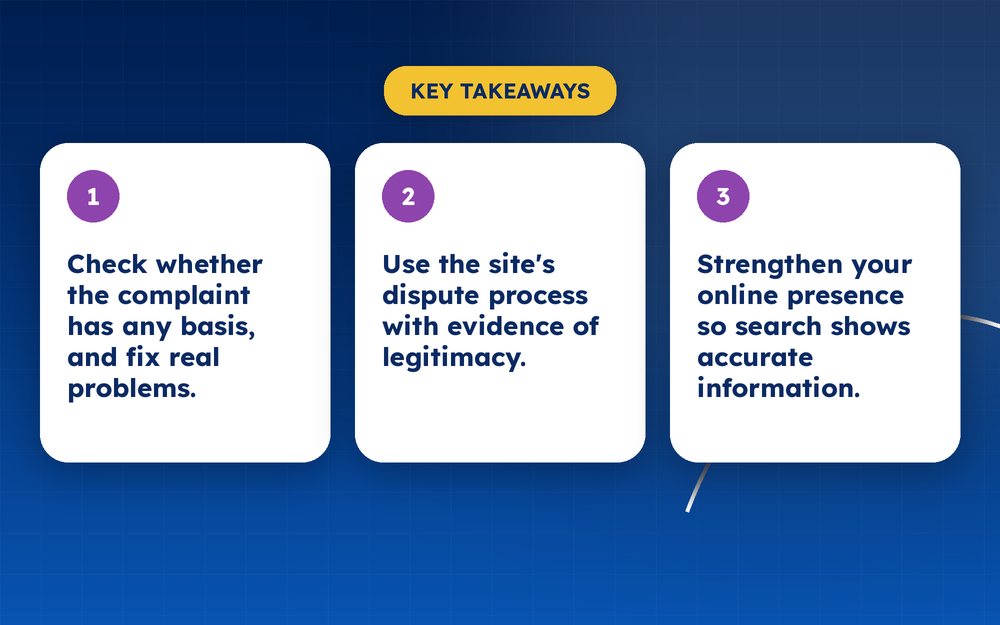
- Check whether the complaint has any basis, and fix real problems.
- Use the site's dispute process with evidence of legitimacy.
- Strengthen your online presence so search shows accurate information.
What to do, step by step
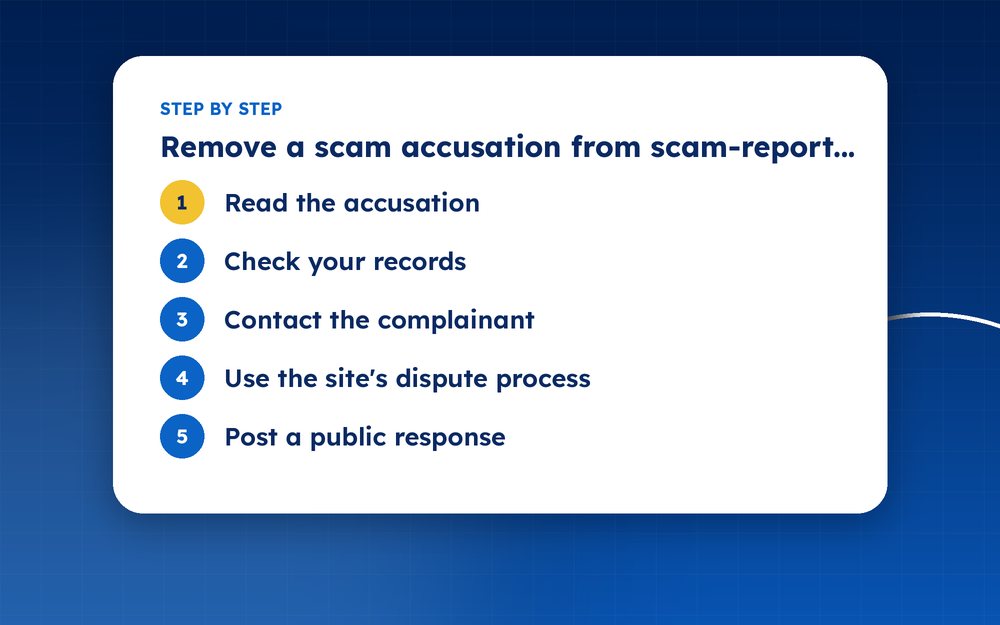
- Read the accusationNote exactly what is claimed and by whom. Read the accusation carefully and list each claim. Check dates, amounts and names.
- Check your recordsGather orders, invoices, delivery proof and communication. Collect receipts, messages, delivery records and policies that show what happened.
- Contact the complainantIf a real issue exists, resolve it and ask them to update the post. If there is a real customer, contact them respectfully and try to resolve the matter.
- Use the site's dispute processProvide evidence and a short statement. Many sites have a dispute or rebuttal process. Follow it with your evidence.
- Post a public responseState facts calmly, and invite contact. Post a short, factual reply. State what you did and how customers can reach you.
- Build trust signalsAdd reviews, certifications, clear contact details and a clear returns policy. Add trust signals such as clear contact details, genuine reviews and policies on your site.
- Consider legal adviceFor false statements of fact, a lawyer can explain options. For false and damaging claims, a lawyer can advise on options.
Why scam pages hurt
People searching your business name may see the accusation first. Even a small number of such pages can reduce conversions. Responding and building credibility helps readers judge for themselves.
Evidence that persuades
Business registration, proof of delivery, customer testimonials and clear policies show legitimacy. Present them briefly and in order.
If the accusation is part of a campaign
If multiple scam posts appear together, they may be coordinated by a competitor or an angry party. Document the pattern and report it to the sites with evidence.
Search and visibility
Search engines usually do not remove pages for being negative. Publishing accurate content about your business and earning genuine reviews helps balance what people see.
What a typical case looks like
A small seller is accused of scamming a buyer who never received an order. The seller checks tracking, finds the parcel was delivered to a different address and contacts the buyer with proof. The buyer corrects the report. The seller also publishes her contact details and policies on her site.
Evidence and a calm response turned a damaging claim into a resolved case.
Checking the page before you act
Read the accusation closely. Note who wrote it, when, what exactly is claimed and what evidence is offered. Some pages invite replies or have a dispute process, while others only accept removal requests. Knowing which applies saves time. Take dated screenshots of the page, the listing and any comments before you do anything that might change it.
Replying publicly versus requesting removal
If the page allows replies, a short factual answer with a link to your evidence can help readers decide for themselves. If the claim is false or defamatory, a formal removal request through the site's process is usually stronger than an argument in the comments. Choose one route at a time, and keep a written record of what you sent and when.
Common mistakes to avoid
Do not threaten the poster. Do not ignore real issues. Do not post fake reviews. And do not make claims you cannot prove.
How a specialist can help
A specialist team can gather evidence, contact the sites and work on search visibility. We are not a law firm and cannot give legal advice. Email us in confidence.
Frequently asked questions
Can I remove a scam accusation?
Sometimes, if the poster withdraws it or the site finds it breaks rules. Otherwise, rebuttals and resolution help.
Should I reply publicly?
Yes, briefly and factually.
Can I sue for false accusations?
Possibly, but it is slow and costly. A lawyer can advise.
How do I rebuild trust?
Show clear contact details, policies and genuine reviews.
Will the accusation affect search?
It can. Publishing accurate content helps balance results.
Is this legal advice?
No. It is general information. For claims or court action, speak to a qualified lawyer.
Need help with this?
Every situation is different. Email us the details in confidence and we will reply with an honest assessment of what can be done.
Contact us by email Negative content removalThis guide is general information, not legal advice. DMCA Reputation is not a law firm.
Related guides
How to Remove a Ripoff Report Listing
How to remove a Ripoff Report listing: how the site works, what its policy says, realistic options, how to respond and how to reduce its search visibility.
Read the guide · 4 min
How to Remove a Pissed Consumer or Complaints Board Post
How to remove a Pissed Consumer or Complaints Board post: site rules, how to respond, flagging violations, resolving complaints and handling paid removal offers.
Read the guide · 4 min
How to Remove a Defamatory Website or Blog Post About You
How to remove a defamatory website or blog post about you: evidence, host and platform complaints, legal routes and search suppression.
Read the guide · 4 min