
A public reply to a patient review can help your reputation, but a careless one can breach confidentiality. The safest approach is a short, generic response that invites the person to talk privately.
Medical and dental professionals often have strict duties to protect patient information. Confirming that someone was a patient, or discussing their treatment, can breach those duties even when you are defending yourself against a false review.
Check your professional and regulatory rules, since they vary by country and profession. This guide is general information, not professional advice.
Even a thank-you can reveal that someone was a patient. The safest approach is a reply that would make sense whether or not the person was ever treated.
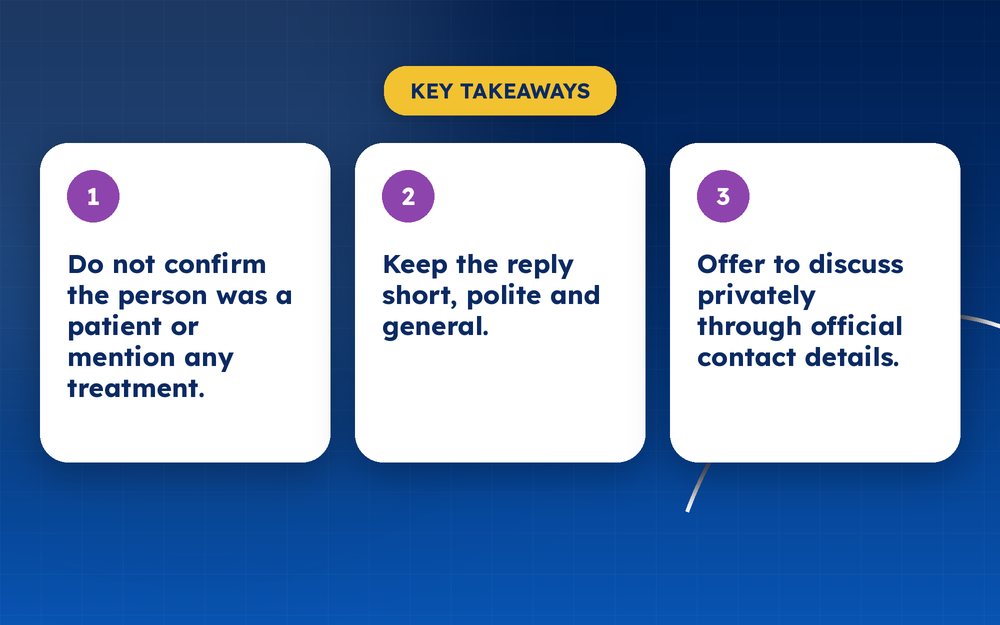
- Do not confirm the person was a patient or mention any treatment.
- Keep the reply short, polite and general.
- Offer to discuss privately through official contact details.
How to reply, step by step
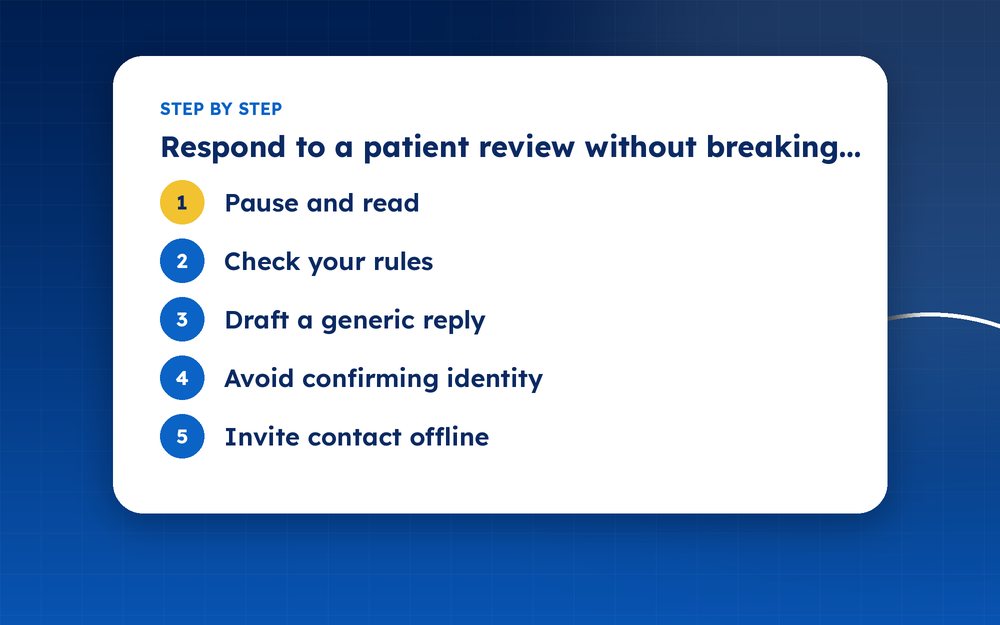
- Pause and readDo not reply while angry. Read the review and any relevant policy. Do not reply while angry. Read the review again and decide what matters.
- Check your rulesReview your professional body's guidance on responding to reviews. Check professional guidance, local law and your own policy on responding to reviews.
- Draft a generic replyThank the reviewer, say you take feedback seriously and describe your general approach to care. Draft a general response, such as thanking the person for feedback and describing how you deal with concerns.
- Avoid confirming identityDo not say "your treatment" or confirm that the person visited. Do not confirm that the person was a patient, or mention any treatment, dates or staff.
- Invite contact offlineGive a phone number or email for the practice. Invite the person to contact the practice, giving a general phone number or email.
- Check with a colleagueHave someone else read it before posting. Ask a colleague or compliance lead to read it before you post.
- Follow up privatelyIf the person contacts you, handle it through your normal complaints process. If the person contacts you, deal with the matter privately and follow your complaints process.
Safe wording structure
A safe structure is: thank you for your feedback, we take all feedback seriously, we are unable to discuss any individual's care in public, and we would welcome the chance to talk, please contact us at the practice. It protects confidentiality and shows care.
What not to say
Avoid mentioning appointment dates, treatments, outcomes or the person's history. Avoid arguments or accusations. Avoid words that imply the reviewer is lying, even if you believe they are.
If the review is false
If you believe the reviewer was never a patient, you can flag the review to the platform under its policies. Check how to share evidence without revealing information, and consider advice from your professional body.
Training your team
Make sure everyone who replies to reviews knows the rules. A simple internal guide with approved wording avoids mistakes.
What a typical case looks like
A dentist receives a review saying a procedure was painful. Instead of replying with details, the practice posts, "Thank you for your feedback. We take concerns seriously and invite anyone with a concern to contact our practice manager." The reviewer calls the next day, and the issue is resolved privately.
A general, kind reply protected the patient's privacy and still showed care.
Common mistakes to avoid
Do not defend yourself with clinical detail. Do not reply in anger. Do not ask patients to remove reviews. And do not reply without checking the rules.
How a specialist can help
A specialist team can help prepare policy-based reports and safe reply templates, while you handle patient care. We are not a law firm and cannot give legal or professional advice. Email us in confidence.
Frequently asked questions
Can I reply to a patient review?
Yes, with a general reply that does not confirm the person was a patient or reveal details.
What should the reply say?
Thank them, explain how you handle concerns and invite them to contact you.
What if the patient posts their own details?
You still should not confirm or add details.
Can I ask for removal?
Only if the review breaks platform rules.
Should I ask someone to review my reply?
Yes. A second pair of eyes helps.
Is this legal advice?
No. It is general information, and laws differ by place. For claims or court action, speak to a qualified lawyer.
Need help with this?
Every situation is different. Email us the details in confidence and we will reply with an honest assessment of what can be done.
Contact us by email Google review removalThis guide is general information, not legal advice. DMCA Reputation is not a law firm.
Related guides
What to Do When Someone Demands Money or They Will Leave a Bad Review
What to do when someone demands money or they will leave a bad review: do not pay, save evidence, report to the platform and handle the review if it is posted.
Read the guide · 3 min
What to Do When a Competitor Is Attacking Your Reviews
What to do when a competitor is attacking your reviews: spot the signs, gather evidence, report to platforms, protect your profile and consider legal and regulatory routes.
Read the guide · 3 min
How to Remove a Google Review: A Complete Guide for Business Owners
How to remove a Google review: what Google will remove, how to report it, how to appeal and what to do if it stays. A guide for business owners.
Read the guide · 6 min