
Sometimes the leak comes from inside your own community. Clear rules, simple controls and a consistent response reduce sharing without turning your members into suspects.
Members share content for many reasons: to help a friend, to save money for others or to get attention. Some do not realise it is wrong. A few do it on purpose. Your response should depend on which kind of sharing you face.
A mix of expectations, technical controls and enforcement works better than any single measure.
Most sharing is not criminal. It is a friend lending a login or a student posting a lesson. Clear rules and sensible limits stop many cases, and consistent responses protect your honest customers.
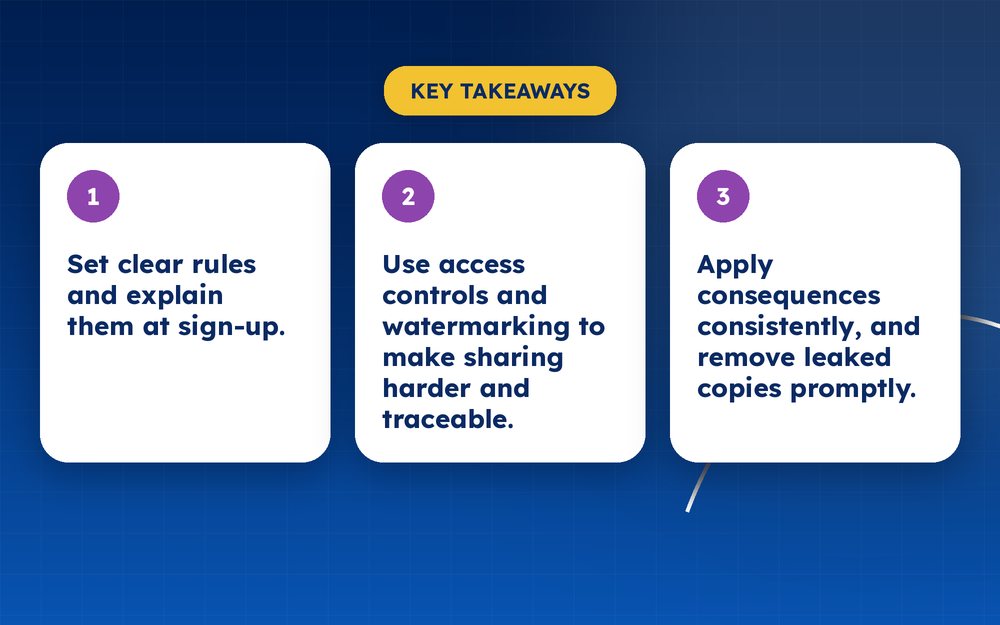
- Set clear rules and explain them at sign-up.
- Use access controls and watermarking to make sharing harder and traceable.
- Apply consequences consistently, and remove leaked copies promptly.
How to reduce sharing, step by step
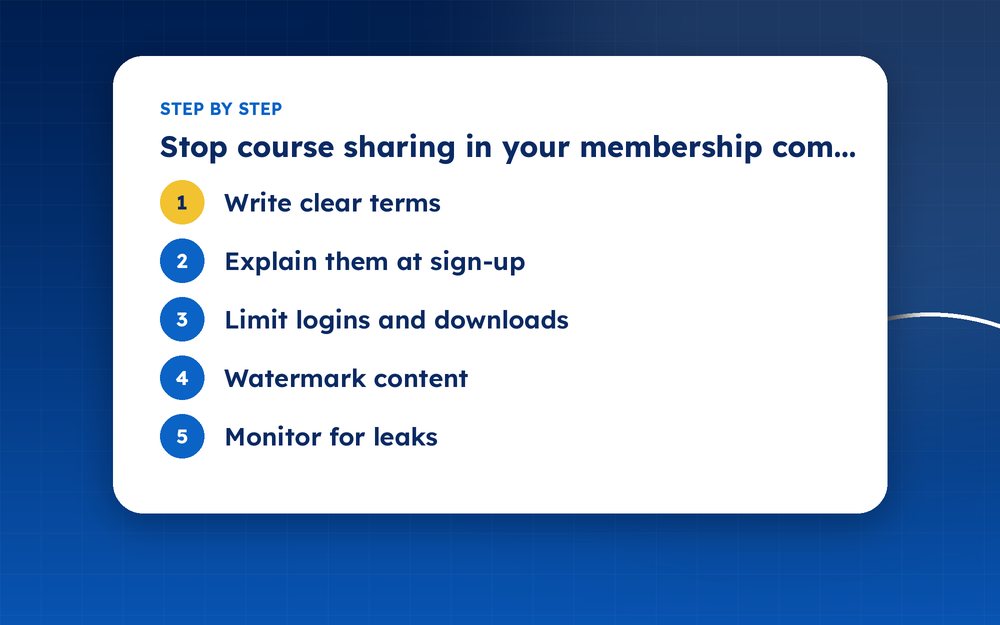
- Write clear termsState that content is for personal use and what happens if it is shared. Put plain terms in your sales page and member area: no sharing logins, no reposting content, no recording. Use simple language.
- Explain them at sign-upAdd a short reminder in your welcome message and course area. Remind members at sign-up and in the welcome email. People are more likely to follow rules they have seen.
- Limit logins and downloadsUse device limits, expiring links and restricted downloads where your platform allows. Use platform settings that limit simultaneous logins and downloads, where available. Do not make life hard for honest users.
- Watermark contentAdd the member's name or ID in a subtle, hard-to-crop spot. Add a subtle watermark with the member email or ID to videos and documents. This discourages sharing and helps trace leaks.
- Monitor for leaksCheck for your content outside the community and match any marks. Search occasionally for your course in public places, and check your platform data for unusual activity.
- Respond consistentlyWarn, suspend or remove depending on severity, and apply the same rules to everyone. Decide what happens first, such as a warning, then suspension. Apply the same rules to everyone.
- Remove the copiesSend takedown notices for any leaked copies. Send notices for copies that appear, and ask the member to help remove them.
Setting the tone
Members respond better to a respectful message than to threats. Explain that your course is your livelihood and that sharing hurts your ability to make more. Most people stop when they understand the impact.
Technical measures and trade-offs
Strong controls can frustrate honest members. Choose measures that fit your audience: for a high-ticket course, watermarks and login limits are worth it, while for a low-cost course, simple terms and monitoring may be enough.
Handling a member you suspect
Check evidence before acting. A watermark match or a leaked file with a member's ID is strong evidence. Contact them privately, explain what you found, and apply your rules. Keep records, and consider legal advice for serious cases.
Keeping your community healthy
Reward members who share testimonials and refer friends, and make it easy for people to buy for others instead of sharing logins. A fair offer reduces the appeal of piracy.
What a typical case looks like
A course creator notices a lesson clip shared on a public forum. The watermark shows the member's email. She emails the member politely, reminds them of the terms and asks for removal. The member apologises and deletes the post. The creator also sends a notice to the forum for the copy.
The watermark made the response quick and friendly instead of a guessing game.
Common mistakes to avoid
Do not accuse without evidence. Do not apply rules unevenly. Do not publicly shame members. And do not ignore sharing, since it spreads.
How a specialist can help
A specialist team can monitor for leaks, send notices and keep records of marked copies. We are not a law firm and cannot give legal advice, but we can handle the practical work. Email us in confidence.
Frequently asked questions
How do I stop members sharing my course?
Use clear terms, simple limits, watermarks and consistent responses.
Do watermarks work?
They discourage sharing and help trace leaks. They do not stop determined people.
Should I remove a member who shares?
It depends on your terms and the case. A warning is often a good first step.
Will limits annoy customers?
Poorly designed limits can. Keep them reasonable.
What if the member denies it?
Your platform data and watermark can help. Be calm and factual.
Is this legal advice?
No. It is general information. For claims or court action, speak to a qualified lawyer.
Need help with this?
Every situation is different. Email us the details in confidence and we will reply with an honest assessment of what can be done.
Contact us by email Piracy monitoringThis guide is general information, not legal advice. DMCA Reputation is not a law firm.
Related guides
How to Send a DMCA Notice for a Pirated Ebook or Digital Product
How to send a DMCA notice for a pirated ebook or digital product: what to include, who to send it to, a simple structure and what to do if the site does not respond.
Read the guide · 4 min
How to Get Pirated Courses Removed From Google Search
How to get pirated courses removed from Google Search: submit copyright requests, include the right links, track results and combine with notices to hosts.
Read the guide · 3 min
How to Send a DMCA Takedown Notice (With Template)
How to send a DMCA takedown notice: what to include, who to send it to, a free template, counter-notices and common mistakes.
Read the guide · 5 min