
Many US businesses are surprised to learn that they usually cannot sue Google or Yelp over a bad review. A US law called Section 230 gives platforms strong protection. There are still things you can do.
This page is general information, not legal advice. Section 230 of the Communications Decency Act generally protects online platforms from liability for content posted by users. That means claims over a review are usually directed at the reviewer, not the platform.
Platforms have their own policies, and they remove reviews that break them. Regulators and consumer protection rules also apply to fake reviews in some contexts.
Section 230 means platforms are generally not liable for what users post, so a business cannot usually sue the platform itself. That shifts the focus to platform policies, the reviewer and regulators.
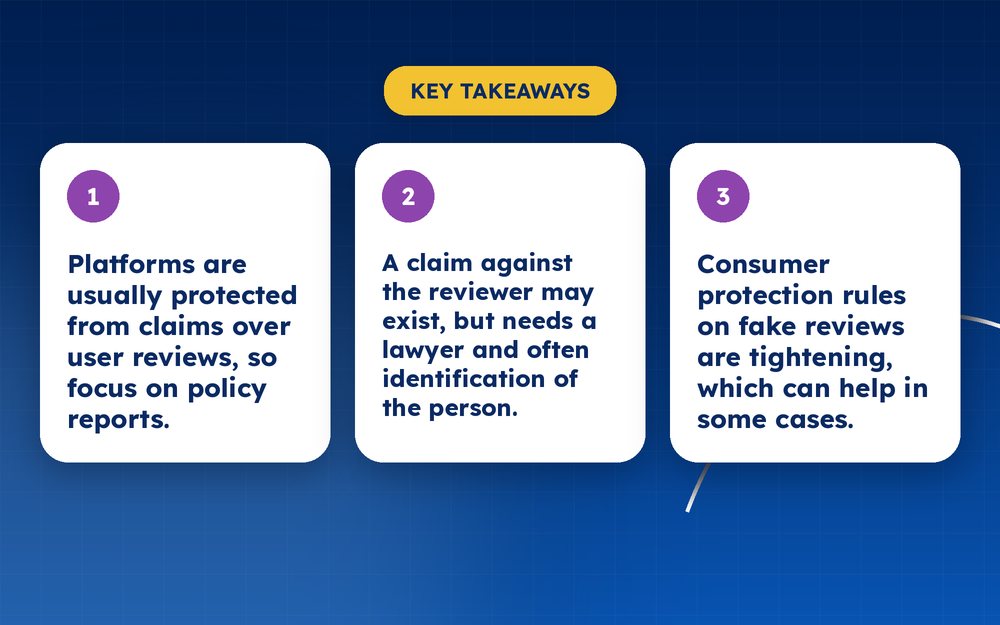
- Platforms are usually protected from claims over user reviews, so focus on policy reports.
- A claim against the reviewer may exist, but needs a lawyer and often identification of the person.
- Consumer protection rules on fake reviews are tightening, which can help in some cases.
What you can do, step by step
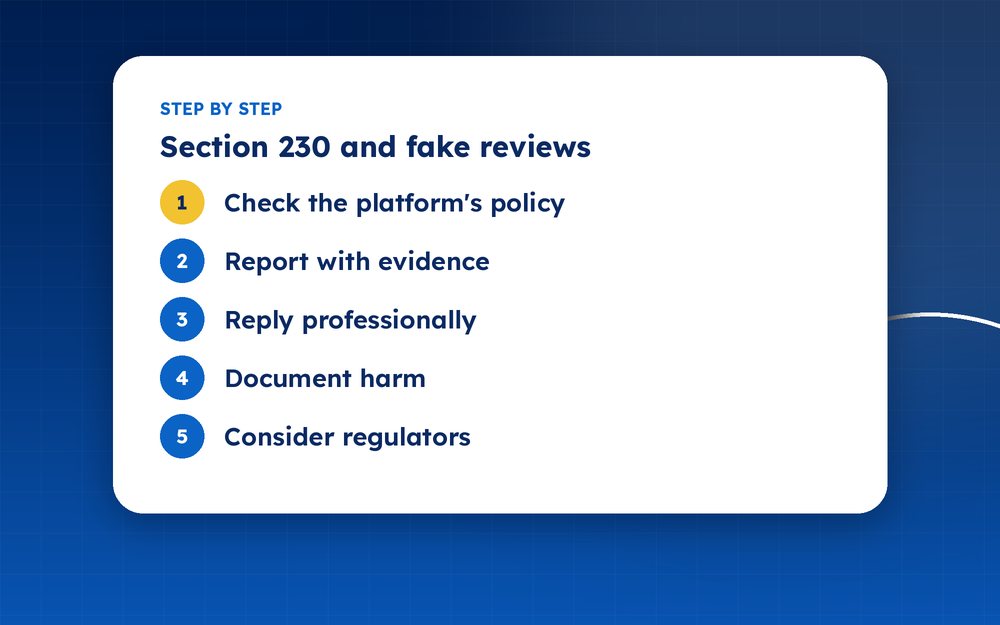
- Check the platform's policySee whether the review breaks rules such as fake, spam or conflict of interest. Read the platform's review policy and find the rules your review may break, such as fake engagement or conflicts of interest.
- Report with evidenceFlag the review and attach evidence. Use the report tool with evidence, such as proof that the reviewer was never a customer or is a competitor.
- Reply professionallyA calm response helps future customers. Reply professionally and briefly. Future customers read replies.
- Document harmKeep records of lost business and how the review affects you. Keep records of lost bookings, enquiries and messages that show harm. This matters if you later pursue a claim.
- Consider regulatorsFor fake review schemes, consumer protection bodies may take reports. Some consumer review rules allow regulators to act against fake reviews. Check what is available in your area.
- Speak to a lawyerAsk about claims against the reviewer and the cost of identifying them. A lawyer can explain whether a claim against the reviewer is realistic, and how the law applies in your state.
- Build genuine reviewsEncourage satisfied customers to leave honest reviews. Collect genuine reviews steadily, so any single review has less effect.
What Section 230 means in practice
In general terms, a platform is not treated as the publisher of a user's review, so it is not usually liable for it. That is why legal letters to platforms rarely work. Platforms can still choose to remove content under their own rules.
Claims against the reviewer
If a review makes false statements of fact, a claim against the reviewer may be possible under state law. State anti-SLAPP laws can affect these claims, and courts differ. A lawyer can explain the rules in your state and the likely cost.
Fake review rules
US regulators have taken a firmer stance on fake and paid reviews in recent years. If your case involves a fake review scheme, reports to a regulator may be worthwhile. Check current rules and guidance.
Practical reputation steps
Most businesses spend more effort on collecting genuine reviews, improving service and responding well than on removal. This tends to have the longest-lasting effect.
What a typical case looks like
A restaurant owner finds a review from someone who never visited. The platform will not act at first, so she gathers booking records and reports again with evidence. The review is removed after a second look. She keeps a log of the effect on bookings, and speaks to a lawyer, who explains that suing the platform would not be possible but that action against the reviewer might be.
Her evidence helped with the platform and kept her legal options open.
Common mistakes to avoid
Do not threaten the platform with a lawsuit. Do not offer discounts for removal. Do not post fake reviews yourself. And do not ignore evidence of fake review schemes.
How a specialist can help
A specialist team can prepare policy-based reports and gather evidence, which helps platforms and any adviser you use. We are not a law firm and cannot give legal advice. Email us in confidence.
Frequently asked questions
Can I sue Google or Yelp over a fake review?
Section 230 generally protects platforms from liability for user content, so such claims face major hurdles.
Can I sue the reviewer?
Possibly, if the review contains false statements of fact. A lawyer can advise.
What can I do quickly?
Report with evidence, reply professionally and collect genuine reviews.
Do regulators help?
Some rules on fake reviews can be enforced by regulators. Check current guidance.
Should I keep records of harm?
Yes. They help with reports and any claim.
Is this legal advice?
No. It is general information, and laws differ by place. For claims or court action, speak to a qualified lawyer.
Need help with this?
Every situation is different. Email us the details in confidence and we will reply with an honest assessment of what can be done.
Contact us by email Google review removalThis guide is general information, not legal advice. DMCA Reputation is not a law firm.
Related guides
Can You Sue Over a Fake Review in Canada? Anti-SLAPP Explained
Can you sue over a fake review in Canada? A general explanation of defamation, anti-SLAPP laws, risks of weak claims and cheaper options. Not legal advice.
Read the guide · 4 min
Can Australian Businesses Sue Over Fake Reviews?
Can Australian businesses sue over fake reviews? A general overview of defamation rules for small businesses, the serious harm test, anonymous reviewers and alternatives.
Read the guide · 3 min
How to Remove a Google Review: A Complete Guide for Business Owners
How to remove a Google review: what Google will remove, how to report it, how to appeal and what to do if it stays. A guide for business owners.
Read the guide · 6 min