
The Streisand effect is when an attempt to hide something draws more attention to it. It is a real risk in removal work, and it can be managed.
The name comes from a case where an attempt to suppress a photo led to far more people seeing it. Online, the effect can happen when a heavy-handed legal threat, public demand or angry reply makes content go viral.
You can reduce the risk by choosing quiet, formal routes, thinking about timing and tone, and judging whether the content is worth removing at all.
The effect is less about cleverness and more about attention. When you make noise about something small, people who never saw it become curious. Quiet, formal routes keep the audience small.
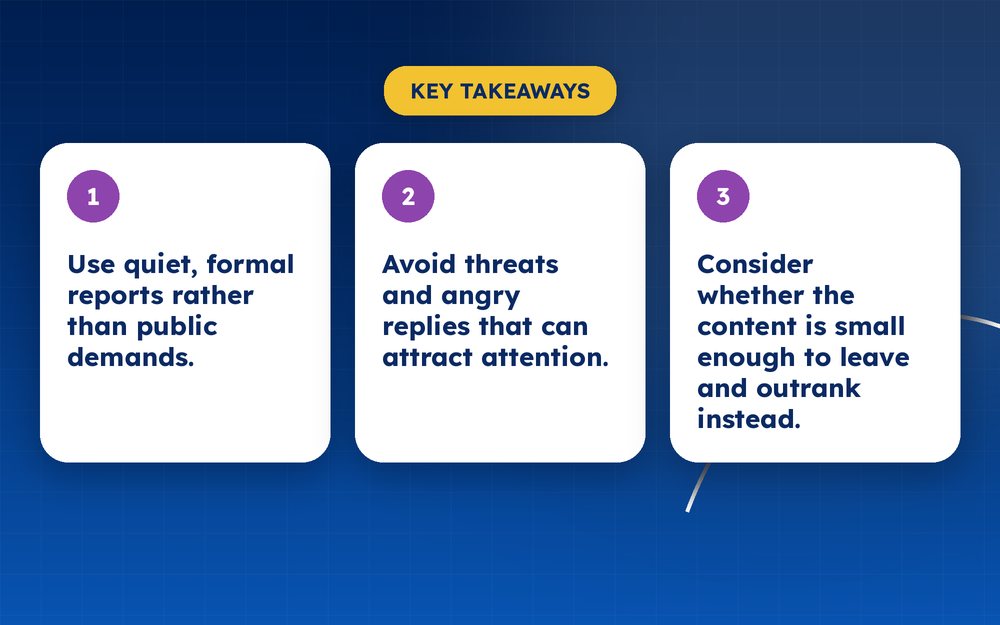
- Use quiet, formal reports rather than public demands.
- Avoid threats and angry replies that can attract attention.
- Consider whether the content is small enough to leave and outrank instead.
How to avoid it, step by step
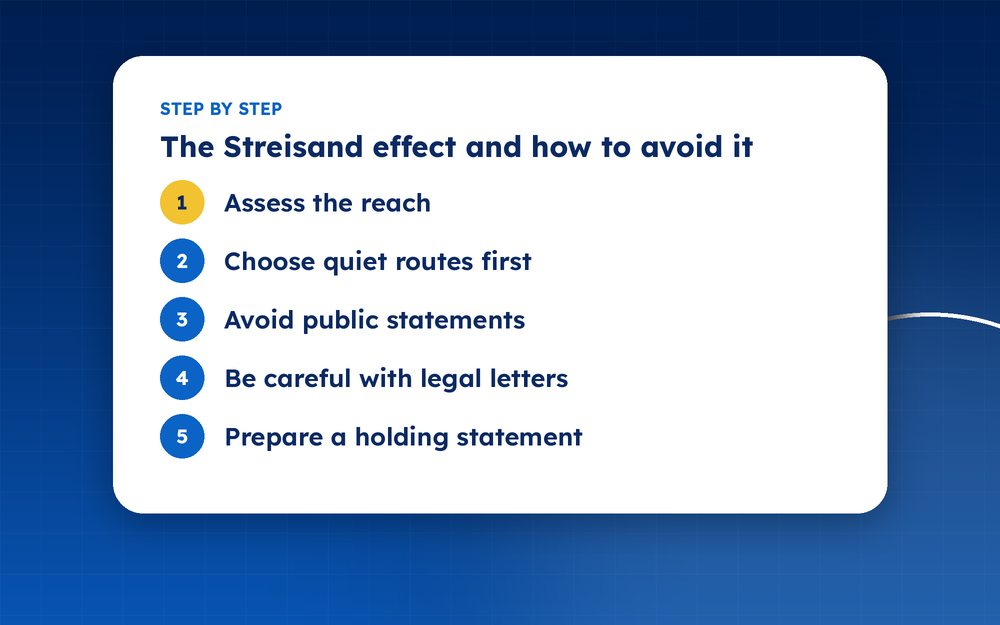
- Assess the reachCheck how many people have seen the content. Check how many people could realistically see the content. If it is hidden or low-ranking, loud action may do more harm than good.
- Choose quiet routes firstPlatform reports and search removal are private. Use platform reports, notices and polite requests, which do not draw public attention.
- Avoid public statementsDo not draw attention unless needed. Avoid posting about it, sharing links or arguing with the person. Even a defensive reply gives the content more reach.
- Be careful with legal lettersLetters can be published. Take advice on tone. A heavy letter can leak, and a publisher may post it. Consider advice and a measured tone.
- Prepare a holding statementIf it does spread, a calm statement helps. Have a short, calm statement ready in case journalists ask. Do not publish it unless needed.
- Monitor mentionsWatch for attention and respond if it grows. Set up alerts for your name so you see new coverage quickly without searching constantly.
- Build positive contentOutrank rather than fight when removal is risky. Publish helpful, accurate content that will appear in search over time and dilute the problem.
How it happens
Content that was almost unseen is posted about by someone who sees your reaction. Journalists and forums pick it up, and the story becomes your response, not the original content.
Choosing between removal and ignoring
If a post has little reach and is not harmful, you may decide to leave it and build positive content. If it is harmful, quiet removal is usually better than silence.
If it starts to spread
Stay calm, avoid escalation and issue a short factual statement if needed. Continue quiet removal in the background.
Legal letters and publicity
Letters to publishers can be shared online. Ask a lawyer about the right tone. We are not a law firm and cannot give legal advice.
What a typical case looks like
A restaurant owner finds a minor false review. Instead of replying angrily, she reports the review quietly and asks friends and customers to leave honest reviews. The review is removed after a week. A neighbouring business that threatened legal action on social media found its dispute reported in local news.
Quiet routes meant the first story never grew.
Common mistakes to avoid
Do not threaten publicly. Do not post angry replies. Do not draw attention to a small post. And do not ignore real harm.
How a specialist can help
A specialist team can pursue quiet, formal removal and monitor for escalation. We cannot promise outcomes, but we will be honest about what is realistic. Email us in confidence.
Frequently asked questions
What is the Streisand effect?
It is when an attempt to hide or remove information draws more attention to it.
How can I avoid it?
Use quiet, formal routes, avoid public arguments and keep statements short.
Should I ever respond publicly?
Sometimes, if the story is already widespread. Keep it factual and short.
Are legal letters risky?
They can be, if they are leaked or publicised. Take advice and keep tone measured.
What is the best long-term approach?
Remove what you can quietly and publish accurate content.
Is this legal advice?
No. It is general information, and laws differ by country. For advice on your situation, speak to a qualified lawyer.
Need help with this?
Every situation is different. Email us the details in confidence and we will reply with an honest assessment of what can be done.
Contact us by email DMCA takedown serviceThis guide is general information, not legal advice. DMCA Reputation is not a law firm.
Related guides
How Long Do You Have to Act? Time Limits for Defamation and Copyright Claims
How long do you have to act? Time limits for defamation and copyright claims, why they vary by country and why early action matters. General information, not legal advice.
Read the guide · 3 min
When to Hire a Lawyer and When a Removal Service Is Enough
When to hire a lawyer and when a removal service is enough: what each can do, typical cases for each and how they can work together. General information.
Read the guide · 4 min
How to Send a DMCA Takedown Notice (With Template)
How to send a DMCA takedown notice: what to include, who to send it to, a free template, counter-notices and common mistakes.
Read the guide · 5 min