
Domain squatters register names that match or resemble your brand to resell, to mislead customers or to profit from traffic. There are formal routes to recover or disable them.
This page is general information, not legal advice. Cybersquatting is addressed by dispute processes such as the UDRP and URS for many domain types, and by national laws in some places. You usually need to show that the domain is identical or confusingly similar to your trademark, that the holder has no legitimate interest and that it was registered and used in bad faith.
A registered trademark makes these routes much easier, but unregistered rights can sometimes be shown too.
Not every similar domain is squatting. Someone may have registered it for a real purpose, such as a business with a similar name. Your approach should depend on whether the holder acts in bad faith, and whether your rights are clear.
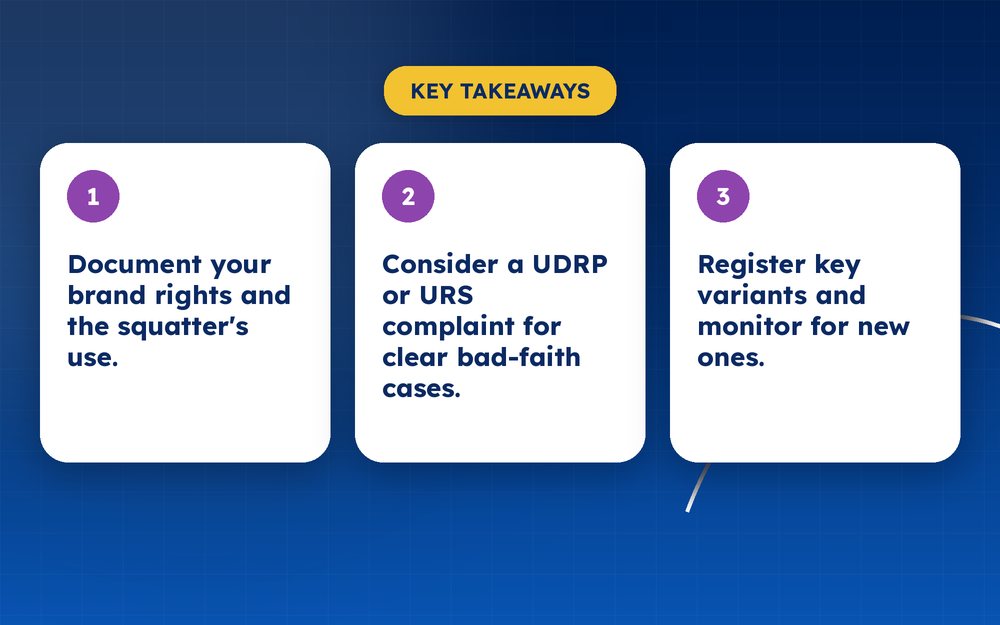
- Document your brand rights and the squatter's use.
- Consider a UDRP or URS complaint for clear bad-faith cases.
- Register key variants and monitor for new ones.
What to do, step by step
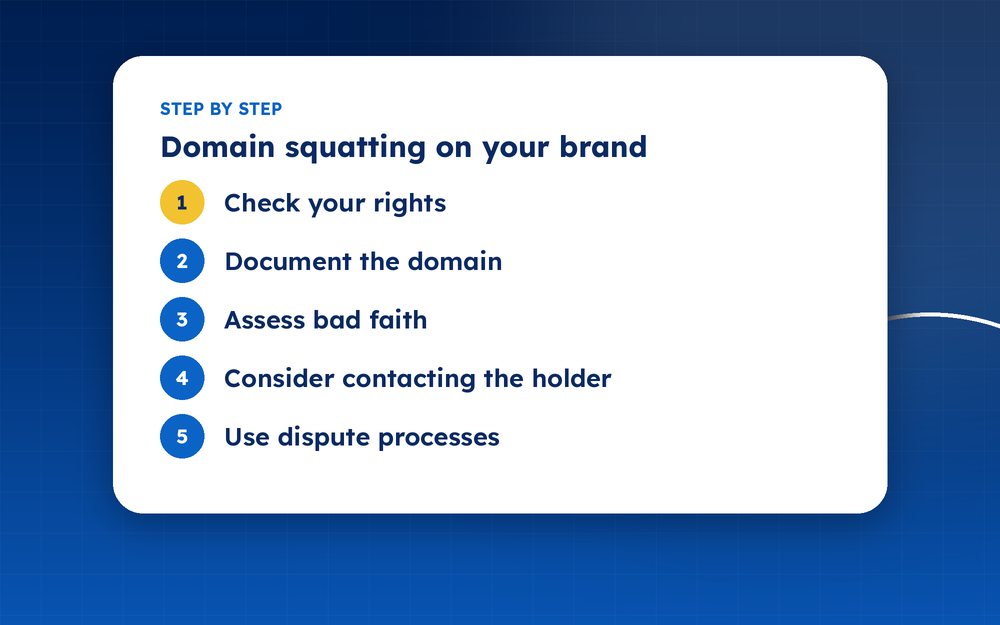
- Check your rightsGather trademark registrations and evidence of use. Confirm what rights you have: registered trademarks, long use of the name or a well-known brand. Your rights decide which routes are open.
- Document the domainCapture the site, its content, offers to sell and dates. Save screenshots, registration details, dates and how the domain is used. Note whether it points to a sales page, competitor or scam.
- Assess bad faithLook for offers to sell at high prices, impersonation or ads targeting your brand. Bad faith is often shown by offers to sell for a high price, links to competitors, confusing use of your name or pattern of registering other brands.
- Consider contacting the holderA polite message or purchase can be cheaper than a dispute, but weigh the risks. A short, polite message or a purchase through a broker can be cheaper than a dispute. Do not reveal how much the domain matters to you.
- Use dispute processesFile a UDRP or URS complaint where appropriate. For clear cases, procedures such as UDRP and URS allow you to ask for transfer or suspension. They need evidence and a fee, and decisions can take weeks.
- Report abuse to registrar and hostIf the site is used for fraud or infringement. If the domain is used for fraud or copying, report to the registrar and host. They may suspend it faster than a dispute.
- Prevent repeatsRegister key domains and set up monitoring. Register key domains and common variations, set up monitoring for new registrations and record your trademarks.
UDRP and URS in brief
The UDRP can lead to transfer or cancellation of a domain. The URS is a faster process aimed at clear-cut cases and results in suspension. Both have fees and rules. A lawyer or specialist can advise.
Buying versus fighting
Sometimes buying the domain is simpler. But making an offer can signal that you value it highly. Consider using an intermediary, and weigh cost, risk and the chance of success in a dispute.
Typosquatting and lookalikes
Squatters also register typos and lookalikes of your name. Monitoring services can alert you to new registrations.
Protecting your brand
Register your trademark where you operate, secure main domain variants and keep your own registrations renewed and protected.
What a typical case looks like
A software company discovers a domain that adds one letter to its brand and shows adverts for competitors. It saves screenshots and finds that the holder offers it for sale for a high price. Because it owns a registered trademark and the page links to competitors, it files a dispute under the domain name procedure. The panel orders transfer within two months. The company then registers close variations and sets up alerts.
Preparation of evidence before filing was the main reason the case was straightforward.
Common mistakes to avoid
Do not start without evidence of rights. Do not reveal how much you want the domain. Do not ignore monitoring. And do not let your own domains expire.
How a specialist can help
A specialist team can assess a squatting case, prepare evidence and handle abuse reports. We are not a law firm and cannot give legal advice. Email us in confidence.
Frequently asked questions
Can I take a domain that uses my brand name?
Sometimes. If you have rights and the holder acts in bad faith, dispute procedures can order transfer. If the holder has a legitimate interest, it may fail.
Is it better to buy the domain?
It can be quicker and cheaper, especially if the price is reasonable. A broker can help avoid revealing your interest.
What is typosquatting?
Registering misspellings or lookalikes of a brand to catch mistaken visitors. These can be used for adverts or scams.
How long does a dispute take?
Often a few weeks to a couple of months, depending on the procedure and the response.
How do I prevent squatting?
Register key domains early, monitor new registrations and record trademarks.
Is this legal advice?
No. It is general information. For disputes, speak to a qualified lawyer.
Need help with this?
Every situation is different. Email us the details in confidence and we will reply with an honest assessment of what can be done.
Contact us by email Brand infringement removalThis guide is general information, not legal advice. DMCA Reputation is not a law firm.
Related guides
What to Do About Fake Job Postings Using Your Company Name
What to do about fake job postings using your company name: report to job boards and social platforms, warn candidates and protect your employer brand.
Read the guide · 3 min
How to Remove Counterfeit Listings From Amazon and Marketplaces
How to remove counterfeit listings from Amazon and marketplaces: brand registries, report forms, evidence, test buys and repeat seller action. General information.
Read the guide · 3 min
How to Protect Your Brand From Fake Social Media Accounts
How to protect your brand from fake social media accounts: registration, verification, monitoring and a fast takedown process.
Read the guide · 3 min