
When an ex shares private photos or videos to hurt or control you, it can feel like a double betrayal. It is also abuse, and you have real options. This guide covers what to do and in what order.
Sharing intimate images of a former partner without consent is often called revenge porn, but a better name is intimate image abuse. It is about control and humiliation, and it is a crime or civil wrong in many places. You did nothing wrong by trusting someone with a private photo.
The practical approach is the same whether the images are on one site or many: save proof, report to each platform, remove search results and stop further sharing. Because the person who did it is known to you, safety and boundaries matter too.
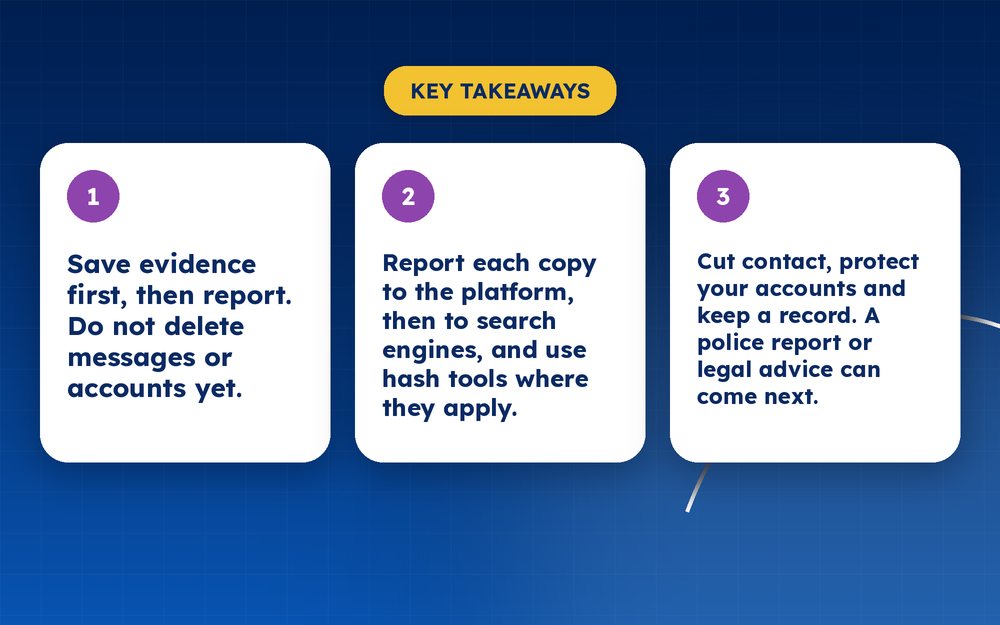
- Save evidence first, then report. Do not delete messages or accounts yet.
- Report each copy to the platform, then to search engines, and use hash tools where they apply.
- Cut contact, protect your accounts and keep a record. A police report or legal advice can come next.
Your safety first
If your ex has threatened you, turned up uninvited or is harassing you, treat that as a separate safety issue. Contact your local emergency number if you are in danger, and tell a trusted person where you are and what is happening. Reports and removals can run alongside this.
What to do, in order
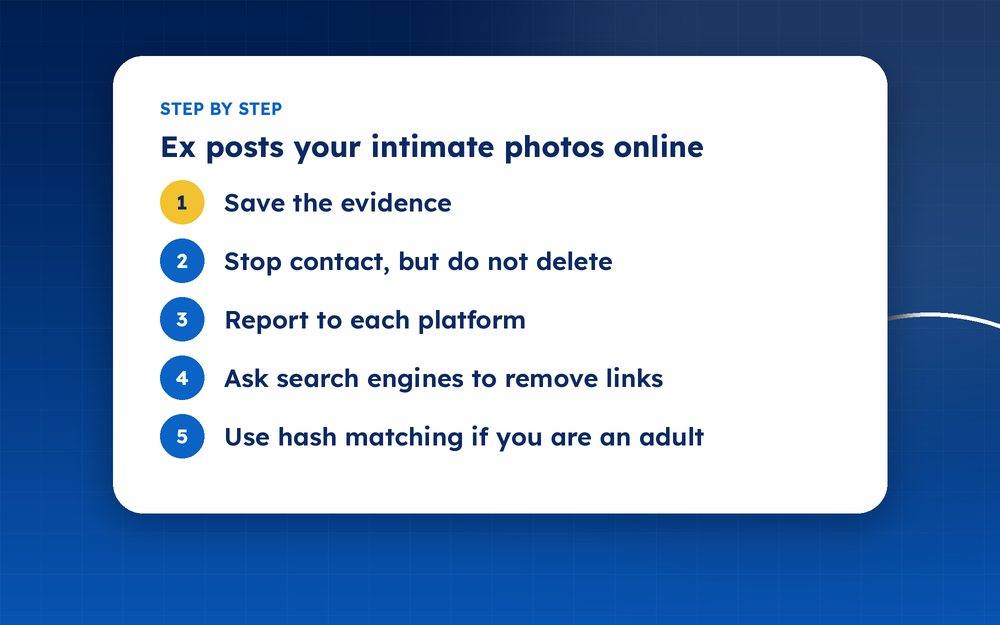
- Save the evidenceTake screenshots showing the post, the account name, the date and the web address. Save any messages where they threaten to share or admit they did. Store copies somewhere safe that only you can reach.
- Stop contact, but do not deleteDo not argue or beg. Block them once you have saved the messages. Deleting chats or accounts can destroy proof you may need later.
- Report to each platformUse the platform's report option for non-consensual intimate images. Mention that you did not consent and that the person who posted it is a former partner.
- Ask search engines to remove linksRequest removal of the links from Google and Bing so strangers cannot find them by searching your name.
- Use hash matching if you are an adultStopNCII.org creates a fingerprint of the image on your device. Participating platforms can then block matching uploads without you sending the image to anyone.
- Lock down your accountsChange passwords, turn on two-step login and check cloud backups. Your ex may still have access to shared devices or accounts.
- Consider a police reportSharing intimate images without consent is a crime in many countries. A report creates an official record and can lead to action against the person who shared them.
- Get supportTalk to a friend, a counsellor or a helpline. Dealing with this alone is harder than it needs to be.
If your ex says they will delete it
Promises are not proof. Even if they do delete the original post, copies may already exist elsewhere. Keep reporting and keep your evidence. Do not agree to anything in return for deletion, such as meeting, money or more images.
Why this feels different when it is an ex
When the person who shared the images is someone you trusted, the harm is not only the exposure. It can also bring fear, anger, guilt and confusion about what you might have done differently. The answer is nothing. Trust within a relationship is not consent to public sharing, and the responsibility belongs to the person who broke that trust.
It is also common for an ex to threaten to share images before they do it, or to repost after a first removal. That is why saving messages, staying calm and reporting through official channels are so important. Each report builds a record that supports later action.
If your ex is threatening to share more
Do not agree to meet, send money or send more images. Save every message and report the threats to the police as well as to the platform. Threatening to share intimate images is itself an offence in many places. If you have shared devices or accounts, secure them now, and consider telling a trusted person so you are not carrying this alone.
Legal options in plain terms
Depending on where you live, the person who shared the images may face criminal charges, a civil claim, or both. A civil claim for compensation is a decision for you and a qualified lawyer. We are not a law firm and cannot give legal advice, but the removal work can usually go ahead without any legal action. If you want to pursue a claim, speak to a lawyer, and you can contact us if you would like a recommendation.
How a specialist can help
Most of the practical work is repetitive: finding copies, writing reports, following up. A specialist team can do that on your behalf, so you are not dealing with it yourself or contacting the person who hurt you. Email us in confidence and we will tell you honestly what can be done.
Frequently asked questions
Is it illegal for an ex to share my private photos?
In many countries, yes. Laws differ, but sharing intimate images without consent is a criminal offence or a civil wrong in a growing number of places. A local lawyer or victim support service can explain your options.
Can I get them removed even if I originally sent them to my ex?
Yes. Consenting to share a photo with one person is not consent for it to be posted publicly. Platforms and search engines accept reports on that basis.
Will reporting make my ex retaliate?
It can feel risky. If you are worried, report through platform tools and let a professional or the police handle contact with your ex rather than writing to them yourself.
What if my ex posted them under a fake name?
You can still report them. Include links and evidence that the images show you and that you did not agree to them being posted. You do not need to identify who posted them.
How do I stop them being posted again?
Report every copy, use hash tools such as StopNCII.org where they apply, and monitor for new copies. Keep your records so repeat posts can be reported quickly.
Do I need a lawyer to get them removed?
No. Platform reports and search engine requests do not need a lawyer. A lawyer is useful if you want to take legal action or seek compensation.
Need help with this?
Every situation is different. Email us the details in confidence and we will reply with an honest assessment of what can be done.
Contact us by email NCII removalThis guide is general information, not legal advice. DMCA Reputation is not a law firm.
Related guides
How to Report Non-Consensual Intimate Images to Google, Step by Step
How to report non-consensual intimate images to Google: who can ask, what to prepare, how the form works and what happens after you submit. A clear step-by-step guide.
Read the guide · 4 min
How to Report Intimate Images to Adult Websites and Tube Sites
How to report intimate images to adult websites and tube sites: find the right report form, what to include, how to escalate to hosts and what to do if a site ignores you.
Read the guide · 5 min
How to Remove Non-Consensual Intimate Images (NCII), Step by Step
How to remove non-consensual intimate images (NCII): reporting, StopNCII.org, Google removal, legal options and support. A step-by-step guide.
Read the guide · 4 min