
If a workplace harassment story about you, or by you, ends up online, you may feel exposed and anxious. Clarify your goals, protect your privacy and be careful about what you say.
Stories may appear on social media, forums, review sites or news. They may be accurate, partly accurate or false, and they may name you, your colleagues or your employer.
This is general information, not legal advice. Take advice from an employment or media lawyer if the matter is serious, and be careful about confidentiality terms.
Whichever side you are on, the story can spread faster than any investigation. The best approach is to slow down, keep your evidence, understand any agreements you have signed and avoid public replies until you have advice.
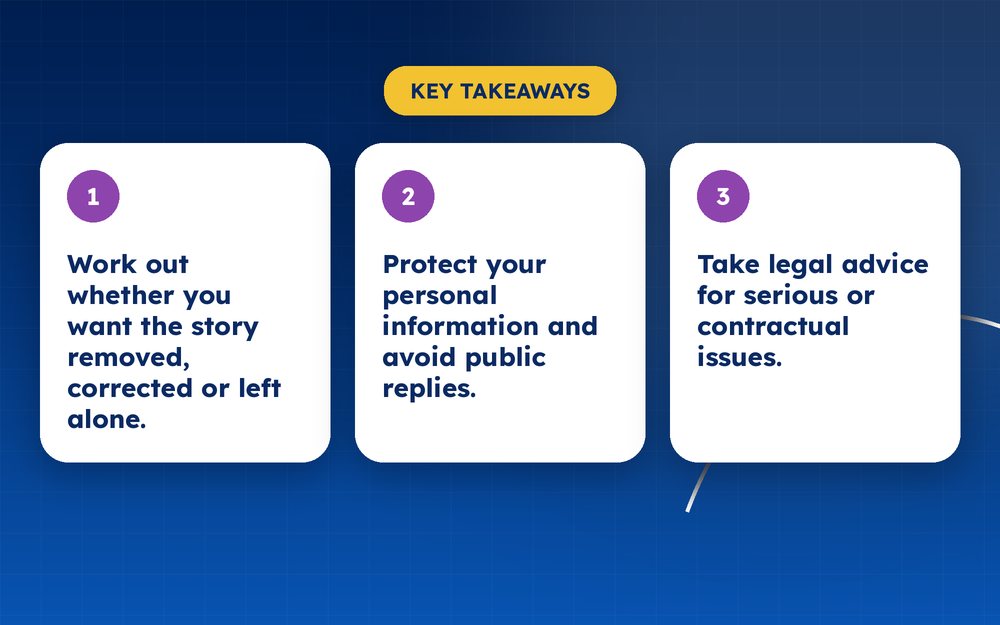
- Work out whether you want the story removed, corrected or left alone.
- Protect your personal information and avoid public replies.
- Take legal advice for serious or contractual issues.
What to do, step by step
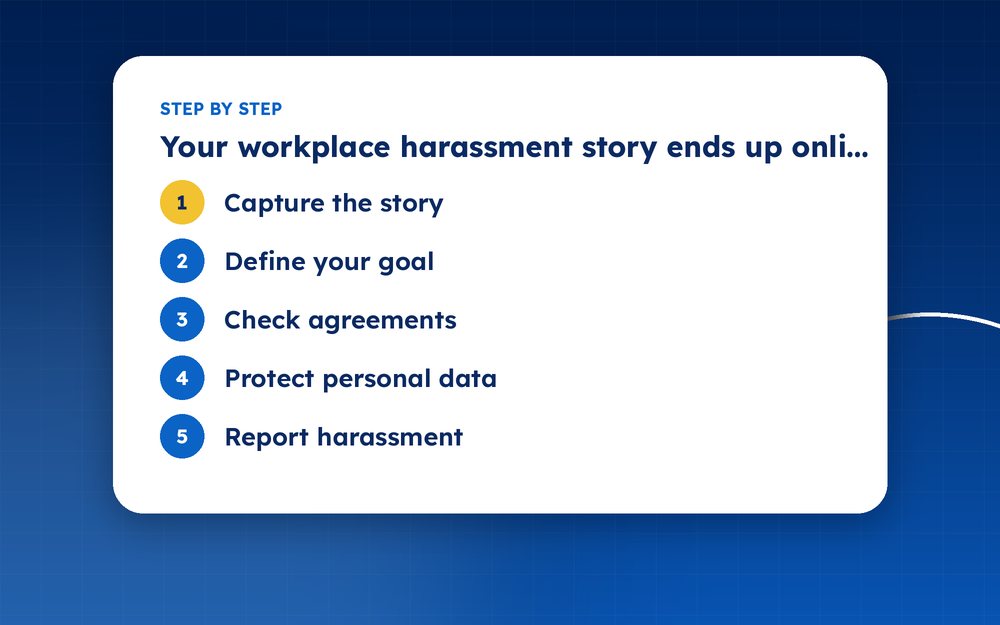
- Capture the storySave links, text and dates. Save the post, the comments and the address, with dates. If the story is on a site that could remove it, a saved copy is important.
- Define your goalDecide whether you want removal, correction or privacy. Decide whether you want removal, correction, privacy or simply to stop it spreading. Different goals lead to different routes, and a lawyer or specialist can tell you what is realistic.
- Check agreementsReview employment contracts and settlements for confidentiality terms. Employment contracts, settlement agreements and company policies may contain confidentiality or non-disparagement terms. Read them before you post or reply, and ask a lawyer if unsure.
- Protect personal dataReport posts that reveal your address, phone or family. Phone numbers, addresses, family details and workplace locations can often be removed because they put you at risk, even if the rest of the story stays.
- Report harassmentUse platform tools for abuse and doxxing. Use platform tools for threats, doxxing and abusive comments. Keep a record of each report.
- Avoid public repliesReplies can escalate and may breach agreements. A public reply can create new legal risks and fuel the story. Wait until you have advice, and keep any reply short and factual.
- Get advice and supportSpeak to a lawyer and a support service. Talk to an employment or media lawyer for serious issues, and consider a counsellor or support line. Stories like this are stressful, and you do not need to cope alone.
If you are the person who was harassed
You may want your name removed or the story kept private. Platforms may remove personal information and identifying details. A lawyer can advise on privacy options and on your rights regarding the story.
If you are accused
If you are named in a story you believe is false, collect evidence and take legal advice before responding. Public replies can create legal risk.
Employer and colleagues
Check whether your employer has a process for communications and support. Do not discuss the matter on social media.
Search visibility
Stories can rank in search for your name. Focus on removing personal data, correcting facts where possible and building accurate content over time.
What a typical case looks like
A former employee posts a long account of workplace harassment naming a manager. The manager is upset and wants it removed. A good first step is not to reply publicly. He saves the post, checks his contract, and asks a lawyer about his options. The lawyer advises that opinion about experiences is hard to remove, but that his home address, which was also posted in the comments, can be reported. The platform removes those comments, and he focuses on a calm statement from his employer.
The outcome did not erase the story, but it removed the part that could put him at risk.
If you are the person who spoke up
If you shared your story and are now facing backlash, document the harassment you receive, protect your personal information and ask for support from people you trust. A lawyer can explain your rights about retaliation and confidentiality.
Common mistakes to avoid
Do not reply publicly. Do not breach confidentiality terms. Do not delete evidence. And do not go through this alone.
How a specialist can help
A specialist team can report personal data and policy breaches, and work on search visibility. We are not a law firm and cannot give legal advice. Email us in confidence.
Frequently asked questions
Can a harassment story about me be removed?
Parts of it may be, such as personal data or abusive comments. Whether the whole story can be removed depends on the platform's rules and whether it is lawful opinion or false fact. A lawyer can help you assess it.
Should I reply publicly?
Usually not before you have advice. Replies can create new legal risk and attract more attention. If you reply, keep it brief and factual.
What about confidentiality agreements?
Some agreements limit what you can say publicly. Check yours with a lawyer before you post or respond.
Can the story be anonymised?
Sometimes a publisher will agree to remove names or identifying details, especially if there are privacy or safety concerns. You can ask politely, with a clear reason.
How does this affect search results?
Stories can rank high for your name. Removing personal data, correcting facts where possible and building accurate profiles over time can help.
Is this legal advice?
No. It is general information. For employment disputes or defamation, speak to a qualified lawyer.
Need help with this?
Every situation is different. Email us the details in confidence and we will reply with an honest assessment of what can be done.
Contact us by email Harassment and doxxing responseThis guide is general information, not legal advice. DMCA Reputation is not a law firm.
Related guides
What to Do If Your Home Address Is Posted Online
What to do if your home address is posted online: assess your safety, save evidence, report to platforms and search engines, and reduce your data trail. A practical guide.
Read the guide · 5 min
What to Do If an Ex Is Posting About You Online
What to do if an ex is posting about you online: save evidence, report harassment, protect your accounts, consider legal and police options and look after yourself.
Read the guide · 5 min
What to Do When You Are Doxxed: A Step-by-Step Guide
What to do when you are doxxed: safety steps, removing personal information, reporting, securing accounts and getting support.
Read the guide · 4 min