
Photos of children posted without parental consent can be a privacy and safety concern. Platforms and search engines usually respond quickly when a parent asks for removal.
Photos may be posted by friends, schools, clubs, strangers or accounts that collect images. Even innocent posts can spread and appear in search, and some collect images of children for inappropriate purposes.
Start with a polite request to the poster, and use platform reports for faster action. If you believe a child is at risk, involve the police.
Parents often worry in two different ways. One is privacy: a photo of a school event or a birthday that spreads further than intended. The other is safety: images collected by strangers or used in ways that feel wrong. The steps are similar, but the second needs faster action and sometimes the police.
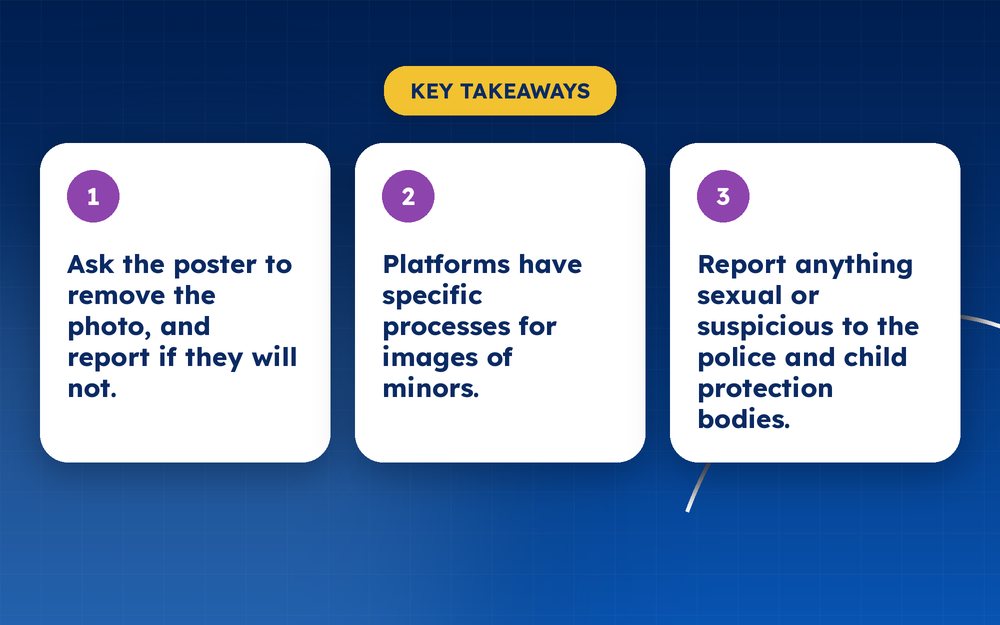
- Ask the poster to remove the photo, and report if they will not.
- Platforms have specific processes for images of minors.
- Report anything sexual or suspicious to the police and child protection bodies.
What to do, step by step
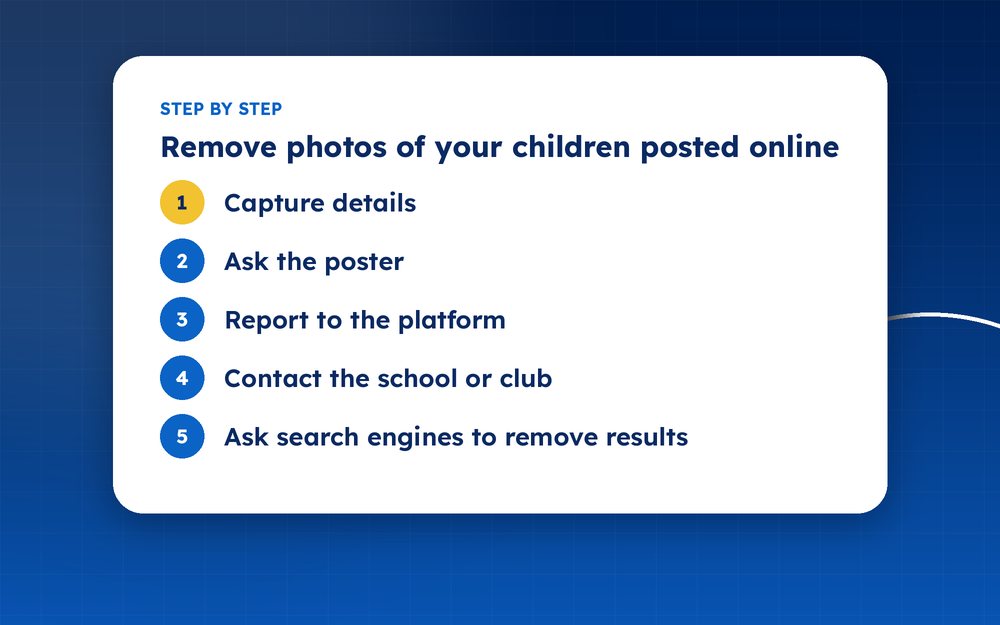
- Capture detailsSave links and screenshots. Save the link, the account name and a screenshot before you ask for removal. If the post is removed, you will still have a record of where it appeared.
- Ask the posterSend a polite message explaining your concern. Be polite and specific, and say which photo you mean and why you want it removed. Most people agree. Keep a copy of the message in case you need to report later.
- Report to the platformUse the report option for images of children or privacy. Look for the option for images of children, privacy or harassment. Many platforms have a special form for parents and guardians, and may ask for proof of your relationship.
- Contact the school or clubAsk about their photo policies and request removal. Ask what consent forms and policies they use, and request removal in writing. Schools and clubs often respond quickly and some update their policies afterwards.
- Ask search engines to remove resultsUse forms for personal information and, where relevant, content involving minors. If the photo appears in search results, request removal through the search engine's personal information or minor-related forms. Removal does not delete the page, but it limits how easily it is found.
- Report suspicious contentTell the police or child protection hotlines if there is anything sexual or concerning. If images are being used sexually, collected by strangers or appear on suspicious sites, do not share them further. Contact the police and a child protection hotline, who can act on the content.
- Review your own sharingLimit who can see photos you post. Check who can see your own posts, turn off location tags and think about what school uniforms, names and locations show. Agree with relatives what is fine to share.
Platform processes for minors
Many platforms have special forms for requests by parents or guardians to remove images of minors. Provide evidence of your relationship if asked.
Schools and clubs
Ask about consent forms and policies on posting photos. Schools often remove images promptly when asked, and some adjust their policies.
If photos are used inappropriately
If photos of your child are used sexually or in a way that worries you, do not share them further. Contact the police and child protection services, and use hotlines for reporting such content.
Protecting children going forward
Talk to family and friends about what is acceptable to share. Use privacy settings and avoid sharing identifying details like school uniforms or locations.
What a typical case looks like
A parent finds that a stranger has reposted her child's sports team photo on a public page with the child's name. She saves the link, reports the post to the platform using the form for images of minors, and asks the club to remove the original and to review its rules. The platform removes the repost within two days. She then asks the search engine to remove one result still showing the photo with the name. The club changes its policy so names are no longer shown with photos.
Acting on the original source as well as the copies is what prevented it happening again.
Talking with your child
If your child is old enough, involve them in decisions about what is shared. Explain what you are doing and why. It builds trust and helps them think about their own privacy as they grow.
Common mistakes to avoid
Do not forward the photos. Do not argue publicly. Do not ignore signs of misuse. And do not delay reporting concerns.
How a specialist can help
A specialist team can find and report copies, and monitor for new posts. We cannot promise every copy will be removed, but we will be honest about what is realistic. Email us in confidence.
Frequently asked questions
Can I demand removal of a photo of my child?
You can ask, and platforms usually give weight to requests from parents or guardians. If the poster refuses, report to the platform and, where relevant, to the school or organisation.
What if a stranger posted the photo?
Report it to the platform, using the option for images of children or privacy. If the account appears to collect images of children, tell the police or a child protection hotline as well.
What if the school or club posted it?
Ask them in writing to remove it and to tell you their photo policy. Most will cooperate, and many revise their consent practice.
Will Google remove photos of my child?
Search engines have forms for removing certain personal information, and some cover content involving minors. Success depends on the content, so provide clear links and explain the concern.
What if the images are sexual or suspicious?
Do not share them or investigate yourself. Contact the police and a child protection hotline immediately, and give them the links.
Is this legal advice?
No. It is general information. For disputes with schools or other parents, speak to a qualified lawyer.
Need help with this?
Every situation is different. Email us the details in confidence and we will reply with an honest assessment of what can be done.
Contact us by email Harassment and doxxing responseThis guide is general information, not legal advice. DMCA Reputation is not a law firm.
Related guides
What to Do If Your Workplace Harassment Story Ends Up Online
What to do if your workplace harassment story ends up online: assess your goals, protect privacy, understand risks, remove personal data and get support. General information.
Read the guide · 4 min
What to Do If Your Home Address Is Posted Online
What to do if your home address is posted online: assess your safety, save evidence, report to platforms and search engines, and reduce your data trail. A practical guide.
Read the guide · 5 min
What to Do When You Are Doxxed: A Step-by-Step Guide
What to do when you are doxxed: safety steps, removing personal information, reporting, securing accounts and getting support.
Read the guide · 4 min