
If a site posts a complaint about you and then offers to remove it for a fee, treat it carefully. Some paid programs are legitimate services, while others look like pressure. Read the terms and consider your options.
Some complaint sites run business programs, such as response tools or arbitration, that cost money. Others contact businesses after a complaint, in a way that feels like a pay-to-delete scheme. The difference matters.
Before paying, understand exactly what you would get in writing, whether the post will be removed or only updated, and whether payment could lead to more demands.
Paying to remove or hide complaints can be legitimate in some cases, such as a publicly described advertising program, but it can also be a pressure tactic. Slow down and understand what is being offered.
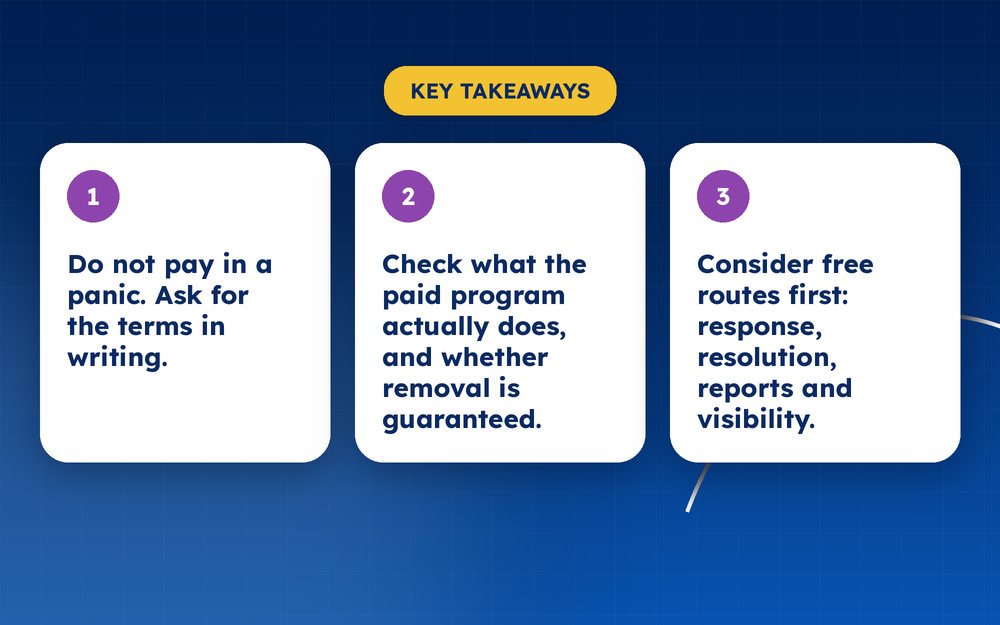
- Do not pay in a panic. Ask for the terms in writing.
- Check what the paid program actually does, and whether removal is guaranteed.
- Consider free routes first: response, resolution, reports and visibility.
What to do, step by step
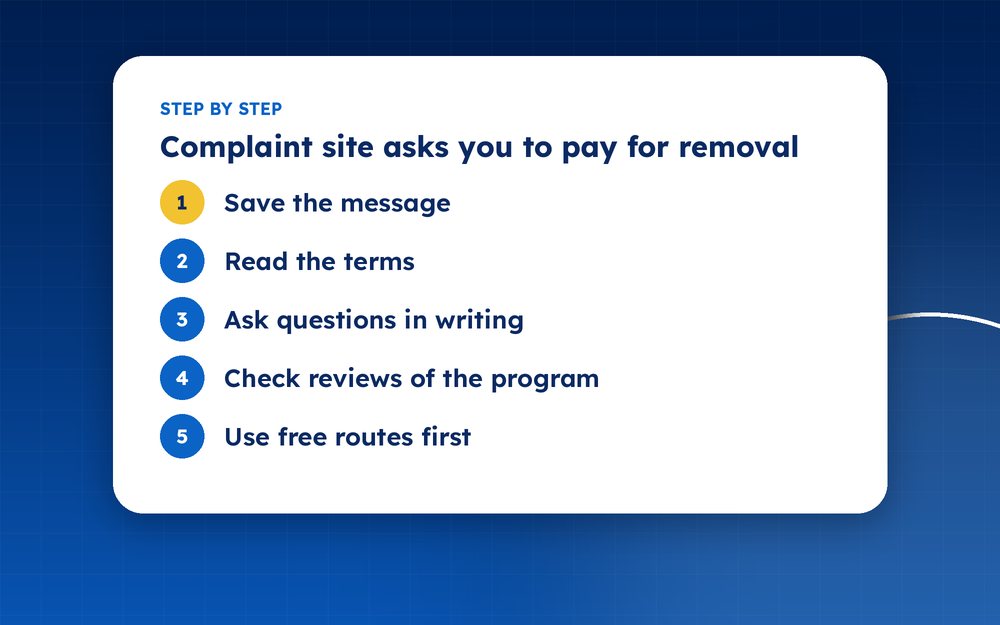
- Save the messageKeep the email or message that mentions payment. Keep the message, sender details and dates. Do not delete anything.
- Read the termsCheck the site's documented programs and what they promise. Read the site's terms and any program description. Note what is promised and what is not.
- Ask questions in writingAsk what exactly you would pay for and what happens to the post. Ask what exactly you would receive, whether the post would be removed, hidden or only displayed differently, and for how long.
- Check reviews of the programLook for reports from other businesses, and check for consistent patterns. Look for independent information about the program and other businesses' experiences. Be sceptical of glowing reviews on the same site.
- Use free routes firstRespond, resolve the complaint and flag rule violations. Try free routes first, such as responses, resolving the complaint and asking the complainant to update.
- Speak to a lawyer if it looks like extortionThreats or conditions tied to payment can be serious. If demands look like threats, speak to a lawyer or the authorities. Do not respond emotionally.
- Decide with a clear headWeigh cost, risk and likely results before agreeing. Decide after you have all the information. Do not rush because of a deadline.
Spotting warning signs
Warning signs include pressure to pay quickly, vague promises, refusal to put terms in writing and demands that increase over time. Legitimate programs describe their services and limits clearly.
What legitimate programs may offer
Some programs allow a business to respond, verify identity, or resolve disputes with the complainant, and may annotate posts. They may not remove them. Ask whether removal is part of the package.
Free options that often help
A calm public response, resolving the issue with the complainant, flagging any rule violations and building positive content cost little and can make a difference.
If you suspect extortion
If payment is demanded under a threat, save the messages and consider reporting to the police or a consumer protection body. A lawyer can advise.
What a typical case looks like
A business owner receives an email saying a complaint can be "resolved" for a fee. She asks in writing what the fee covers and whether the post would be removed. The reply is vague and mentions that the post may stay visible. She decides to resolve the complaint directly with the customer and posts a reply instead.
Asking questions in writing exposed that the offer was not what it first seemed.
Common mistakes to avoid
Do not pay without terms. Do not argue by email. Do not share more than needed. And do not assume payment ends the problem.
How a specialist can help
A specialist team can review the offer, assess your options and help with responses and visibility. We are not a law firm and cannot give legal advice. Email us in confidence.
Frequently asked questions
Is it legal for a complaint site to ask for payment?
Some offer paid programs. Whether a particular practice is lawful depends on facts and place. A lawyer can advise.
Will paying remove the complaint?
Not necessarily. Ask exactly what is offered, in writing.
What if it feels like extortion?
Keep records and speak to a lawyer or the authorities.
Are there free options?
Yes. Resolve the complaint, respond publicly and build positive content.
Should I tell customers?
Not usually. Focus on facts and your reply.
Is this legal advice?
No. It is general information. For claims or court action, speak to a qualified lawyer.
Need help with this?
Every situation is different. Email us the details in confidence and we will reply with an honest assessment of what can be done.
Contact us by email Negative content removalThis guide is general information, not legal advice. DMCA Reputation is not a law firm.
Related guides
How to Remove a Scam Accusation From Scam-Report Websites
How to remove a scam accusation from scam-report websites: check the facts, use site processes, provide evidence, respond publicly and manage search visibility.
Read the guide · 4 min
How to Remove a Ripoff Report Listing
How to remove a Ripoff Report listing: how the site works, what its policy says, realistic options, how to respond and how to reduce its search visibility.
Read the guide · 4 min
How to Remove a Defamatory Website or Blog Post About You
How to remove a defamatory website or blog post about you: evidence, host and platform complaints, legal routes and search suppression.
Read the guide · 4 min